NASA laid out its revised path back to the Moon this week, and the short version is this: before anyone actually lands, astronauts are going to spend two weeks in Earth orbit practicing with the hardware that’s supposed to get them there.
This isn’t a brand-new decision, exactly. NASA first announced back in February that Artemis III would shift from a lunar landing mission to an Earth-orbit test flight, following concerns raised about the sheer number of “firsts” the original mission was trying to pull off at once. This week’s update filled in a lot more of the actual detail behind that shift.
Administrator Jared Isaacman put it plainly at the press conference: going straight from Artemis II, a crewed flight around the Moon without landing, to Artemis III, a full crewed landing, was simply “too big of a gap.” Rather than risk that leap, NASA’s inserting a dress rehearsal in between.
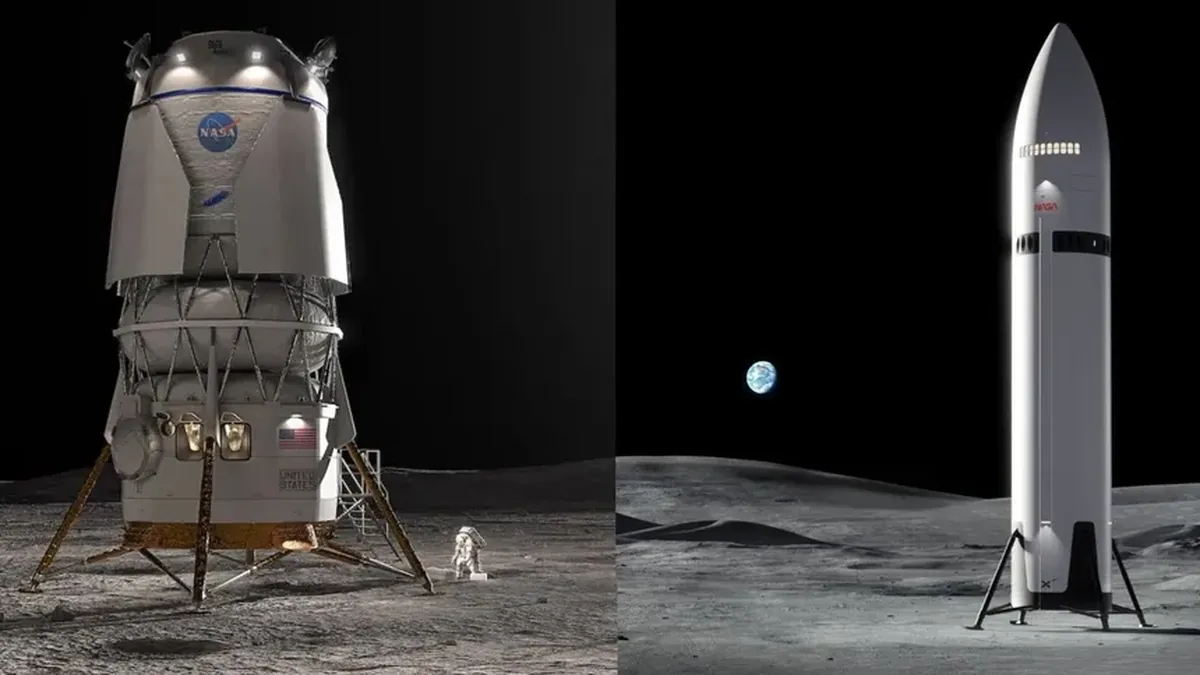
Under the new plan, Artemis III will launch four astronauts into low Earth orbit by summer 2027, kicking off a roughly two-week mission built entirely around practicing rendezvous and docking procedures. Orion will first connect with Blue Origin’s Blue Moon lander at an altitude of about 270 miles above Earth, letting astronauts open the hatch, climb inside, and test the lander’s environmental controls and life support systems.
From there, Orion will detach, adjust its trajectory, and line up its docking system with SpaceX’s Starship in a slightly lower orbit, repeating a similar evaluation process with that spacecraft. Basically, instead of practicing this choreography for the first time during an actual Moon landing, NASA wants it tested thoroughly, on both landers, while everyone’s still safely in Earth orbit.
The headline number hasn’t changed. NASA says it’s still aiming for a crewed Moon landing in 2028. What’s changed is which mission actually carries that landing: Artemis IV, not Artemis III. NASA is also leaving the door open for a second landing attempt, Artemis V, later in 2028 as well, depending on how the earlier flights go and which lander ends up ready first.
One detail still up in the air: NASA hasn’t locked in whether SpaceX’s Starship or Blue Origin’s Blue Moon will be the one actually carrying astronauts down to the lunar surface for Artemis IV. Both companies are reportedly working toward uncrewed landing demonstrations as part of their existing agreements with the agency, and NASA’s decision will likely hinge on how those tests, plus the Artemis III docking rehearsal, actually go.
Beyond the mission restructuring itself, Isaacman has also pushed for NASA to pick up its overall pace. Historically, SLS rocket launches have come roughly every 18 months or so, a cadence Isaacman has said isn’t fast enough to maintain the kind of technical readiness and “muscle memory” needed for a program moving toward annual Moon missions. The new target is closer to one SLS launch every 10 months, a notable jump in pace for a rocket program that’s historically moved slowly between flights.
That faster cadence matters beyond just scheduling convenience. Isaacman and other NASA officials have pointed to it as central to rebuilding the agency’s broader technical workforce and competence, something they argue has eroded during the long gaps between major Artemis milestones.
Part of the backdrop here is competitive. NASA’s own leadership has pointed to China’s accelerating lunar ambitions as a reason for urgency, with Isaacman specifically warning that the gap in the “new space race” is closing faster than many expected. Whether or not that competitive pressure directly shaped this week’s restructuring, it’s clearly part of the conversation NASA’s having publicly about why getting this right, and getting it done roughly on schedule, matters as much as it does.
The real test of this new plan starts next year, when NASA actually has to execute that two-week orbital dress rehearsal and see whether the docking procedures with both Starship and Blue Moon go as smoothly as hoped. If they do, NASA will have a much clearer picture of which lander, or possibly both, carries the Artemis IV crew down to the Moon’s surface in 2028. If problems show up during that test flight instead, the 2028 target, already once delayed, could end up under pressure all over again.