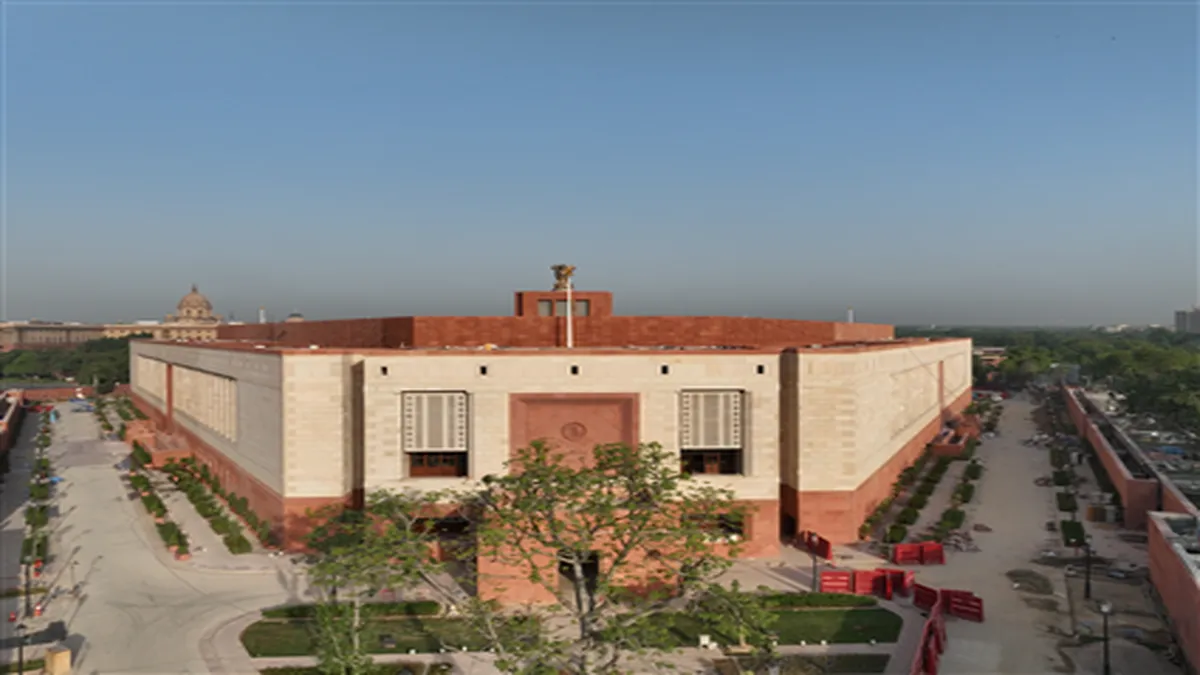
As Parliament was in session for its Budget-cum-Monsoon session during the summer months, very few matters captured the minds of the legislators present in both Houses as much as the NEET-UG scandal. What started off as individual complaints about the conduct of the entrance test turned into a political battle between the ruling coalition, the National Democratic Alliance (NDA), and the opposition, the INDIA bloc.
The core of this political fight involved the use of a parliamentary technique seldom used in Parliament—the adjournment motion. Knowing the reasons for why the opposition resorted to such a course of action and the reasons behind the stiff resistance shown by the government to this method is essential in comprehending how the Indian Parliament deals with national outrage.
The NEET-UG, an entrance examination that is conducted by the National Testing Agency (NTA), acts as the sole entrance examination required for gaining admission to the undergraduate programs of medicine, dentistry, and allied health sciences in India.
Almost 24 lakh (2.4 million) students took the examination during the mentioned year. After the announcement of the result of the examination, certain anomalies came into public notice at once, like an exceptionally large number of candidates securing a perfect score of 720 out of 720, sudden grace marks allotted in some centers, and leakages of question paper in some states before the examination itself. Such irregularities did not remain restricted only to NEET alone. Just around the same time, the UGC-NET (UGC's National Eligibility Test), which establishes the eligibility of candidates for lectureship and fellowship in universities, was suddenly cancelled on the very next day of its conduction due to the 'sanctity of the examination process.' The simultaneous failure of two national examinations within such a short span of time created a wave of public outrage against the authorities concerned.
The use of adjournment motions in parliamentary procedure is seen as one of the strongest tools in the hands of members. The reason is that, as against other procedures like debates or calling attention notices, which are meant only for deliberation on important issues, this motion seeks to disrupt the proceedings of the House totally so that an urgent matter can come up for discussion right away. Most importantly, the implication of this type of motion in the Lok Sabha is that of censure of the government for its failure to deal with some urgent matter.
That is precisely why opposition members, some belonging to the Congress party, decided to raise an adjournment motion instead of going for the usual options of calling attention to a motion or discussing a limited period.
Their logic was clear: as there were more than two crore students affected through the multiple examinations in view of the allegations of mismanagement in the NEET and UGC-NET examinations, it was no ordinary issue of policy but an emergency that required the urgent attention of the House.
The government, however, raised objections both procedurally and substantively. It was stated that the Parliament at that time was in the process of discussion of the Motion of Thanks to the President’s Address—a constitutionally obligatory discussion that takes precedence over any other work at the beginning of a new session.
Senior ministers claimed that in the long history of parliamentarism, there was no case of any other discussion during the discussion of the Motion of Thanks. Opposition MPs would have sufficient time to discuss the problem of NEETs after the end of the discussion.
The Chair of the Lok Sabha, relying on its discretion, refused to consider the adjournment motions on these grounds, which provoked loud protests, slogans, and adjournments in both Houses of the Parliament.
On several occasions, discussion in both houses was interrupted by the opposition MPs, who gathered in the well of the house and demanded discussion, and in some cases, resignation of the Union Education Minister because of this scandal. Nevertheless, the government insisted that it did not try to ignore the issue. It was emphasized that the special investigating group was set up, and arrests took place in the several states where the paper gets leaking.
In the case of the opposition, procedural precedence was not enough to put off a debate specifically dedicated to the topic. According to the leaders, leaks were said to happen several times throughout the year and hence, it was something more than a mere mistake.
The students deserved a clear message from the House that both the government and the opposition considered their complaints as important and hence did not belong in a general discussion where it would get a passing mention.
The demand from the opposition side was made by them with respect to the youth as well, according to which it was an important issue that needed a dedicated debate along with a government answer and not merely an assurance given in passing during another discussion.
It was part of a larger strategy on their part that was focused around keeping the issue of exam leakages in focus and asking questions about the government's supervision of NTA and UGC.
However, apart from the immediate issue of the procedural dispute, the NEET controversy was made to fit into bigger stories of joblessness, the government's defense recruitment program 'Agnipath', and its failure of the institutions in general during the government’s tenure.
This was done in order for the opposition to create an impression of the government’s failure in governance rather than just considering the NEET controversy to be an administrative blunder.
In case of the government, it was a matter of containing the controversy without appearing to brush off a genuinely aggrieved group of students and parents. The government’s balancing act between its traditions in Parliament and the sentiments of the public became difficult, and the repeated adjournments even though were procedurally legitimate for the government became susceptible to being taken by the public as evasion.