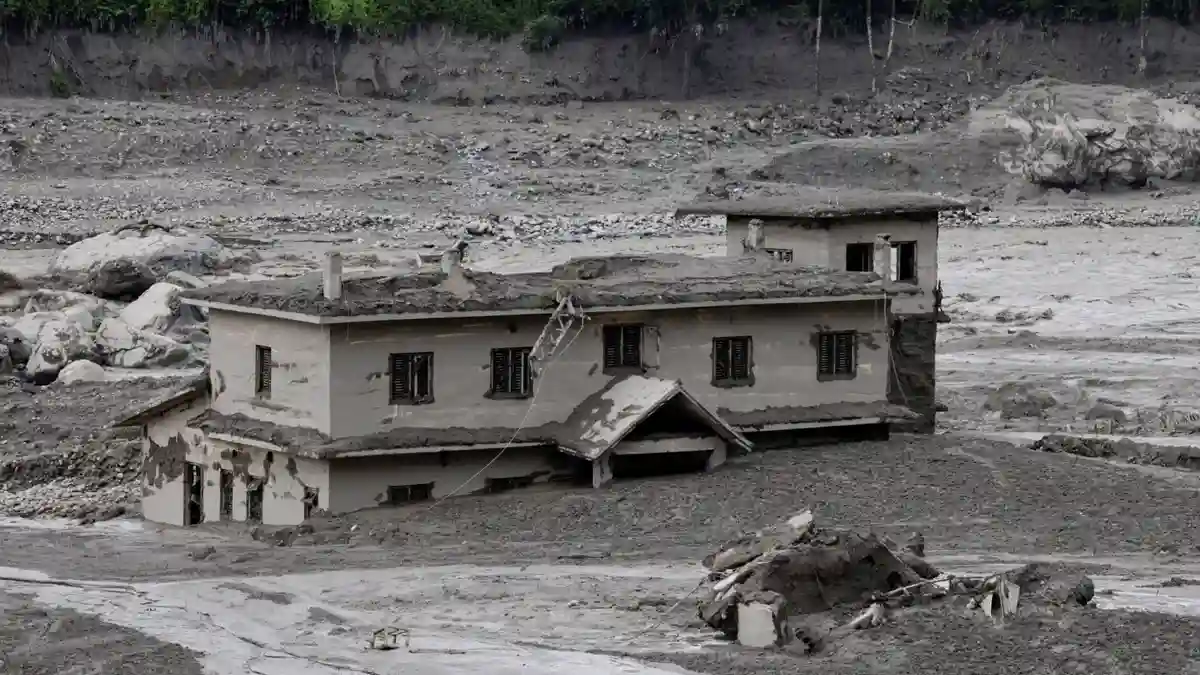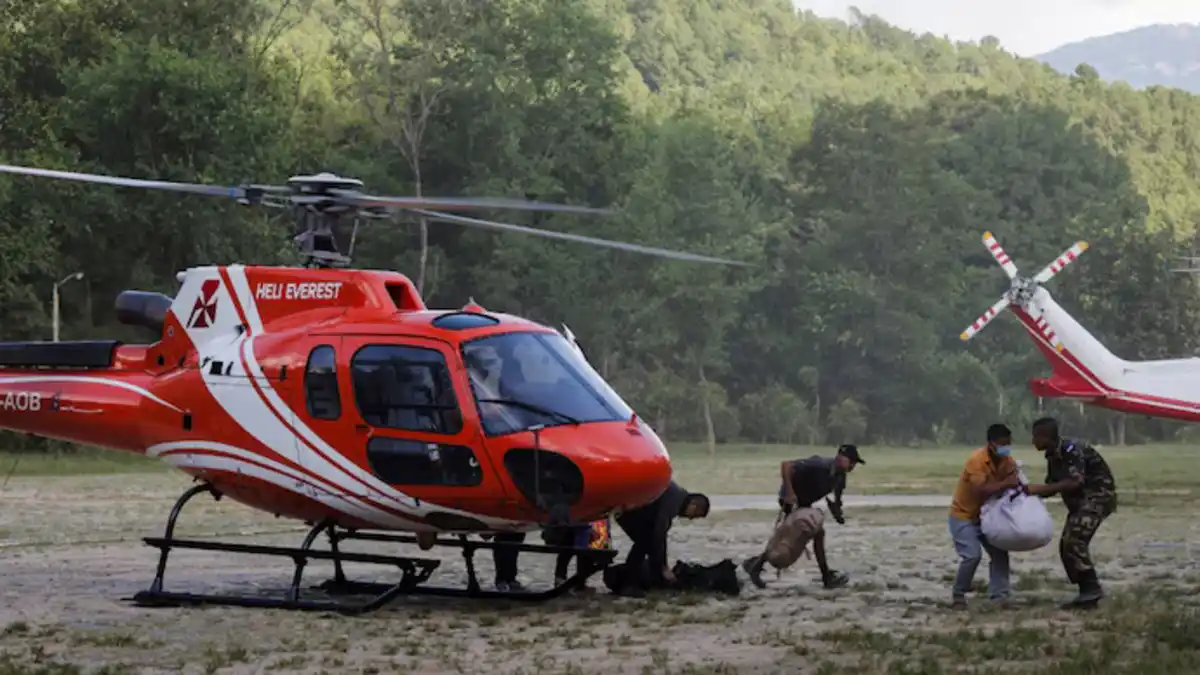
Just two days after a glacier melt caused deadly floods in northern Nepal, offers of aid from across the globe started coming in.
Despite having 517 foreigners missing after the Bhotekoshi floods in Nepal on Wednesday, the country has refused any foreign rescue team, saying Nepal's security forces can take care of the operation.
The position of the Nepali government on that Friday was unchanged. “Nepal’s foreign ministry states that no assistance from outside is needed for rescue and relief efforts,” the article states.
It was not just a symbolic move by a couple of neighboring countries; it was a sincere coalition of many countries offering assistance.
Government representatives from India, China, the USA, the UK, Japan, South Korea, Sri Lanka, and Bangladesh had requested the government to let them send their rescue team for assistance.
South Korea stood out from the rest by sending not only a response team to Nepal but also an additional disaster relief team since there were reports of nine South Koreans missing and ten more South Koreans stranded at a hydropower plant.
This response from the government was very clear and came up time and again.
"The appeal to provide help is natural but our security agencies are performing the rescue operations. As of now we do not need any assistance of this sort," stated Lok Bahadur Chhetri, spokesperson for Nepal's foreign ministry.
According to an official from Nepal's foreign ministry, this decision by the government was a result of its previous experiences in 2015 during which the coming in of foreign search and rescue teams had created management problems for them due to the competition between countries.
This decision was taken on the specific recommendation of Nepal's army and police force.
Considering the place where this tragedy happened, an additional, politically charged interpretation has been put forward, which Nepali authorities have tried to deny vehemently.
According to Dinesh Bhattarai, a former Nepali ambassador to the UN in Geneva, it is possible that the government was reluctant to let foreign search and rescue teams into the country due to the geographical location of the flooded area – Rasuwa district, which is located close to the Tibet region in China, a very sensitive territorial issue for Beijing.
"Maybe they have taken into consideration the geographical sensitivity of that region and decided not to accept foreign teams," Bhattarai said in an interview with Reuters.
However, Chhetri immediately denied any relation between this matter and China's sensitivity and insisted that Nepal's rescue teams could cope with the situation alone.
It is also significant to highlight what Nepal refused and what it did not refuse; the difference is significant, and the government has made sure to clarify it.
What Nepal did not refuse was receiving any kind of help from any outside source. For instance, India has delivered humanitarian materials despite Nepal having declined the Indian proposal of providing an NDRF team, and South Korea has promised one million dollars as aid through international organizations.
India alone has delivered over 47.5 tonnes of relief materials to Nepal, even though Nepal has refused the offer to provide an NDRF team.
Instead of allowing other countries’ boots on the ground, Nepal has set up its own unique mechanism to deal with queries of missing foreigners.
An Emergency Response Team is already being maintained by the Nepali government in the Foreign Ministry for providing assistance in information and search and rescue and consular issues related to affected foreigners.
The foreign ministry has requested the diplomatic missions and international organizations and the families of missing people to avail themselves of the dedicated channel of information and assistance, instead of trying to coordinate the rescue efforts individually.
Foreign Minister Shisir Khanal has directed the joint secretaries of different divisions of the ministry to maintain personal contacts with foreign governments about their missing people and missions abroad have been advised to seek financial help only through the Prime Minister Relief Fund.
Besides the issues of coordination highlighted above, there is also a logical reason for why Nepal would want to carry out this mission independently.
By leaving search and rescue operations up to Nepalese authorities, the Kathmandu Government will have complete control over the personnel and resources involved without having to coordinate different foreign forces in an operation that is already divided between specialized units.
This decision carries with it a concrete price, which seems to become more difficult to overlook considering the number of missing persons remains consistently high.
Additional search and rescue teams from foreign nations could have provided additional manpower and equipment to the operation. Nepal has turned down such offers and hence has decided not to supplement its national capability of search and rescue with additional units.
The size of the operation makes the cost quite substantial. According to an update of the Nepal Foreign Ministry dated 27th August, 359 bodies have been retrieved whereas 596 foreign citizens representing 33 nations have gone missing – information, as pointed out by the Ministry, is up to date.
Apart from the conflict between the rescue team, India is on its own taking care of its citizens affected by the natural calamity.
The foreign office of India reported that more than 200 Indian citizens are looking for evacuation since they have been stuck in the floods.
This position mirrors a dilemma that comes up in virtually every major international disaster scenario: whether to accept as much assistance from other nations as possible and still retain sovereignty over how the rescue mission is carried out.
It is within Nepal’s sovereign power to decide how the rescue missions will be carriedout—evenn those who disagree with the choice have conceded this point even while questioning whether it was appropriate, considering the magnitude of casualties and the diversity of nationalities.
As the search and rescue continue within and downstream of the Bhotekoshi river among the debris, the first and foremost priority remains the locating of the hundreds who have not been accounted for yet before the chances of their survival decrease.
It will soon be clear whether Nepal's stand of keeping the whole operation solely in its hands isenough or whether the pressure applied by nations whose citizens remain missing would change that decision in the near future.