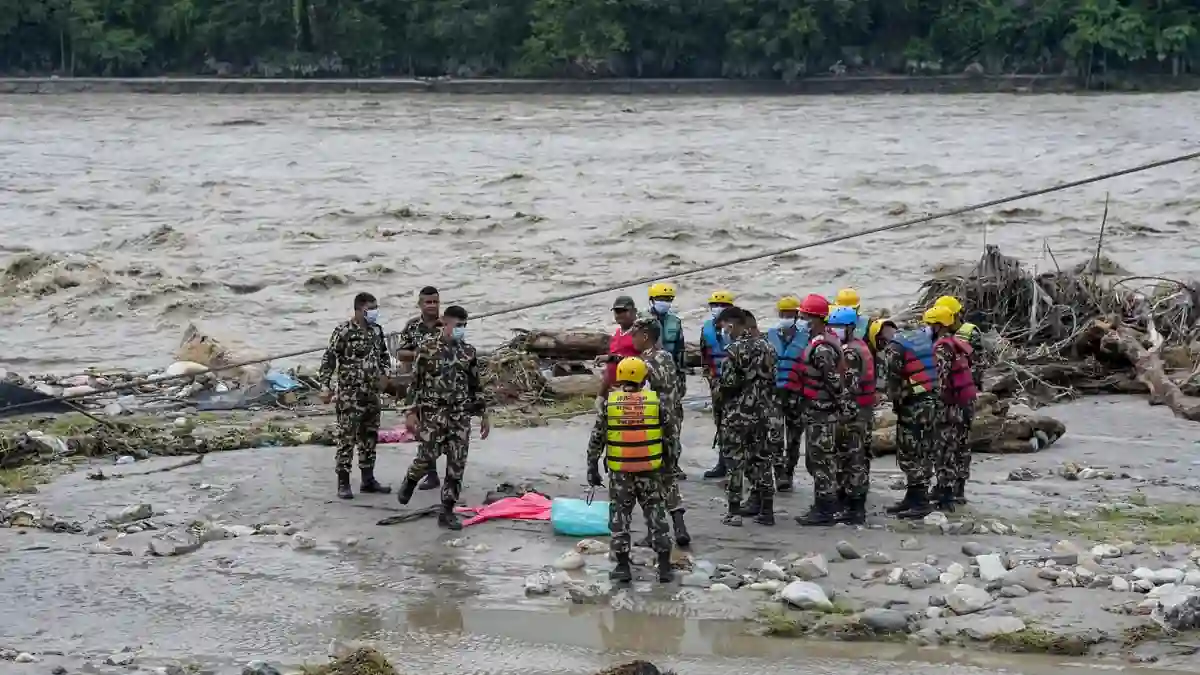
However, not only did the flash floods on Wednesday cause the death of many people; the infrastructure that could allow access to the survivors was destroyed.
Nepal has requested Bailey bridges from India, China, and other nations as an immediate means of assistance in restoring the roads disrupted because of the flash floods witnessed on Wednesday in Rasuwa district.
According to the Ministry of Foreign Affairs, Nepal has formally requested Bailey bridges from the governments of India and China after consultations with the Ministry of Physical Infrastructure and National Disaster Risk Reduction and Management Authority of Nepal.
This is because the extent of the destruction to the infrastructure has made this request urgent.
There were 41 bridges which were either destroyed or washed away, including the one near Rasuwagadhi which was an important route for travel between Nepal and China and some bridges which connect the Trishuli River in Nuwakot.
This destruction to the infrastructure has led to disruption of road connectivity to Dhading, Rasuwa, Nuwakot and other places hit by the flood making it difficult for relief operations to reach these places.
The call for help from Nepal has gone far beyond the mere provision of physical structures because it has been part of the country’s larger effort of seeking aid from its giant neighbors.
According to Sasmit Pokharel, spokesperson for the government of Nepal, the government has sought the help of India and China not only in relation to the construction of Bailey bridges but also in terms of their general rescue efforts.
It is important to point out the difference between the two since Nepal, earlier in the week, had already refused to accept the services of foreign search-and-rescue teams but still sought for the other type of help.
This calamity has seen the numbers increase every time there was a new update, and the number of missing persons has changed drastically from one report to another.
At least 540 people have lost their lives, while 1,500 have been reported to be missing in the Himalayan region according to reports issued by the authorities while on rescue missions; however, later updates indicated that the number of missing people has exceeded 2,000, and then again, later it has exceeded 2,500 people who were yet to be accounted for.
Many foreigners are reported to be missing, including 65 Americans who had been listed among the 1,000-plus people who had been missing in the Nepal-China border region.
Verified footage from the disaster site has shown the immense power of what hit these mountain villages.
The verified videos by NBC News have revealed bridges cracking and being washed away because of the immense power of the raging waters filled with mud and debris. In the surveillance video of the Rasuwagadhi border crossing, crowds were shown running for their lives from the wall of mud that was coming towards them, striking them with immense power.
A health worker in Rasuwa, Tula Bahadur BK, told Reuters, "Devastation all around us. All the settlements adjacent to the riverbed are gone. Five members of my own family are unaccounted for."
However, even as rescue and relief operations remain ongoing, yet another problem has arisen, which could worsen the situation even more.
A second lake formed in the area is under close scrutiny from the authorities, which adds to the fears of additional flooding — a situation that proves the instability of the entire mountain region after the initial glacier collapse.
It is not happening without precedence, since India has come forward with almost identical aid to Nepal after earlier disasters in the country.
India's envoy in Nepal had just last month delivered a fully constructed 70-metre modular bridge along with special equipment for launching in Nepal's Minister of Physical Infrastructure and Transport, as part of an agreement to provide ten such bridges valued at more than NPR 73 crore as a grant after heavy rains in eastern Nepal in October 2025.
And the previous instance of such aid was even more recent than that, when, after floods and landslides in September 2024, India provided ten prefabricated steel bridges costing more than NPR 41 crore, and several of which were installed within the following months. Ambassador Naveen Shrivastava had called such repeated assistance "a strong demonstration of the unbreakable ties of friendship that characterise the India-Nepal relationship."
That which makes this tragedy particularly frightening is its similarity to events past. This is not the first time that such an important connection across the Bhotekoshi River in Rasuwa district has been lost due to a flash flood.
In fact, barely over a year ago in July 2025, a flash flood destroyed the Miterepul Bridge between Nepal and China, taking at least nine lives and 19 others missing, in addition to damaging the Rasuwagadhi hydropower station and causing power loss to the country’s national grid.
A prior flash flood in the same month had already destroyed the Miteri Bridge along with some 200 vehicles parked at a customs dry port at the same location.
This combination of geographic location, a glacial river channel running along a mountain range which is highly unstable, makes the district of Rasuwa highly susceptible to just such a series of floods.
Because of glacial melting, and the existence of an unstable glacier right above the river channels, any infrastructure built back after the previous year’s flood is highly vulnerable to another one the following year – a cycle which has already repeated itself at least three times in this region within a year’s time span.
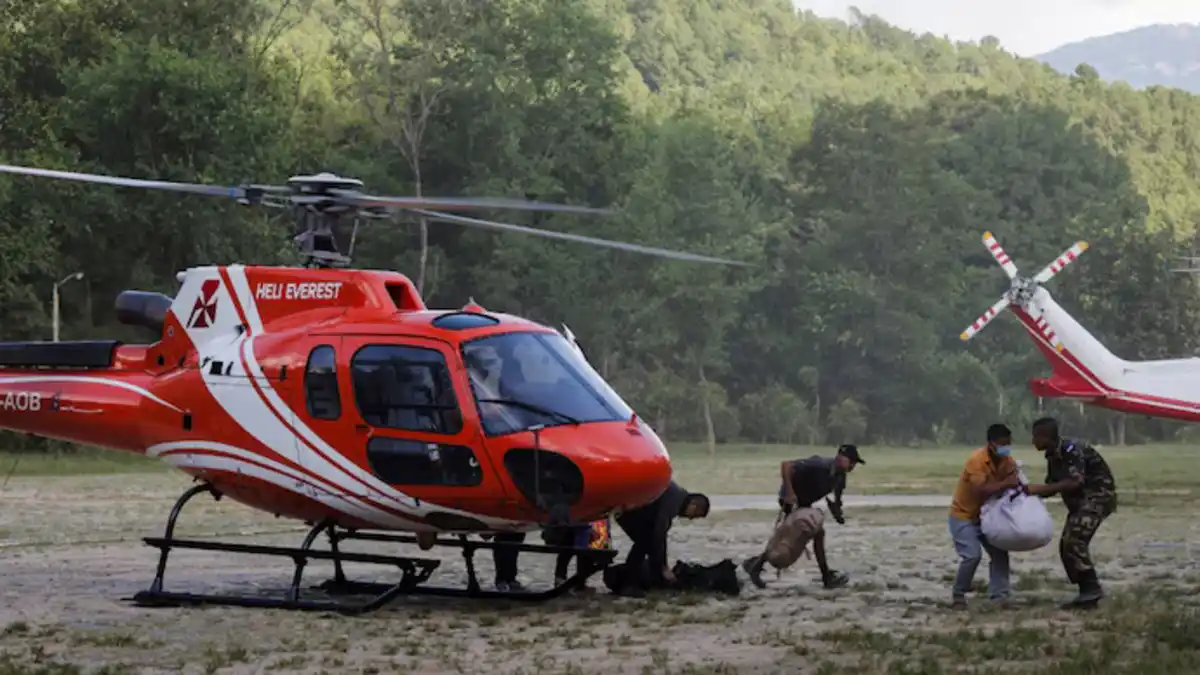
With formal requests having been made to India and China at this point, the efficiency of the Bailey bridge deliveries is dependent on how well the logistics can be put into place considering the same damaged roads that the bridges need to repair. This will prove to be difficult considering the fact that the parts for building the bridges have to be transported to areas which are currently inaccessible by road, and the options available would either be via helicopter or by taking an alternative route, which would take them right past the damage done.
India's past responses to similar requests from Nepal have come through within a week, and thus officials in Kathmandu will be expecting the same efficiency from their current request.