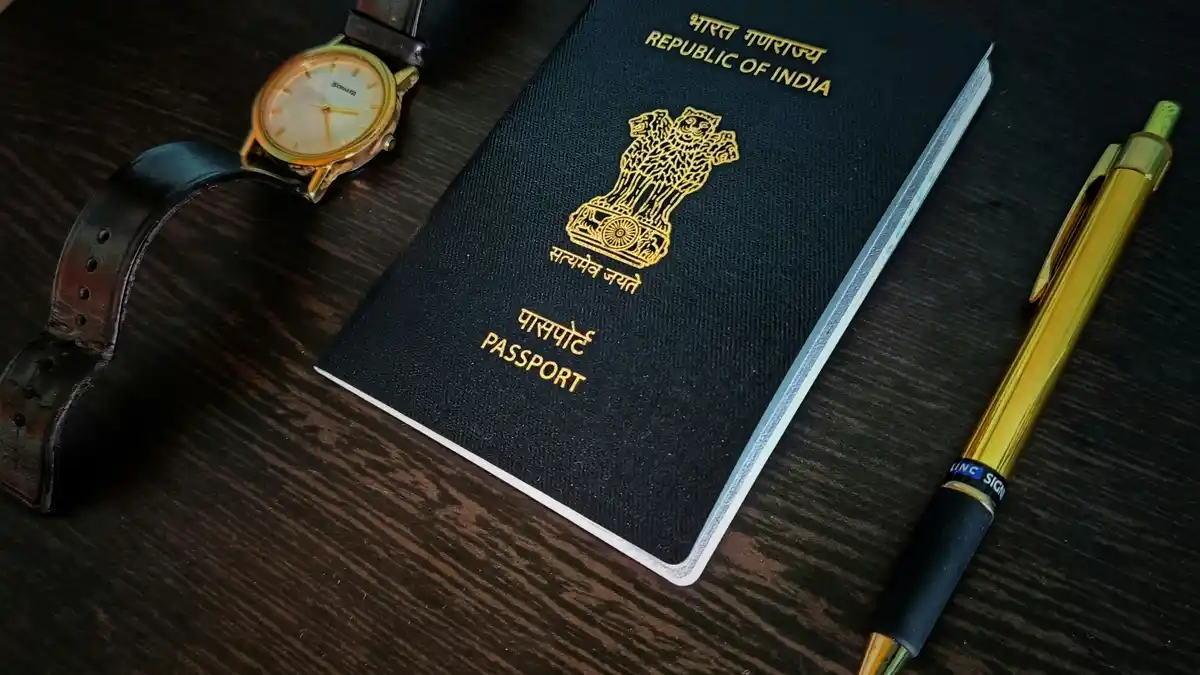
There are two different types of indexes, and both put India lower in their rankings when it comes to ranking of passports for July 2026. First, there is the Henley Passport Index which places India as 80th best nation in this ranking process. Next, we have the Global Passport Index (GPI) from Global Citizen Solutions, which ranks India 125th out of 197 nations.
Before this month's fall in the ranking, India had experienced an upward trend, where it managed to be placed at 78th rank in May and at 75th rank in February, which is the best India had done within recent years after being ranked 85th in 2025.
The fall takes place when two independent events happen in the country: the Ministry of External Affairs announced recently that passports are just travel documents and do not constitute one's citizenship in themselves, causing some controversy, and the fees required to get a passport have been changed after 14 years, starting on July 1st.
Even with the fall in the ranking, the situation of the citizens of India holding passports has not changed much. At present, citizens who hold passports of India are visa-free or visa-on-arrival in 56 different countries, and India shares this rank with countries like Algeria.
The Henley Index compares the strength of a passport to others, and therefore it is possible that the strength of the Indian passport can decline while its rank improves, or conversely, when other countries are doing well in terms of access.
In the beginning of this year, India had managed to improve its rank partially due to the toughening of restrictions by other nations regarding visas and online registration, while access of Indian passports declined from 57 to 55.
Here's the important point about suchindices—theyy are relative and not absolute ratings of a passport's strength.
In the Global Passport Index published on July 5, 2026, by the advisory service on citizenship and residency programs, Global Citizen Solutions, India ranks 125th out of 197 nations, falling by one position from the 124th position recorded in 2025. In contrast to the Henley ranking, GPI is not limited to only visa-free travel.
GPI ranks a passport based on three weighted indices—Enhanced Mobility, accounting for half of the total score; Investment Potential; and Quality of Living, each carrying 25%. Here's where things become more complicated for India.
India registered the lowest score on the enhanced mobility indicator, ranking 136th, whereas on the quality of living index, it showed significant improvements and rose to the 118th position, improving eleven ranks, and it also rose on the investment index, ranking 94th. All that, despite the overall drop in ranking, India scored the highest five-year composite score for its passport, showing gradual improvement over the years, starting from the 127th position in 2021.
Which means that India has started to become an increasingly attractive country for investments and residence.
Currently, visa-free or visa-exempt travel is available from India to 26 countries like Bhutan, Nepal, Jamaica, Macau, Palestine, Tunisia, and more. Pre-arranged visa application processes are necessary for major countries such as the USA, UK, Germany, France, China, and UAE, having serious implications for the huge Indian diaspora that plans to travel back and forth between these nations and India.
There are several reasons behind the fluctuation in the rankings of India.
The main reasons that caused the initial decline in the number of visa-free countries for India were the following foreign policy changes: the abolition of the visa-exemption policy for Indian passports by Iran in November 2025 and a shift from a visa-on-arrival policy to an e-visa requirement for Bolivia. On the positive note, the visa-free travel to The Gambia was reinstated for Indian travelers in early 2026.
Recently, Malaysia and Kazakhstan were added to the list of visa-exempt countries due to increased cooperation and India's efforts to engage the Central Asia region.
According to experts mentioned in early reports on the ranking, geopolitical subtext related to tensions in West Asia and in the Atlantic could also contribute to a more general assessment of the risk of traveling to several countries, including India.
The drop in the rating has become a political issue. The head of the opposition party Congress, Mallikarjun Kharge, criticized the government for the fall, mentioning that India fell from 74th place in 2013 to 80th place in June 2026, raising the question about the previous statements of Prime Minister Modi about the rising "strength" of the Indian passport. He also pointed out the problems of the development of the sector of tourism, saying that foreign tourists were still not reaching the numbers before the pandemic; in 2019, there were 10.93 million tourists, while in 2024 there were only 9.95 million, wondering whether the government hid this fact by including the number of non-resident Indian tourists into these numbers.
The government, for its part, claimed that the key use of a passport is as a travel document, not a national symbol.
For most Indian travelers, who plan international travel in the future, the immediate effects of these rankings will not be significant. In fact, for those Indians who are living outside India in countries such as Australia, the UK, the USA, Canada, New Zealand, and the UAE, it is still necessary to obtain a visa before visiting their families since that has been a decision made through bilateral agreements and not by any rankings.
To make more progress on mobility, bilateral visa waivers, passport security measures, digital identity systems, and diplomacy would all need to improve. Data from Henley itself indicates that the ranks of India will improve to 2024 levels after dipping in 2025 due to bilateral negotiations, not because of one single policy change.