One of the greatest festivals within the Vaishnava tradition of worshipping is Radha Ashtami, which will fall on September 19, 2026, Saturday, during the Ashtami Tithi of Shukla Paksha of the Hindu Bhadrapada month.
The festival is dedicated to the celebration of Goddess Radha, the eternal wife of Lord Krishna, in the Barsana, Vrindavan, Mathura, and Nandgaon temples.
Radha Ashtami originates from the Vedic times when it is believed that the goddess appeared on the sacrificial ground of Vrishbhanu Maharaj in Barsana, which now becomes the center of this festive day each year.
Radha is considered an incarnation of Goddess Lakshmi and is referred to in the Vedas and Puranas as the one who manifests "Hladini Shakti," or "energy of divine bliss."
The Radha Ashtami festival is held precisely fifteen days after the Janmashtami festival, which is seen as very symbolic by the devotees of this tradition.
Krishna cannot be approached by His worshippers without Radha's consent. Radha Ashtami Tithi starts around 1:00 PM on September 18 and lasts until 3:26 PM on September 19.
While most of the Hindu religious celebrations reach their zenith either in the early morning or in the evening hours, Radha Ashtami is an exception because Radha appeared in the Madhyahna time period.
In 2026, the Madhyahna Puja Muhurat falls within 11:19 AM and 1:45 PM and offers devotees an opportunity to perform the main ceremonies in the specified period.
During the Abhijit Muhurat, which is deemed especially fortunate, about 49 minutes before or after noon are devoted to the ceremony, depending on the city.
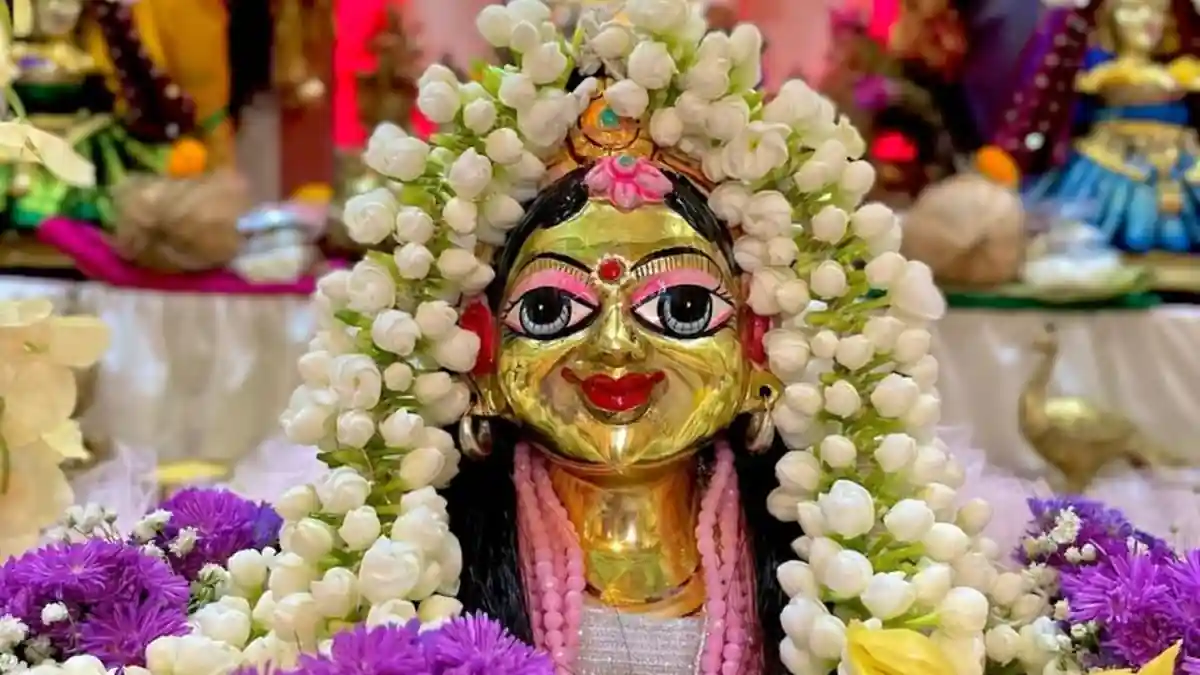
All the temples of North India, including ISKCON temples, conduct grandiose rituals of the celebration by performing Panchamrit abhishekam, or washing the deity with five elements, such as milk, curd, ghee, honey and sugar; decorating the deity with new flowers; and painting a sixteen-petalled lotus yantra.
Devotees fasting on Radha Ashtami observe the vrat, or fasting practice, and eat fruits through the whole day. The fasting is completed only after the midday Puja is over.
The offerings made on this day are very special in their own right. Some sweet dishes that are believed to be very dear to Radha Rani are cooked and offered to her, and then they are served as prasad to the devotees.
Devotees also chant devotional songs such as Sri Radhikashtakam and engage in prolonged kirtans and bhajans, which continue late into the night.
Being one of the birthplaces of Radha Rani, Barsana celebrates some of the grandest festivals. At Radha Rani Temple of Barsana, the idol is dressed in new clothes and decorated with fresh garlands, and various cultural and procession programs are held in which devotees from the nearby areas also come and take part.
Similarly, the cities of Vrindavan and Mathura, where the Radha-Krishna tradition prevails, celebrate the festival through temple-centered programs, in which the 'Sringara' (dressing up of deities) ceremony takes place at noon.
ISKCON temples around the world are conducting grand abhishekam ceremonies, offering up to 108 kinds of bhog, and organizing cultural events involving devotees from all over the world.
Radha Ashtami is a festival that does not occur on the same date every year due to the fact that it follows the Hindu lunisolar calendar and is celebrated on the eighth day during the waxing moon period of the Bhadrapada month. For example, the celebration took place on the 31st of August in 2025 and on the 19th of September in 2026.
This is also why the timing of the tithi is different depending on the time zones of the cities, and therefore it is advised to consult the local Panchang regarding the details of the puja.