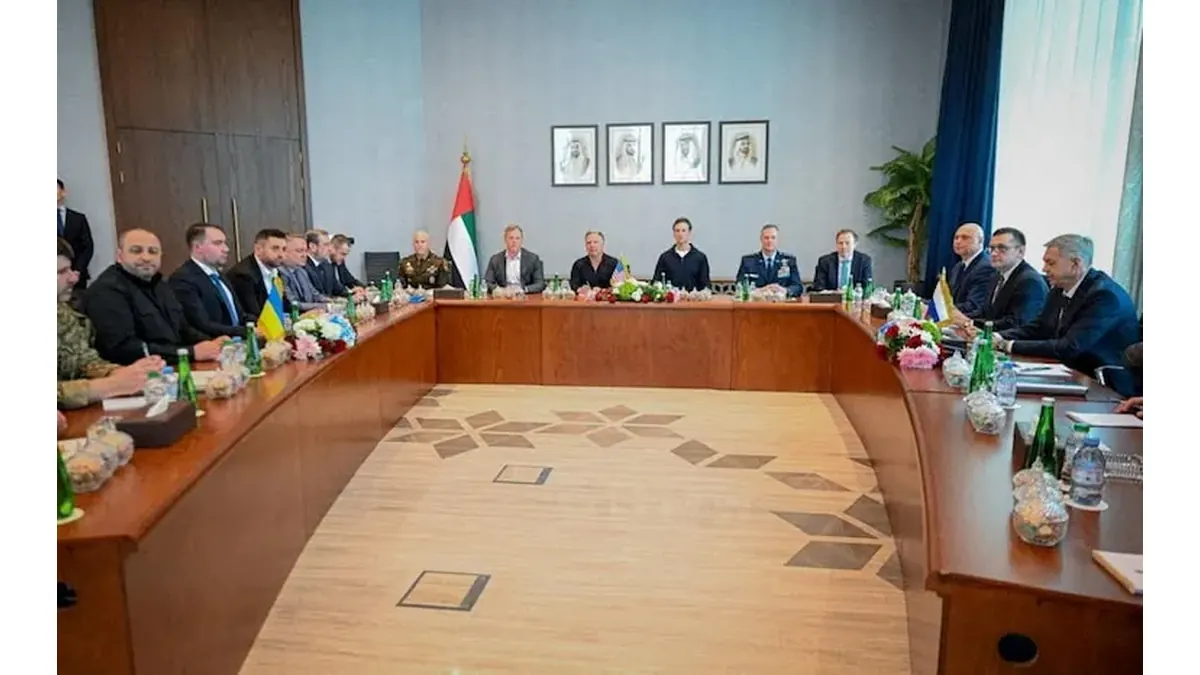
The talks ended with an agreement, but it wasn't a peace deal. Russia and Ukraine have agreed in principle to a major exchange of prisoners of war after two days of US-mediated discussions in Abu Dhabi. The negotiations produced no major breakthrough on ending the war.
This was the first meeting between the Russian and Ukrainian delegations since February. Washington has been trying to revive negotiations that have struggled to produce results. The prisoner agreement is a concrete outcome, but the questions that have kept the two sides apart are still there.
US envoy Jared Kushner announced the prisoner agreement after Wednesday's meeting. He said both sides had agreed to what could be their biggest humanitarian release of prisoners, with the final numbers expected to be confirmed on Thursday. Russian negotiator Vladimir Medinsky and Ukraine's Rustem Umerov also confirmed the arrangement, although Medinsky stressed that it had been agreed in principle.
A Russian official, Alexander Zorin, said the exchange could take place within two to three weeks. He described it as potentially one of the largest swaps since the 1,000-for-1,000 exchange last year. The exact number of prisoners involved in the latest arrangement has not yet been announced.
The talks also covered the return of Ukrainian civilians held in captivity and children taken from the country. Zelenskyy had described the first day's discussions as constructive and said humanitarian issues and security guarantees were among the subjects discussed. The prisoner exchange is the clearest result so far, but it does not mean the two sides are close to agreeing on a ceasefire.
Territory continues to be the biggest obstacle. Russia wants Ukraine to withdraw from the parts of the Donbas region that remain under Kyiv's control. Ukraine has rejected the demand. Zelenskyy has also argued that territorial decisions are sensitive and should be discussed directly by the leaders.
Security guarantees are another unresolved issue. Ukraine wants assurances that Russia will not launch another invasion after a settlement. Moscow has its own security demands, including its objections to NATO's presence and expansion in the region. Kushner said the discussions had made progress on a post-war security framework, but he did not provide details of what had been agreed.
There is also the question of trust. Kushner acknowledged that neither side currently trusts the other, which he said was understandable after years of war. That remains a problem for any agreement that requires both governments to make commitments about what happens after the fighting stops.
European representatives from national governments, the European Union and NATO were in Abu Dhabi, but they did not take part in the main trilateral negotiations. Ukraine held separate discussions with them. Kyiv wants Europe involved in future talks, arguing that decisions about the continent's security cannot be made without European countries.
Russia has taken a different position. Medinsky said his delegation had not communicated with European representatives and questioned what there was to discuss with them. Kremlin spokesperson Dmitry Peskov said European countries could eventually participate, but criticised their current position towards Moscow.
Kushner said the United States would raise the possibility of bringing Europe into a wider negotiating format during the next meetings with Putin and Zelenskyy. European involvement is likely to matter particularly when security guarantees are discussed. Ukraine wants protection against another Russian attack, while European governments would have a direct interest in any arrangement affecting the continent's security.
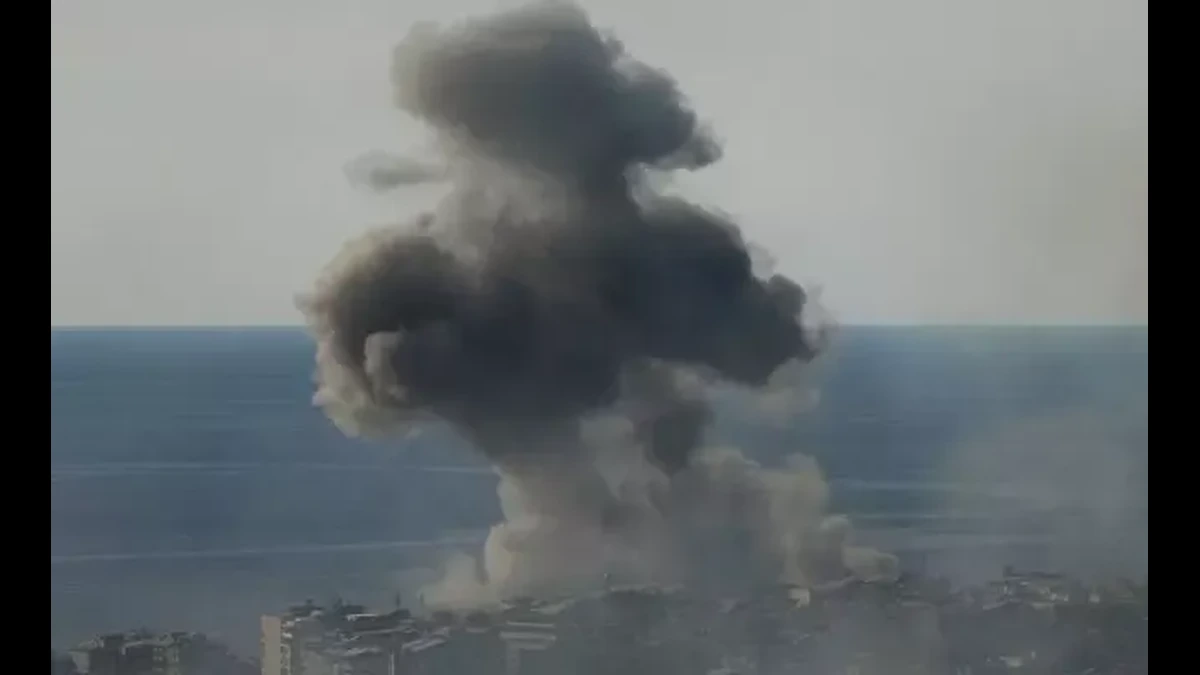
The negotiations took place against the backdrop of continued attacks. A Russian strike on a market in Ukraine's southern Odesa region killed three people and injured 11, according to local authorities. Russian attacks also hit Zaporizhzhia and Kharkiv, injuring seven civilians and damaging property.
Russia's Defence Ministry said its air defences had downed 627 Ukrainian drones overnight. Alexander Drozdenko, governor of the Leningrad region, said drones had caused a fire at the port of Ust-Luga, one of Russia's major oil-export facilities. Three workers were reportedly injured.
Separately, Ukrainian authorities reported capturing a 49-year-old Indonesian man in the Zaporizhzhia region. He reportedly said he had been recruited by Russia after being offered what he believed was construction work in Moscow. Indonesia's Foreign Ministry said its embassy in Kyiv was seeking access to him. Ukrainian and Russian officials had not immediately commented on the case.
Kushner and Witkoff are expected to travel to Moscow on Thursday to meet Putin and brief him on the discussions. They will then travel to Dublin to meet Zelenskyy. The meetings are expected to focus on the proposals discussed in Abu Dhabi and whether further negotiations can move the process forward.
The next meetings may also clarify whether the United States can persuade Moscow to accept a wider format involving European representatives. For now, neither side has publicly indicated a change in its position on the central territorial dispute.
The final number of prisoners to be exchanged has not been confirmed, and the exact date of the release remains unclear. There is also no public agreement on the security framework, the future of Donbas or the terms of a possible ceasefire.
The Abu Dhabi talks have produced a humanitarian agreement, but not a political settlement. Whether the meetings with Putin and Zelenskyy can take the negotiations further remains to be seen.