It all began, according to reports by the police, in the manner in which many online connections begin, an Instagram message.
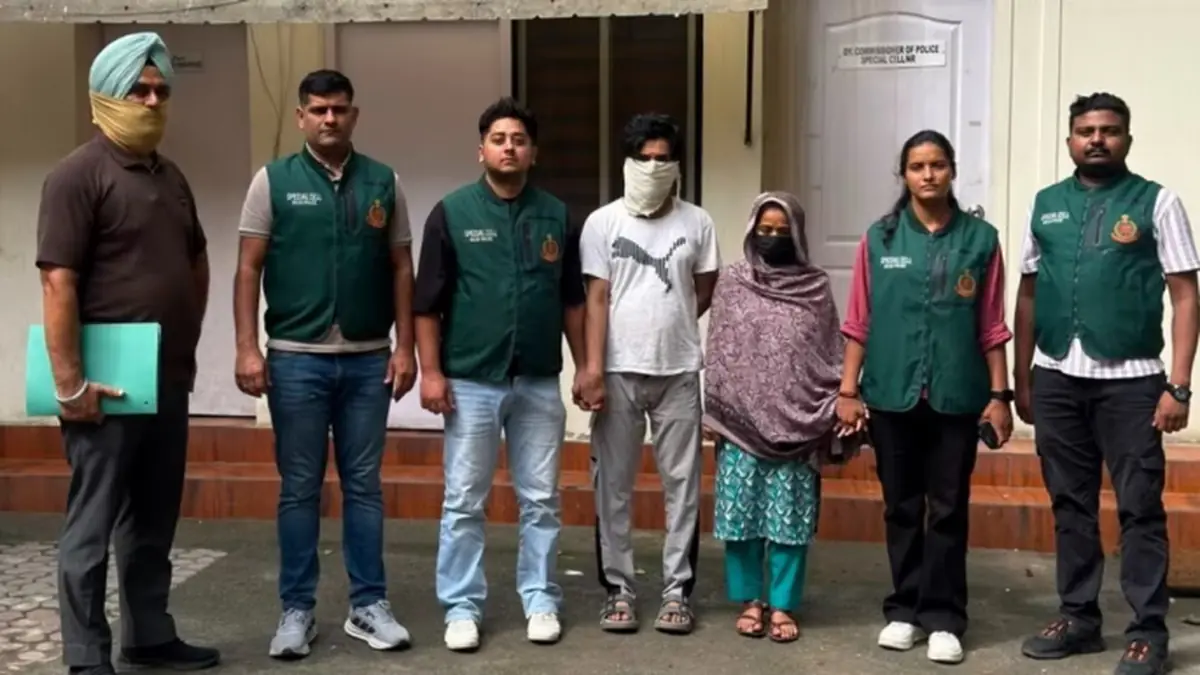
Delhi Police have arrested a couple reportedly associated with an espionage group based out of Pakistan, and have accused them of providing Indian SIM cards through Dubai and helping out Pakistani intelligence officials with their WhatsApp-based operations.
The accused include Mohammad Sahil, aged 25 years, and his wife, Sameera, aged 21 years, a young couple from Delhi who are reportedly engaged in espionage operations for Pakistani intelligence for the past two years.
The link was not engineered right from the beginning; it came up from what seemed, at first sight, to be just a routine internet engagement.
As per the police, Sahil was introduced to a Pakistani spy through Instagram by his wife, Sameera, back in 2024. It was this spy who connected the duo with another intelligence spy who used them for money.
The DCP Chaitanya, who is handling the case, explained, "The role of Sahil and Sameera was that of providing logistic support in Delhi and recruiting spies for espionage and other activities."
The function of the couple, according to the investigators, revolved around a particular, rather low-tech logistics process—the Indian SIM cards being transported from Dubai to Pakistan.
According to police, the couple had shipped eight Indian SIM cards to Pakistan through Dubai from 2024 to 2025 and had received Rs 30,000 in payment for their services.
The use of these SIM cards was the whole point of this process. The police have accused the couple of using these SIM cards for creating WhatsApp accounts in order to contact and collect information from Indians, with Sahil also engaged in other espionage activities.
Apart from the SIM operations, further reports have indicated a history of alleged intelligence gathering associated with the pair.
In one report, the couple is alleged to be spying on cantonment areas for about two years, and leaking military information via WhatsApp, apart from the SIM activities – if proven true, then the couple’s involvement would definitely go way beyond courier services.
The investigators have found Sahil to have had a fairly unremarkable past for the man who is currently under major espionage charges.
He graduated from Indira Gandhi National Open University, was working with a lawyer, and himself intended to enroll in a course in law – none of which provides any clear hint about the nature of activities he allegedly indulged in for the past two years.
"The breakthrough came from forensic examination of his mobile phone itself," says Chaitanya.
"Analysis of his mobile phone helped us track his incriminating chats with the Pakistani operatives," he adds—the key evidence that seems to be the core of the entire case against the couple.
The arrest, on the other hand, was made following an intelligence input about the overall ISI-linked espionage network in Delhi-NCR.
The Northern Range of the Special Cell, Delhi Police, had busted the entire espionage network, and the arrest of this couple happened as investigators tracked the structure of the module down to the individuals who provided logistics to them.
More than just these arrests, what makes this case important is what it can tell us about the way that the larger espionage cell has been run according to these allegations.
The group used locals in Delhi for the task of procuring Indian SIM cards, after which WhatsApp accounts were activated using these numbers, with Pakistani intelligence agents contacting Indians through these accounts in order to get information.
According to the investigation, interrogations of Sahil and Sameera have given important insights into the structure and working of the entire network, especially with regard to Pakistani handlers and their methods of communicating with the overground operators and sleepers through encrypted messaging apps.
The Sahil-Sameera case is just the tip of the iceberg — it is yet another instance in the series of almost identical SIM card cases against Pakistan, that have been cracked by Delhi Police's Special Cell.
In one such case, a 34-year-old man of Rajasthan, called Kasim, was arrested for helping Pakistanis use Indian phone numbers for their intelligence operations, following the discovery of the fact that he had visited Pakistan twice in August 2024 and March 2025, spending 90 days in the country and meeting ISI officials on those two occasions.
In yet another case, a Nepalese man Prabhat Kumar was arrested because he had been promised a US visa and an opportunity to be a journalist abroad in return for 16 SIM cards issued in his name through the Aadhaar system, 11 of which have been operating from Lahore and Bahawalpur in Pakistan on WhatsApp.
What stands out among these is how steady the methodology has stayed despite huge differences in terms of individual recruits and the unique situations they find themselves in.
Back in the days when Delhi saw another similar episode, the police had discovered a pre-activated Vodafone SIM card on a false identity used in the India-Pakistan border region for reaching out to agents in India—which, in turn, had been part of a wider network of spies that had resulted in the arrest of active as well as retired members of the Indian Army, along with a Border Security Force officer.
Even the means of recruiting have shown similarities to old cases. In one such case earlier, an officer of the Indian Air Force had reportedly been lured using fake Facebook accounts created to make him believe they were of some women before getting him to pass sensitive information to Pakistanis through WhatsApp.
This repeated emphasis on Indian SIM cards is not an accident; rather, it is linked to a particular necessity on the part of the handlers operating out of Pakistan.
It gives credibility and legitimacy to the communication between the handler and the target, as the Indian citizen—especially any in the military or at sensitive locations – is more likely to respond to a call from what appears to be an Indian number.
With Sahil and Sameera being arrested and having their phones provide forensics proving communications with agents from Pakistan, the next step for investigators would be to map out the rest of the network structure and find out about other recruits in Delhi that could have provided such logistical assistance.
Considering how frequently such incidents have allowed investigators to find connections to larger networks operating in several states and, sometimes, foreigners who were similarly lured in, it is not unlikely that more arrests will follow in connection with this module.