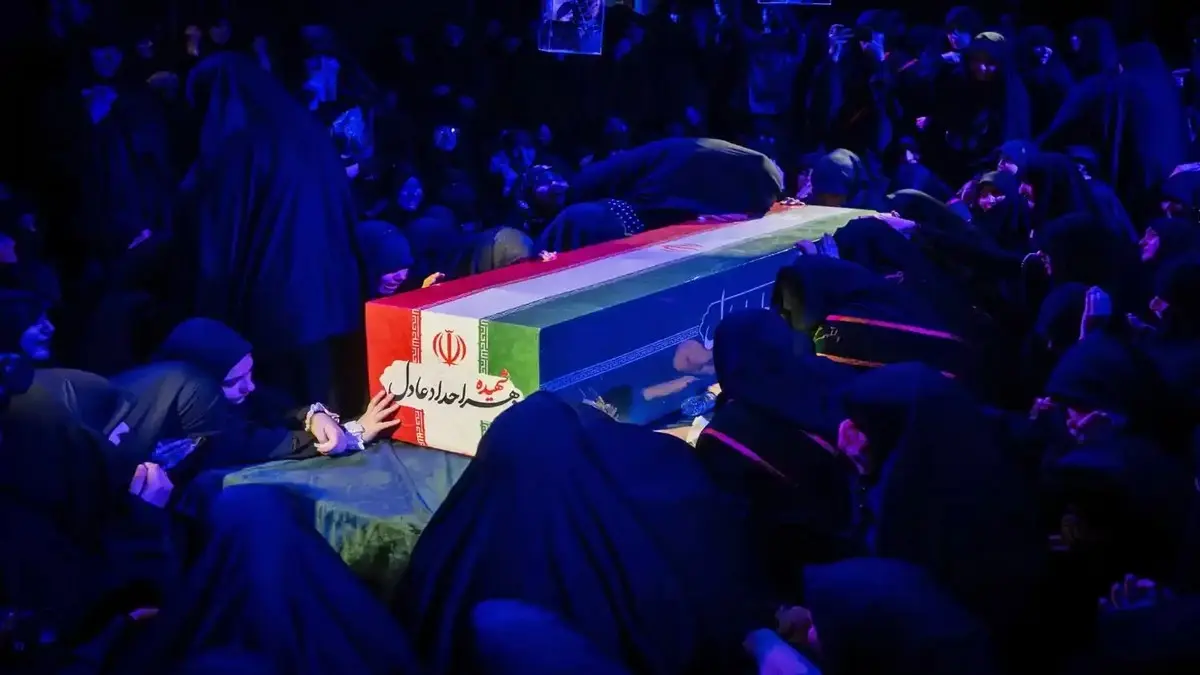
Tributes pour in for the former supreme leader as Iranians gather from five cities in Iran and Iraq, months after his death during initial attacks of the US and Israel-led war against the Islamic Republic of Iran.
Iran has commenced six days of state funeral for its late supreme leader, Ayatollah Ali Khamenei, who was assassinated on February 28 this year during the first attacks by US and Israel-led forces against the Islamic Republic of Iran. The funeral ceremony has commenced from July 4, when the body of the late leader lies in state at the Grand Mosalla prayer complex in Tehran.
As many as 15 to 20 million people are expected to pay their tributes in what will be the biggest ever state funeral in the history of the country.
Based on the official report from Iran, the processions will take place in three Iranian cities and two cities of Iraq that are important for Shiites:
- July 4 to 6: Three-day program in Tehran and a final funeral procession on July 6 in Tehran. The sky above Tehran will be entirely closed during those three days.
- July 7: The body of Khamenei will be transferred to Qom.
- Coming days: The procession will go to Najaf and Karbala in Iraq.
- July 9: Conclusion of the procession in Mashhad.
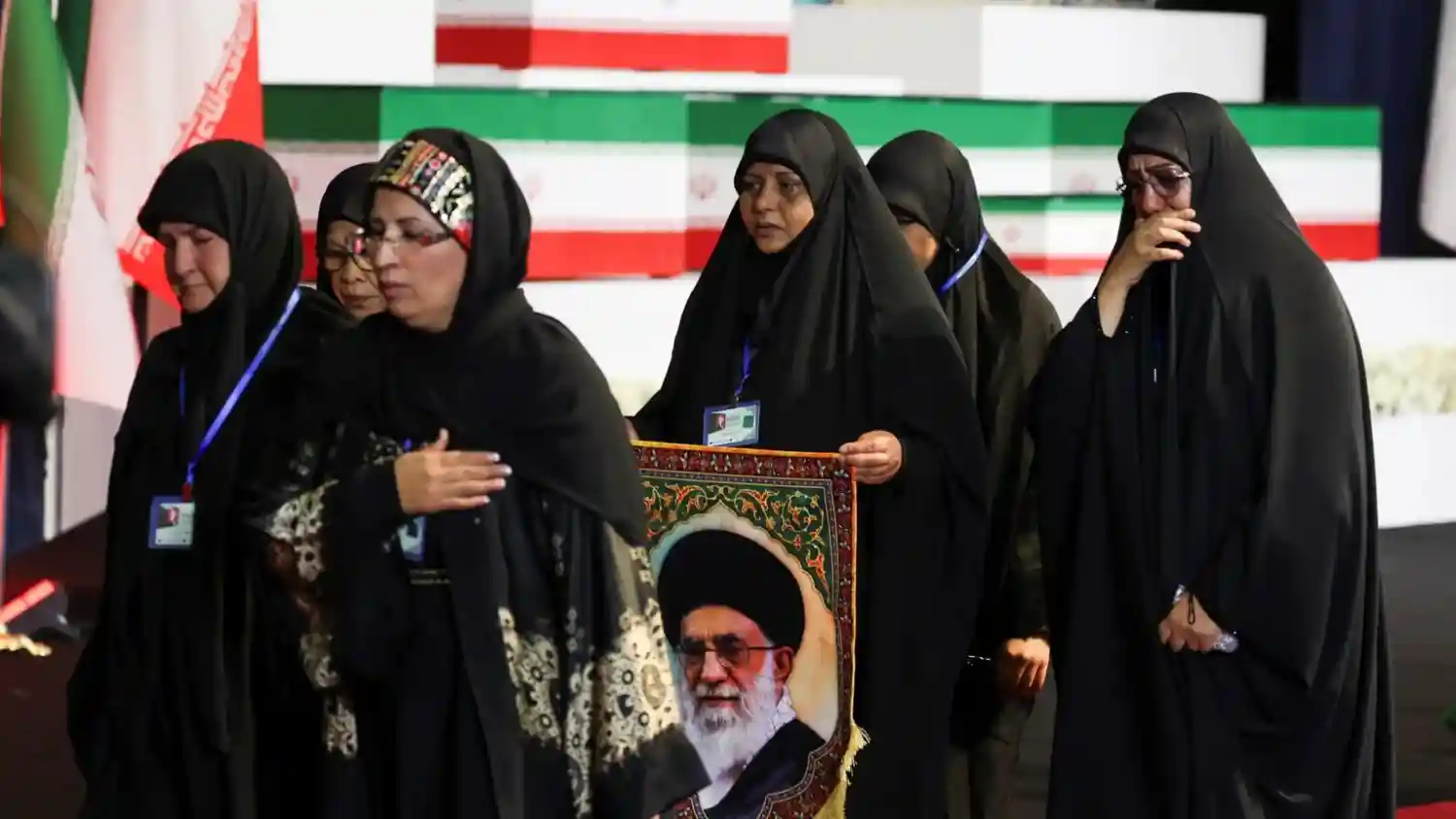
Photo: @ Reuters
Khamenei is the current Supreme Leader of Iran who has held the office for the past 37 years and is at present the second longest-serving individual to hold this office since the founding of the Islamic Republic of Iran in 1979. Being born in 1939 in the town of Mashhad, Khamenei was previously the president of Iran from 1981 to 1989. Khamenei became the Supreme Leader of Iran after the demise of Ayatollah Khomeini through the Assembly of Experts.
Throughout the years, Khamenei managed to exert full control over the political processes in Iran and reduce all the opposition groups to marginal status, being quite hostile towards the West.
Khamenei passed away at the age of 86 in his home in Tehran at the start of the war. It is reported that Khamenei’s body was not embalmed and stored in cold temperatures for many months due to the war.
The funeral is being held at an especially sensitive juncture in U.S.-Iranian relations. The memorandum of understanding, signed by both nations on June 17, created a 60-day period for talks regarding the Strait of Hormuz, Iran’s nuclear program, and sanctions relief.
The talks were interrupted temporarily for the funeral, although President Trump and mediators from Qatar and Pakistan have stated that progress has been made this week. The core disagreementspersist—particularlyy the dispute over Iran’s nuclear program, which has its origins in the 2015 JCPOA nuclear deal that Trump pulled out of in 2018.
President Asif Ali Zardari and Prime Minister Shehbaz Sharif of Pakistan will be sending their representatives for the ceremony of mourning, while it still is unknown if any leaders of Gulf Arab states (who were also victims of Iranian missiles and drones), Russia, and China will make an appearance and at what level.
The question about whether the new Supreme Leader of Iran will show up at the funeral is also still open, as it is yet unknown if Mojtaba Khamenei will be making a public appearance. US media reported, according to sources from the government of Iran, that Mojtaba Khamenei suffered severe injuries as a result of attacks on his father and had surgery multiple times, though the country did not confirm this information.
It is also known that the new Supreme Leader is now in hiding and communicating only with a small number of officials, one of whom is the Revolutionary Guards general, Ahmad Vahidi.
The scope of the event to be organized is reminiscent of three previous occasions of massive mourning in the history of Iran:
The funeral for the founder of the Islamic Republic was marked by a loss of control as the crowd overwhelmed the ceremony. It took them close to losing the body itself, ripping pieces from the burial shroud, and using a helicopter to transfer it. From all of the chaos ensued the choice of Ali Khamenei as Khomeini’s successor, an act that even surprised Khamenei himself.
The Quds Force commander, killed in a drone attack ordered by Trump in his first year of presidency, was mourned in eight different cities in Iran and Iraq. A massive crowd crush occurred at the funeral in Soleimani’s hometown of Kerman.
Raisi died in a helicopter crash in northwest Iran, and the funeral for him was attended by thousands of people in various cities.
Considering the number of people mourning that can be in the range of 15–20 million, the funeral ceremony will be bigger than any of these three ceremonies.
Iran has issued warnings to the United States and Israel from attacking during the time of the funeral ceremonies. A major security operation has been arranged in which Basij forces and the Revolutionary Guard are being called into action.
The streets and air space of Tehran will be closed down during these ceremonies.
The funeral ceremony has been presented by the officials with a lot of defiance. Speaking at parliament, the speaker of the parliament, Mohammad Bagher Ghalibaf, declared that Iran is going to witness one of the greatest days in its history.