For many years, a position in the ISRO was something of an honor, not something that could be bought for money alone.
The scientists who helped build India’s rockets and satellites usually stayed for decades not because of their salaries but rather because of the excitement of seeing India soar in the sky.
Now this tradition seems to be coming to an end. More than 100 skilled scientists and engineers have left or asked for voluntary retirement in the recent several months.
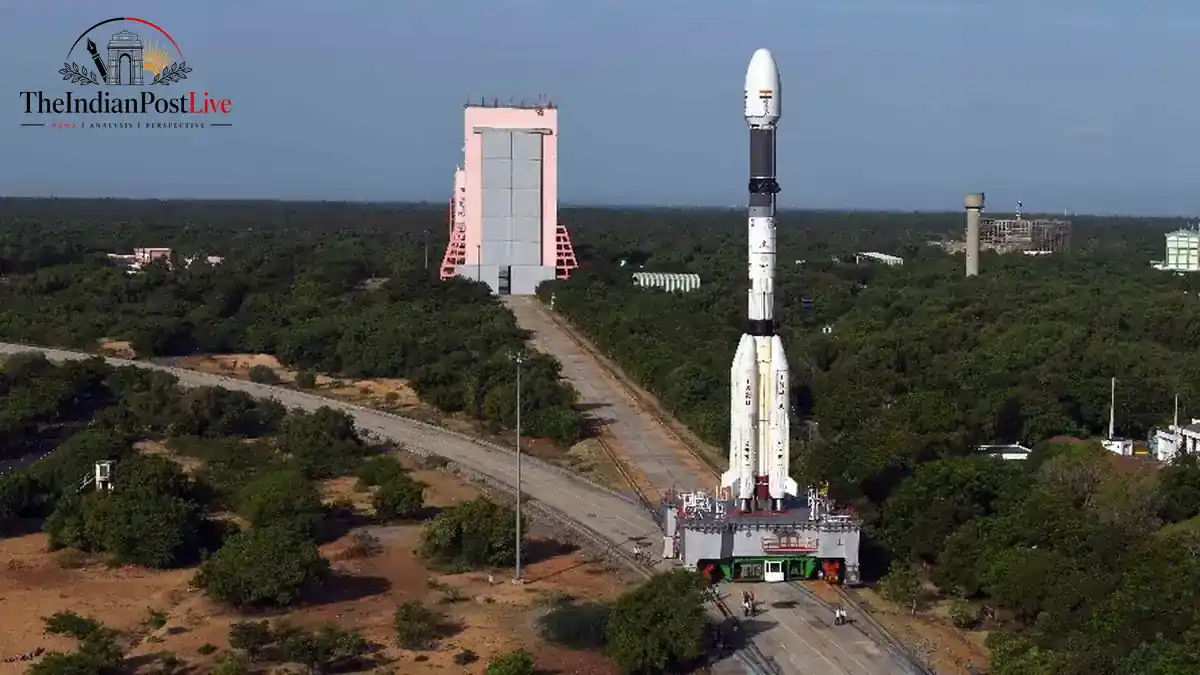
The magnitude of the phenomenon has raised the alarm within India’s space community. Most of the exits have happened from two of ISRO’s most vital centers: U R Rao Satellite Centre (URSC), Bengaluru, which plays a pivotal role in the agency’s satellite design, and the Vikram Sarabhai Space Centre (VSSC), Thiruvananthapuram, which drives launch vehicle design at ISRO.
It has been reported that URSC alone has witnessed around 80 experienced professionals leaving the agency, whereas VSSC has lost at least 20 experienced engineers.
Victor Joseph T, the Project Director for the Geosynchronous Satellite Launch Vehicle Mark III (LVM3) program at VSSC, reportedly left the organization in February following his long-term contribution to the launch vehicle project.
This, together with other exits of equally experienced professionals, has been interpreted to mean that this is no ordinary case of turnover involving entry-level employees; it involves the top technical minds at ISRO—the scientists with institutional knowledge spanning two or three decades.
Acknowledging the resignations but downplaying them as a routine matter for a large organization, the chairman of ISRO, V. Narayanan, has commented on the same. Nevertheless, the government reaction indicates that it is taking these resignations seriously.
On July 14, a memorandum was sent out by the DoS to ISRO's various centers, namely URSC, VSSC, Satish Dhawan Space Center, Liquid Propulsion Systems Center, and others, prohibiting them from approving applications for resignations or voluntary retirements of Group 'A' scientific and technical staff, especially those who were connected with the Gaganyaan human space mission and other crucial missions.
This step effectively cancels a policy introduced in 2020, which gave the power to approve the voluntary exit of scientists to the heads of centers until the Scientist/Engineer-SG grade.
The new rule requires all resignation notices or applications to the Voluntary Retirement Scheme from personnel involved in important space missions to be submitted to the Department of Space in New Delhi, along with a comprehensive report from the center's director.
This step adds one more stage to the procedure of exiting from the service, making it more complicated and less probable.
There are a number of reasons why scientists decide to quit their jobs at ISRO. First, as government workers, scientists have to follow a fixed civil-service pay scale, which lags far behind the market rate of comparable expertise. Apart from low pay, many experienced engineers mention red tape and hierarchy as an obstacle to effective work in the field.
This frustration stems from the sudden availability of an alternate option. The private space industry of India, which did not exist a decade back, has come a long way thanks to the space reforms of 2020 and the formal Indian Space Policy of 2023.
Today, India boasts of over 400 space startup companies that have access to several million dollars in venture funding. Companies like Skyroot Aerospace, Agnikul Cosmos, Pixxel, and Bellatrix Aerospace are working on creating their own launch vehicles and satellite constellations, and these start-ups require people who know all the ins and outs of space travel operations.
The scientists of ISRO, with their operational knowledge accumulated over years, are ideal recruits. For these scientists, the private firms offer salaries twice to thrice the salary they earn in the government, equity shares, flat hierarchy, faster decision-making, and the opportunity to build everything from scratch.
This is especially tricky considering the fact that the ISRO is also concurrently undertaking some of its most daring projects till date – the Gaganyaan human spaceflight mission, the Chandrayaan-4 moon sample return mission, an intended Mangalyaan-2 mission to Mars and the Indian Space Station called the Bharatiya Antariksh Station.
Space human flight does not offer any margin of error.
All systems, including life support systems, crew evacuation systems, and crew-rated launch vehicle systems, have to be faultless in their design and operation, and all this requires uninterrupted continuity of expertise in these areas. Any changes in leadership midway or even any lead engineers leaving in the middle of tests may cause communication problems and delays and, worst of all, put the whole safety aspect of the mission at risk.
Considering the fact that valuable institutional knowledge is leaving the organization in times when the organization cannot afford it, the government's move to stall the resignation process starts making sense.
ISRO is not unique in experiencing this problem. While NASA has been unable to compete with Silicon Valley salaries, it has relied upon its flexibilities in hiring and has used programs such as the Intergovernmental Personnel Act, which enables scientists to spend some time in the private sector or academia before returning back to the agency without giving up scientists permanently.
At the same time, NASA positions itself as the agency of pioneering endeavors and leaves simple tasks related to low Earth orbit operations to the private sector.
In the meantime, ESA gives scientists the opportunity for international mobility, tax-free salaries, and good pension plans, as well as co-funded research agreements between the agency and industries that enable scientists to be engaged in private pioneering projects without leaving the agency.