Each year on the 5th of September, Indians reflect on the selfless beings who lay the foundation for future citizens.
The contributions of teachers touch the life of almost everyone. They mentor, guide and shape individual growth in countless ways that will echo through the entire life of a student.
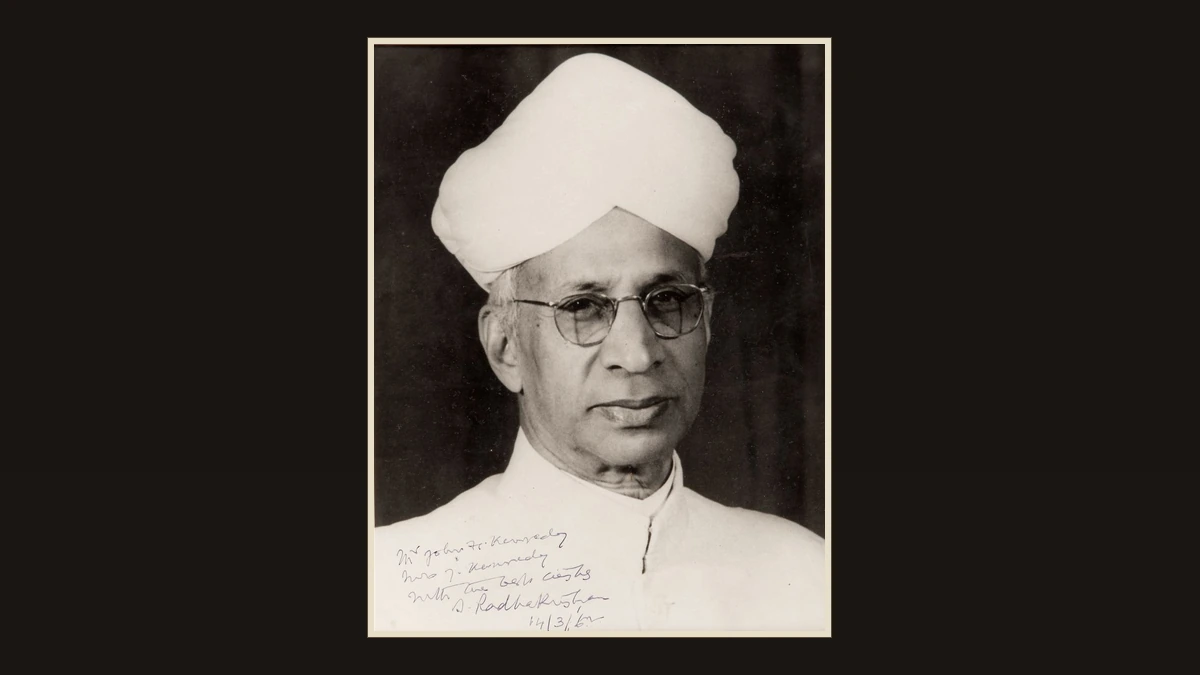
The annual date falls on the birthday of the second president of India, an extraordinary philosopher-teacher who is Dr.
Sarvepalli Radhakrishnan. His student wanted to celebrate him by arranging him birthday bash; but he denied and on the contrary wanted September 5 to be dedicated to all the teachers of India; which eventually took shape as 'Teachers' Day'.
Dr. Radhakrishnan was known for his expertise in Indian Philosophy, but in addition to that, he was also a profoundly devoted and inspiring teacher who gave his prime of life in the field of education. He was an inspiration to generations of students.
Teaching is, 'among the noblest of callings', said an aspiring minister once.
Indeed, it's a profession for which the very destiny of the Nation rest on in an innumerable number of instances, as per Dr. Radhakrishnan
It is true that the nature of learning has been greatly altered with the emergence of such developments in AI, self-paced online tutorials and learning apps-but how does this affect the traditional role of a school teacher in the year 2026?
If only we could replicate it for the amount of fact deliverable by such a course or app, I’m sure we can afford it the equivalent amount in emotional intelligence and adaptability in the blink of an eye-which can in no case be attained from any programmed course or app, which may provide all the facts but cannot see you at times, struggle silently and therefore adjust a lesson in mid-sentence.
Teacher's have a vital role even today. From now on it shifted, only the facts come from machines; teachers have to guide how the students make use of facts and how to think, to be the guide.
Teachers, in most of the schools and colleges of India, are celebrated on the September 5 in more than just one aspect and most of it includes the act of gifting a part of the appreciation to those who have been gifted them with wisdom.
This way, most of the teachers' jobs, for that day, get taken over by students and those young adults go through a session of teaching their junior counterparts where they receive, not just knowledge about the same subject over and over again but also the challenges and pressures in such an endeavor, teaching, a lesson on its self.
The gifting by students includes cards and handwritten appreciation notes etc, while the education authorities acknowledge and felicitate teachers with awards such as the 'best teachers award' to best teachers at state or national level, including the act of talking about the profession.
Even with bouquets and greeting cards filling the classrooms, the larger narrative of teaching in India remains complex.
Numerous teachers, especially those in state-run schools and villages, continue to contend with a lack of basic infrastructure, irregular salary payments, and excessive administrative responsibilities that steal time from instruction.
Student-teacher ratios in some parts of the country also remain very high, thereby posing a hurdle to providing individual attention.
Moreover, a swift and widespread movement toward digital learning has added the pressure of reskilling for teachers to meet the expectations set by a digitalizing world, often lacking any support to do so.
Teacher's Day in this sense remains a time when educationists are honored not necessarily because much has improved, but in annual reflection over efforts being made toward them, to be able to teach children better.
In essence, the relationship between the teacher and the taught remains to be one of life's longest-running and most impactful human connectivities.