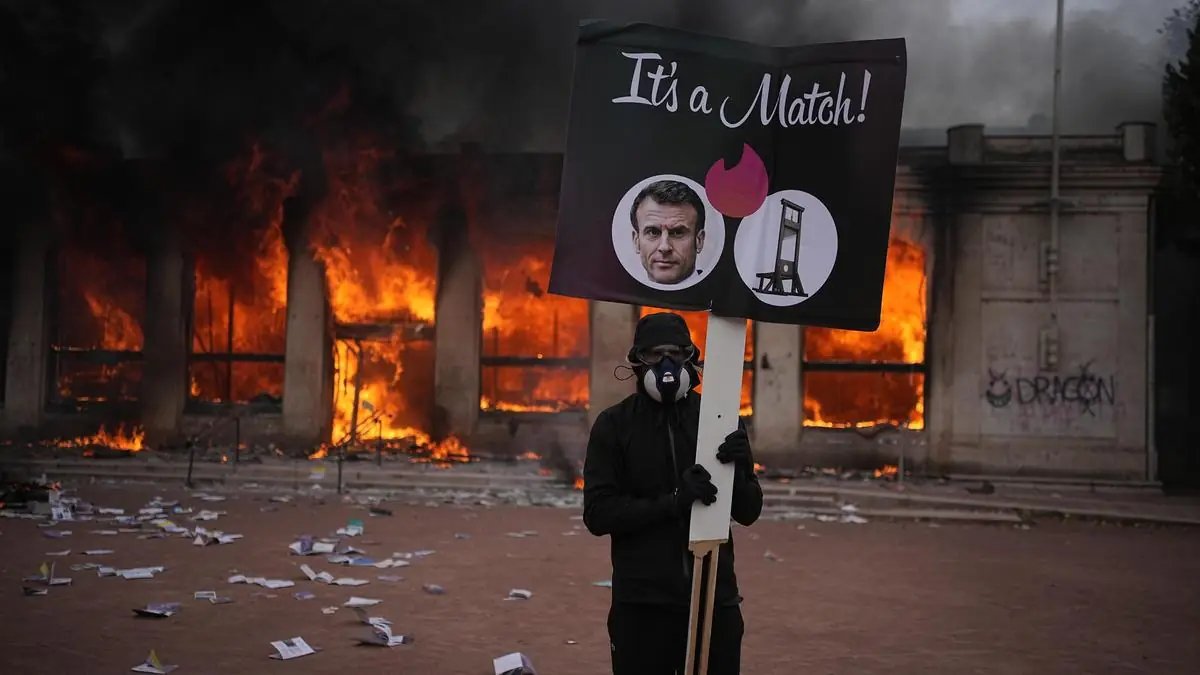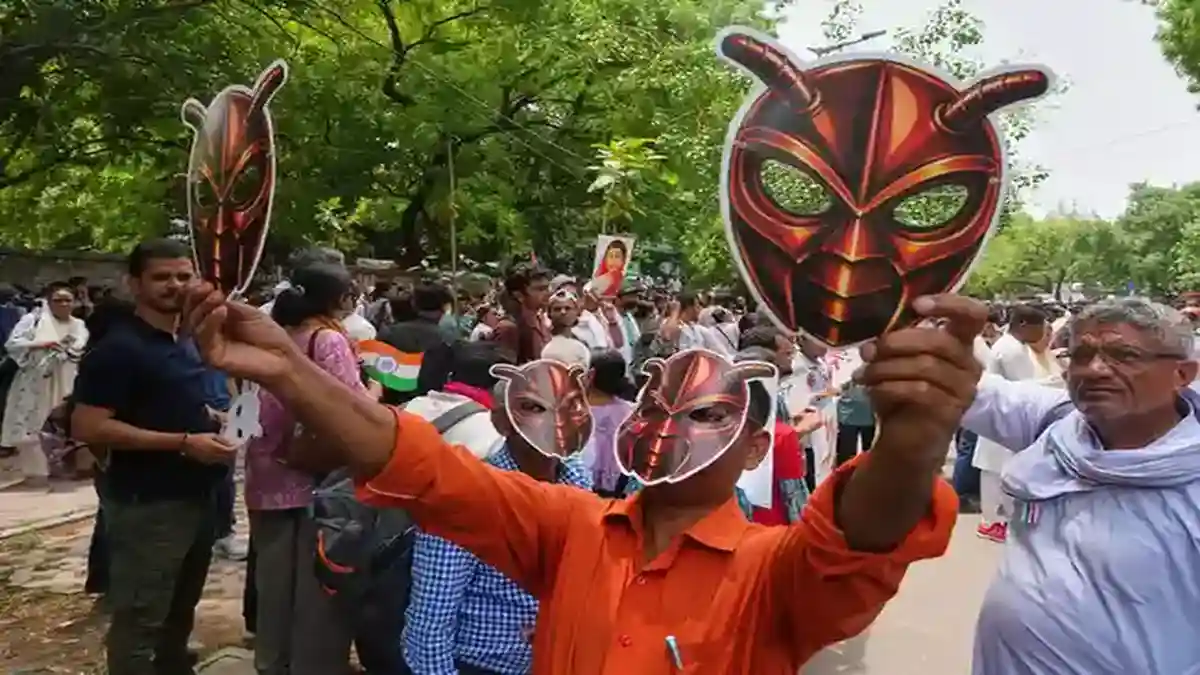
The march, which was organized under the label of the sarcastic name Cockroach Janta Party (CJP), and whose slogan was “Sansad Chalo” or “Chalo Sansad”, started at Jantar Mantar, where the party has been organizing a sit-in since June 20. By dawn’s light, almost a thousand people, including school children in their uniforms, college students, parents, and even seniors, and some protestors wearing cockroach costumes, gathered and started heading towards Parliament Street.
As the Delhi Police had known about the planned rally, the authorities had set barricades in different routes leading to Sansad Marg and Rafi Marg, thereby blocking the heavily secured area surrounding the Parliament House. As per the police sources, the conflict arose around 11:25 in the morning when the protestors tried to take down the barricades.
According to the reports, it was a chaotic scene in which police personnel and RAF men used lathis (batons) to scatter the crowd on the streets of Parliament Street, Patel Chowk and Rail Bhawan, whereas tear gas was fired from various spots as the protestors kept reforming themselves and trying new routes to reach the Parliament building.
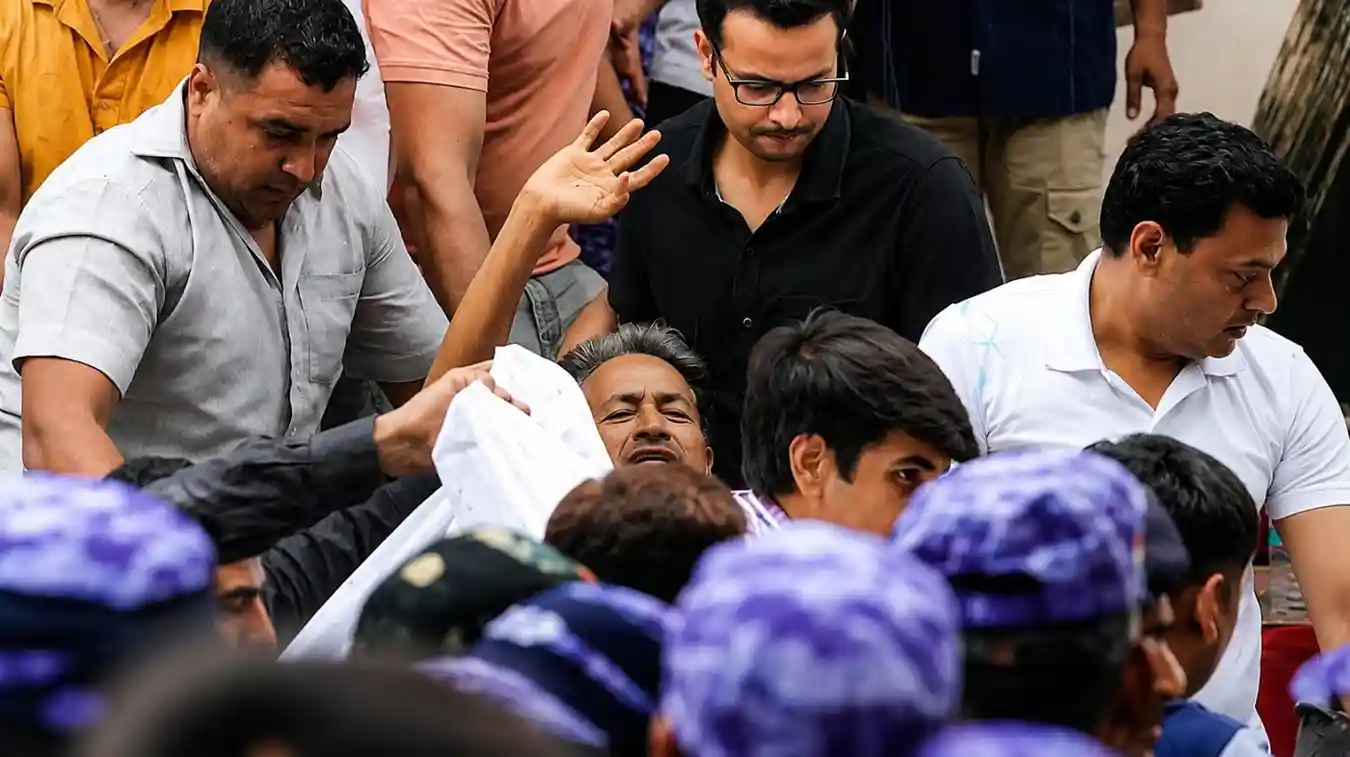
Images provided by the protestors and the media houses revealed some of the protestors.
The campaign of CJP has been based on the issue of irregularities in national entrance examinations, especially the NEET-UG medical entrance examination, along with broader issues associated with the National Testing Agency (NTA), which conducts the test.
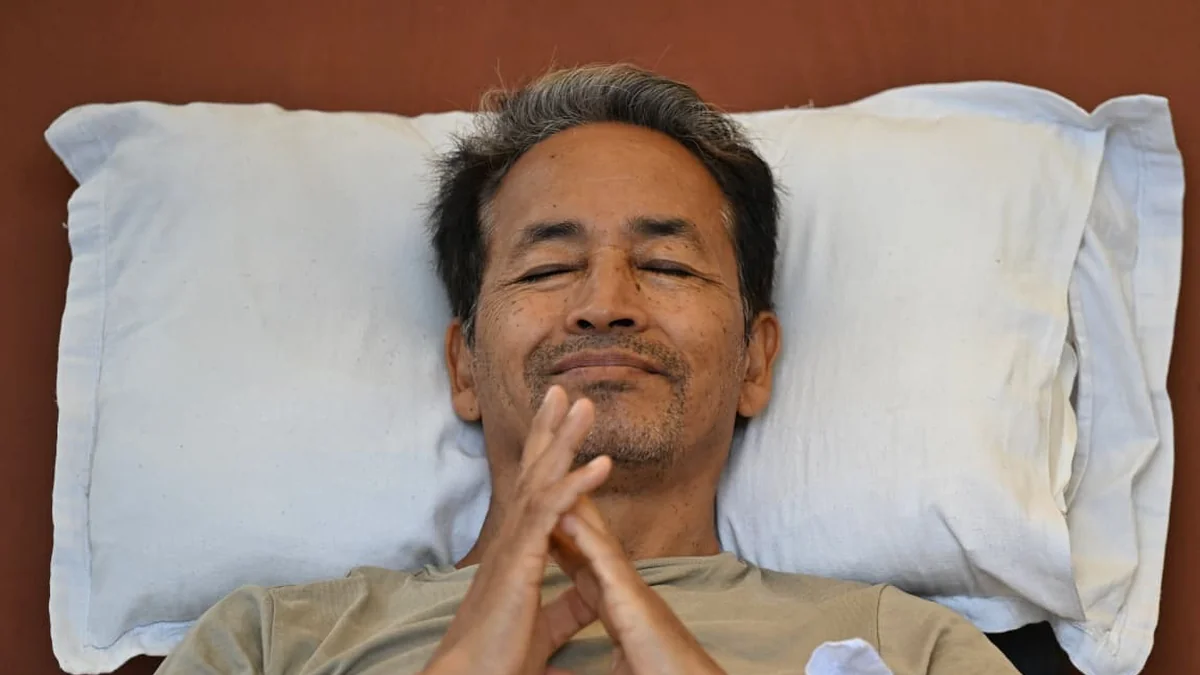
The founder of the campaign, Abhijeet Dipke, sent repeated letters to the Prime Minister Narendra Modi demanding that the family of those who died by committing suicide because of the problems related to the examination should be compensated with roughly ₹1 crore (about $105,000), and the resignation of the Education Minister. According to CJP, the number of deaths increased from 11 to 29 during their sit-in from June 20. Sonam Wangchuk, an educationist and engineer, who is already known for his previous activism in the field of climate and education in Ladakh, has decided to join the protest in order to conduct the indefinite hunger strike lasting one week.
On Friday, he was hospitalized in Safdarjung Hospital after being transported there by Delhi Police. This event only contributed to the mobilization of CJP in anticipation of the march that would take place on Monday.
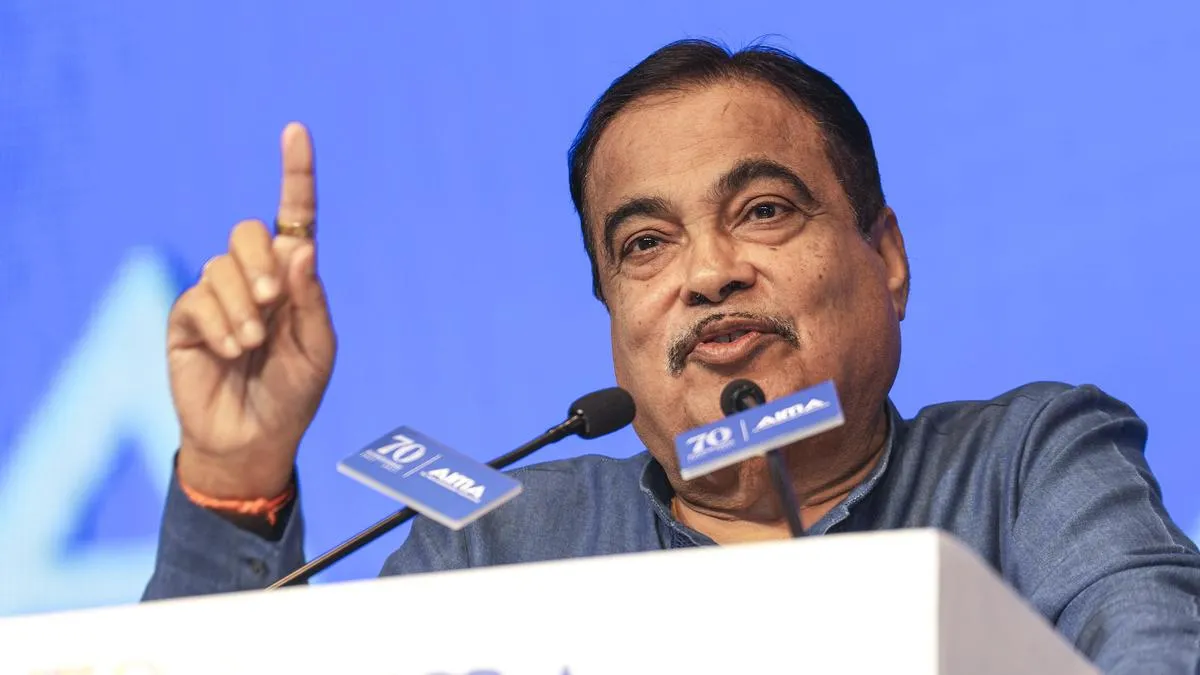
Education Minister Dharmendra Pradhan has already rejected the protest movements, referring to their participants as "disruptive elements" in his television.
In turn, Monday’s protests had immediate reverberations inside the Parliament building itself.
The upper house of India's bicameral Parliament, Rajya Sabha, went through six adjournments during the day, with the opposition members led by Congress demanding answers on NEET-UG.
While raising the issue himself in the House, Leader of Opposition Mallikarjun Kharge noted that the matter concerns the future of lakhs of students, pointing out that at the same time protesters at Jantar Mantan were lathi-charged by the police.
Despite attempts to maintain order by Chairman CP Radhakrishnan and Deputy Chairman Harivansh, the disruption resulted in adjournment of the House, and the proceedings are to continue Tuesday.
At the same time, the first working day of the session provided the opposition members with an opportunity to discuss another controversial issue, namely allegations of theft of donations at the Ram Mandir in Ayodhya.
The leader of the Samajwadi Party, Dimple Yadav, participating in a separate march from Parliament Street to Jantar Mantai, was highly critical about the government because of the alleged violation of the rights of students and youths and demanded the immediate resignation of the Education Minister.
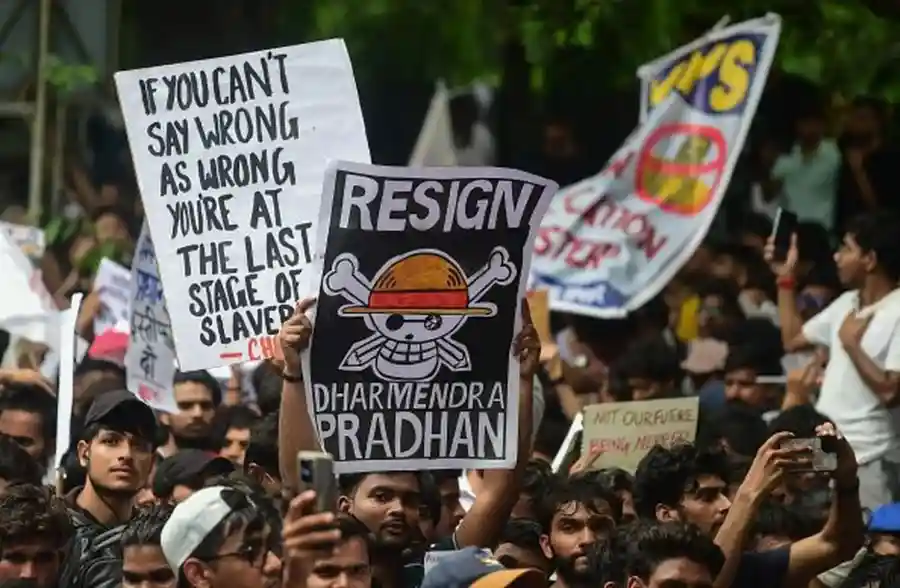
Photo: @Getty Images