The evening of June 24, 2026, started like most public holidays in Venezuela—quiet, domestic, people at home marking the anniversary of an 1821 military victory that helped secure the country's independence from Spain. Then, just after 6 PM, the ground moved.
And thirty-nine seconds later, it moved again. Harder.
A magnitude 7.5 earthquake struck near Venezuela's northern coast, hitting just 40 seconds after a 7.2 foreshock. The epicenter of the first quake was near San Felipe, roughly 100 miles west of Caracas; the second hit close to the nearby town of Yumare. Two earthquakes. One minute. A city shaking apart.
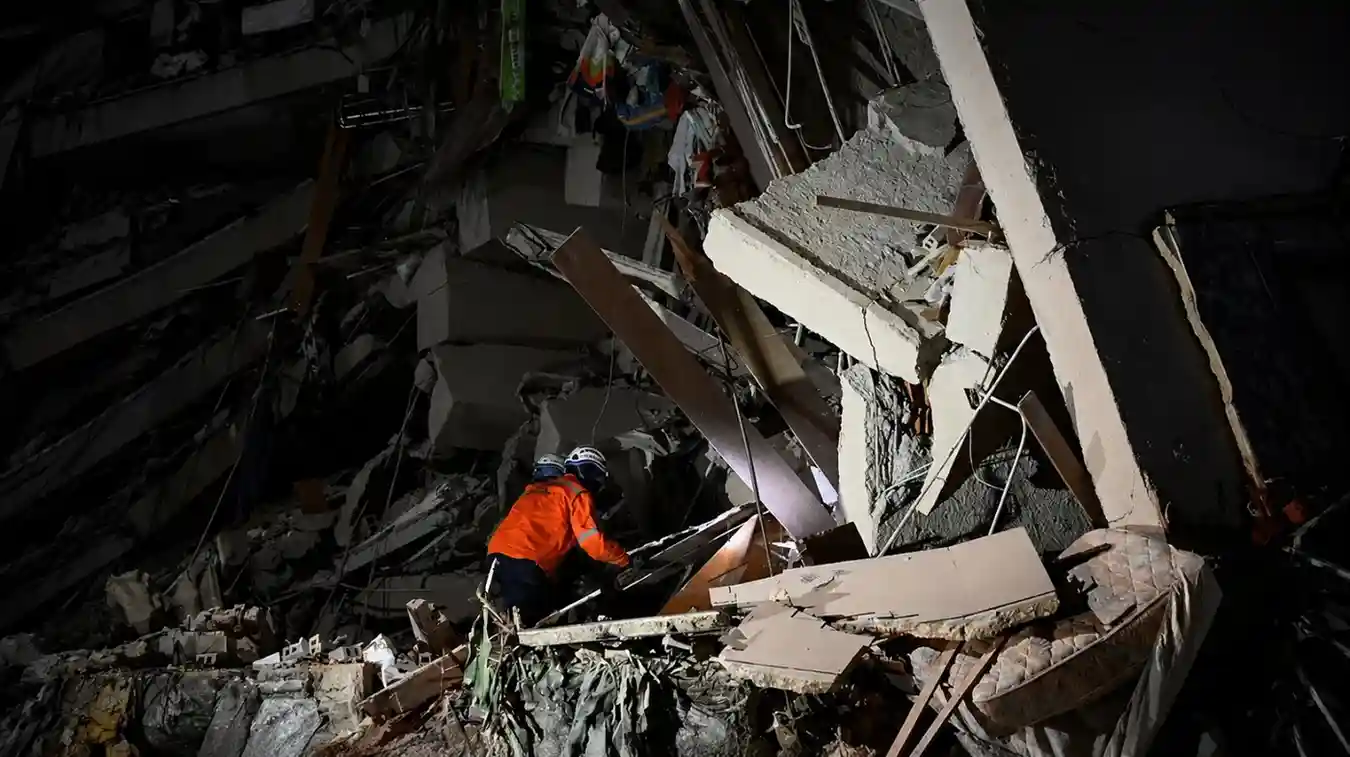
People evacuated swaying buildings and stayed outside for hours—many visibly stunned as they saw entire walls collapsed, furniture visible from the street. Dust columns rose above two Caracas neighborhoods where restaurants and businesses are usually busy on a holiday. An AFP journalist on the ground watched a 22-story building in the Altamira area come down entirely. People were crying out relatives' names as volunteers scrambled over rubble.
One survivor described what escaping felt like: "All the walls were cracked. There was a cloud of smoke that wouldn't let us see. And when we went downstairs, the scene was like a horror movie."
The Timeline
7.2 foreshock strikes near San Felipe
A magnitude 7.2 quake hits roughly 160 km west of Caracas. Buildings begin to sway. Residents scramble for exits — many are home for a national holiday.
A 7.5 mainshock hits near Yumare.
The stronger quake strikes at only a 6-mile depth—shallow enough to funnel full destructive force into Caracas. A 22-story building in Altamira collapses entirely. USGS issues two rare red PAGER alerts, estimating casualties between 10,000 and 100,000. Dust columns rise over the capital.
Tsunami warning issued
The U.S. Tsunami Warning System flags Puerto Rico, the U.S. & British Virgin Islands, Aruba, Curaçao, and Bonaire for hazardous waves.
Tsunami warning withdrawn
No significant waves recorded. Warning cancelled for all regions. Nearly two dozen aftershocks continue to rattle the country through the evening.
State of emergency declared; airport shut
Acting President Delcy Rodríguez addresses the nation. Confirms fatalities — no official count given. Simón Bolívar International Airport closed due to structural damage. Schools were cancelled for several days. All healthcare workers are ordered to report to hospitals immediately. Ministry of Education converts schools into shelters.
International aid mobilizes.
Trump pledges U.S. support. El Salvador offers 300 rescuers and paramedics. Search operations continue through the night.
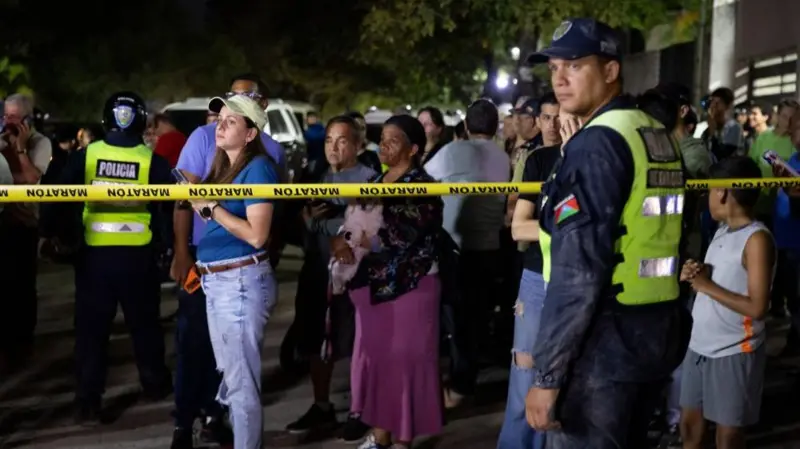
Photo: @ EPA
What made this doublet so lethal wasn't just the magnitude—it was the physics. The first quake struck at about 8 miles deep, while the second was shallower still at 6 miles. Shallow quakes produce stronger ground shaking at the surface. Energy that in a deeper earthquake would dissipate before reaching the surface was delivered almost directly into the foundations of the capital.
The USGS issued two separate red alerts through its PAGER system—a classification it typically uses only once or twice a year globally. The agency's language was unsparing: "High casualties and extensive damage are probable, and the disaster is likely widespread," with an initial death toll estimate ranging from 10,000 to 100,000.
For context, an estimated 30,000 people were killed in the 1812 Caracas earthquake, estimated at a similar magnitude of 7.5 or higher. Wednesday's twin quakes are being called the strongest to hit Venezuela in more than a century. An 80-year-old pensioner in southern Caracas, helped out of her home by police, said it simply: "This earthquake was horrible, even worse than the one in 1967."
The city scrambled. Parts of Caracas lost power and cellphone signal. Collapsed buildings, toppled poles, and debris blocked roads. Interior Minister Diosdado Cabello went on state television urging residents to stay outside—the aftershocks kept arriving. Nearly two dozen of them shook the country through the night.
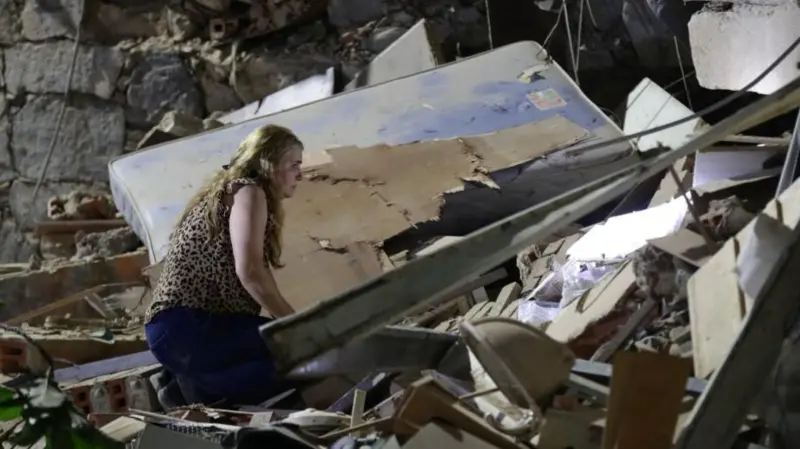
Photo: @ EPA
The U.S. Tsunami Warning System issued a threat for Puerto Rico, the U.S. and British Virgin Islands, and islands off Venezuela's coast, including Aruba, Curaçao, and Bonaire. Coastal communities evacuated. The warning was withdrawn about an hour later with no significant waves recorded—a rare piece of good news in an otherwise brutal evening.
Acting President Delcy Rodríguez declared a state of emergency and announced the closure of Simón Bolívar International Airport due to heavy damage, cancelling classes for several days. She urged all healthcare professionals across the country to report to hospitals immediately and called on the population to remain calm. The Ministry of Education announced schools would be converted into shelters and donation centers overnight.
Trump said the quakes "left a devastating number of deaths" and that early reports were not good. El Salvador's President Nayib Bukele offered 300 rescuers and paramedics for relief operations. International pledges of support followed through the night.
Venezuela sits in a seismically active zone where the Caribbean Plate meets the South American Plate. A fact most residents live with quietly—until a night like this one makes it impossible to ignore. The rubble is still being searched. The missing are still being counted. And the 39 seconds that changed everything are already being called Venezuela's worst natural disaster in living memory.