For years, Riyadh was the one Saudi city the Houthis mostly left alone.
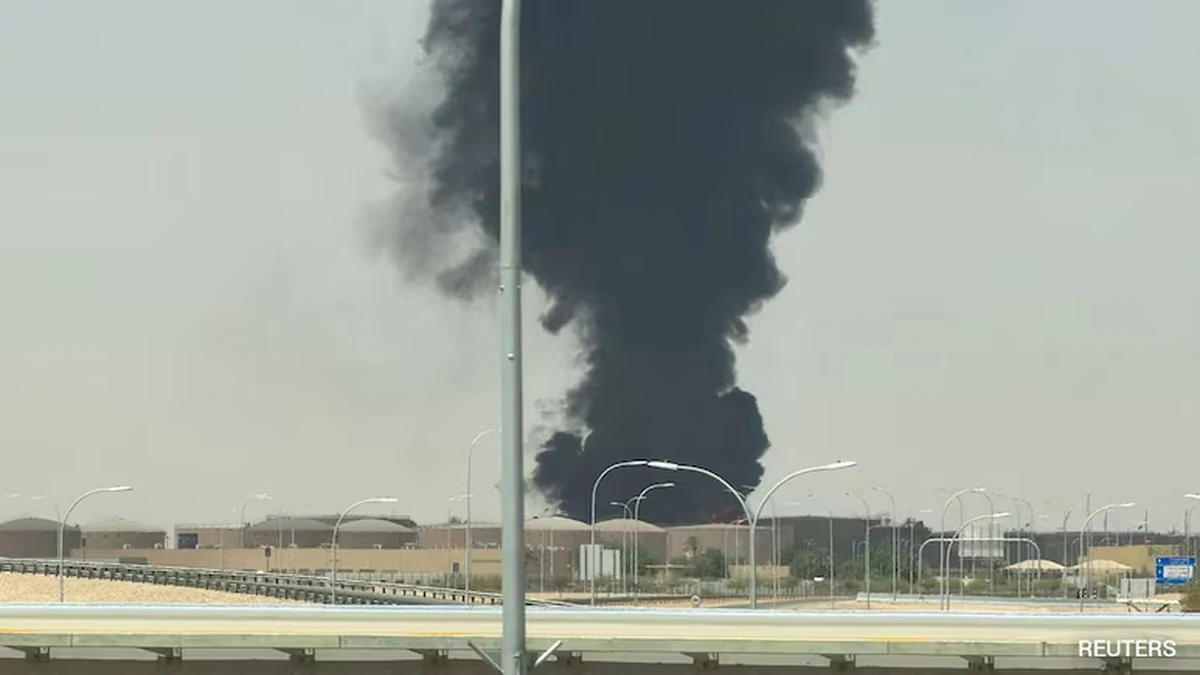
That changed sometime before dawn Saturday. Residents heard explosions first. Then the smoke, black and rising from a fuel depot near King Khalid International Airport, visible enough that people were posting about it before any official said a word.
By the time Saudi authorities confirmed anything, the story had already gotten away from them. A fuel tank branded with the Aramco logo had caught fire at a depot next to the airport. Firefighters put it out. Flightradar24 slapped the airport with its maximum disruption rating. Cancellations and delays followed through the day.
The coalition's version, laid out by spokesman Turki al-Maliki, splits the night in half. First attempt: a ballistic missile aimed at Riyadh, intercepted and destroyed at dawn. Second wave: wider, hitting toward Bisha, Taif, Farasan and Yanbu, all thwarted too, he said.
The Houthis tell it with more specifics, and less humility. Military spokesman Yahya Saree posted on Telegram that Yemeni forces ran two operations, ballistic and cruise missiles plus drones, a lot of them. First one hit what he called sensitive sites in Riyadh. Second hit Aramco facilities in Yanbu, the port city where the kingdom's east-west pipeline actually ends.
Whichever account you trust more, one thing isn't in dispute. This is the first time Riyadh itself has been targeted since this round of fighting reignited. Civil Defense had already been sending warnings across the kingdom overnight Friday about a "hostile aerial threat." But Saturday was the first attempt aimed at the capital specifically, not somewhere closer to the Yemeni border.
King Khalid International isn't some minor strip. Tens of millions of passengers a year. A regional air traffic node well past Saudi borders. The Houthis have gone after it twice before, 2017 and 2018, and both times it got intercepted clean, no visible damage.
Not this time. A missile got through to the fuel storage area, which is a different outcome entirely than an interception. Read into that what you want, but it suggests Saudi air defenses, worn down after months of near-constant bombardment on multiple fronts, aren't catching everything anymore. Nobody official is saying that part out loud. The smoke is saying it for them.
Riyadh wasn't even the only bad headline for the Saudi military this week. On Wednesday the Houthis put out video they say shows a Royal Saudi Air Force F-15 shot down over Marib governorate, hit, according to their spokesman, by a missile they built themselves.
The footage shows a debris field and a scorched tailfin with a Saudi flag insignia still visible. CNN says it hasn't been able to verify or geolocate any of it. Riyadh hasn't said anything either way. If it turns out to be real, trade press has already flagged it as the first combat loss ever for the Advanced Eagle variant of the F-15, which would be a genuinely big deal in a war that's mostly been missiles and drones up to now, not dogfights.
There's a track running underneath all of this that gets a lot less attention. Reuters reported that US officials met Houthi representatives in Oman over the weekend, where the group apparently repeated that it has no plans to attack American vessels and intends to keep holding to a 2025 ceasefire with Washington. Unless, that is, the US steps in directly on Saudi Arabia's side. Multiple outlets have reported that Riyadh actually asked for exactly that, and got turned down.
Sit with that refusal for a second. It means Saudi Arabia is taking the worst of this mostly alone, even as CENTCOM confirms it's helped move roughly a billion barrels of oil through the Strait of Hormuz over the last two months, a separate but connected front in the bigger regional standoff with Iran.
The UN Security Council met earlier this month, after an earlier round of strikes wounded 73 people in southern Saudi Arabia, and warned that Yemen risked falling back into full-scale war for the first time since the 2022 truce. UN envoy Hans Grundberg told the council his own warnings had, in his words, turned into harsh reality. Saturday looks like exactly what he was talking about.
Yemen's Houthis targeted Saudi Arabia's capital directly for the first time since fighting reignited, firing a ballistic missile intercepted before dawn Saturday, followed by a second strike that hit a fuel depot near Riyadh's King Khalid International Airport, sparking a fire and major flight disruptions. The Houthis say they hit sensitive sites in Riyadh and Aramco facilities in Yanbu. The Saudi-led coalition says every attempt, including a wider wave against Bisha, Taif, Farasan and Yanbu, was intercepted. Separately, the Houthis released unverified footage claiming a downed Saudi F-15 over Marib. US officials have reportedly met Houthi representatives in Oman, and Washington turned down a Saudi request to intervene directly, leaving Riyadh largely on its own as the UN warns Yemen is sliding back toward full-scale war.