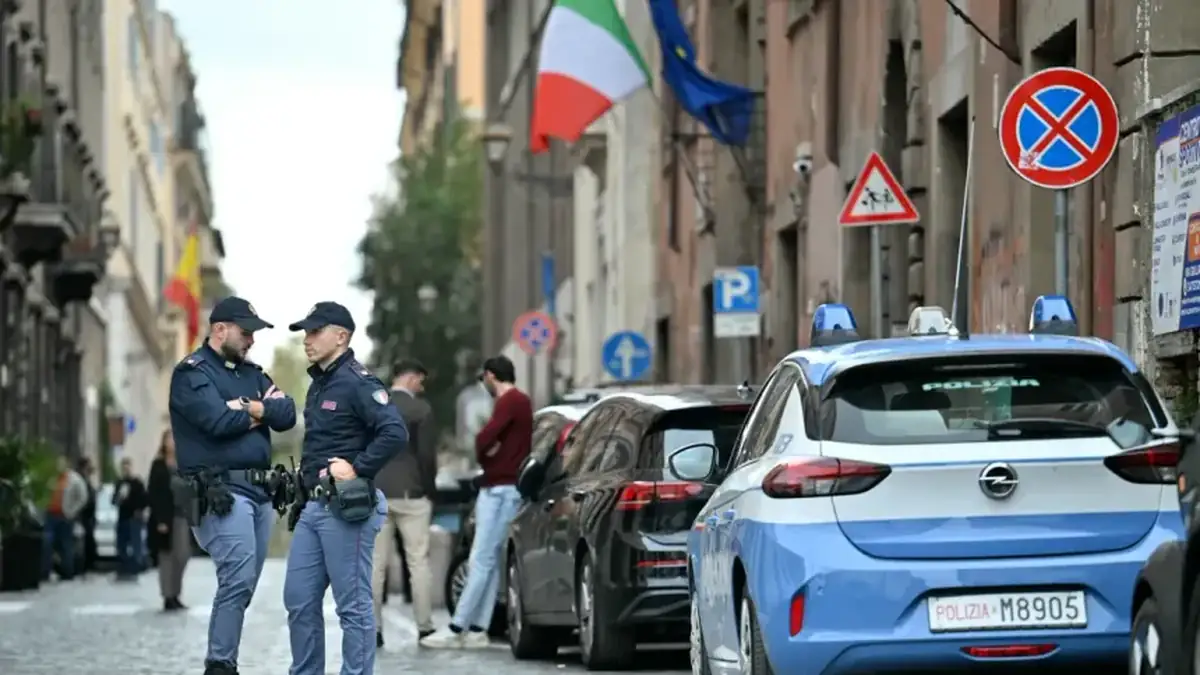
The messages prompted a significant security response in Italy, where schools began evacuating students and staff after receiving warnings of possible bomb attacks. Although the emails reached approximately 6,300 schools, the number evacuated was considerably lower, with at least 300 institutions affected by the precautionary measures.
Italian Education Minister Giuseppe Valditara said the threats were believed to be hoaxes. Nevertheless, the scale of the messages left authorities dealing with a situation that could not simply be dismissed without checks.
The emails were not limited to threats against schools. They also reportedly included threats directed at Prime Minister Giorgia Meloni, adding another dimension to the investigation.
Italy was not the only country targeted. Schools in Scotland and Northern Ireland received messages carrying similar threats. According to reports, around 470 Scottish schools and more than 300 schools in Northern Ireland were sent the emails.
The response in Britain differed from that in Italy. Police in Scotland and Northern Ireland assessed the messages as hoaxes and did not advise schools to evacuate solely because of their contents. The Police Service of Northern Ireland said there were no unusual findings and that the risk to the public was considered low.
Authorities in the Republic of Ireland also received reports of similar messages. The incidents have raised questions about how the same or closely related threats were distributed across several countries within a short period.
The sender's identity remains unknown. A national security source told Reuters that school email addresses were publicly available, making it relatively easy for someone to distribute messages to a large number of institutions.
The investigation is also examining claims made by the purported sender, who reportedly took responsibility for threats involving newsrooms in Ireland and Bulgaria. However, those claims have not established who was behind the campaign.
The fact that the messages reached institutions in several countries has inevitably drawn attention to the possibility of coordinated disruption. That remains a line of concern rather than a confirmed explanation. Authorities have not publicly attributed the incidents to a government, political organisation or other group.
Even when a threat turns out to be false, the response can affect thousands of students, teachers and families. Evacuations interrupt classes, place additional pressure on emergency services and leave parents waiting for information about their children's safety.
Italy's experience on Wednesday illustrates the difference between the number of institutions contacted and the number that actually had to evacuate. But the wider incident also shows how threatening messages can create disruption without an explosive device being found.
Investigators now face the task of identifying the sender and determining whether the incidents were organised by one individual or involved a wider network. Until that is established, the threats should be treated as a cross-border security investigation, not evidence of a confirmed international conspiracy.