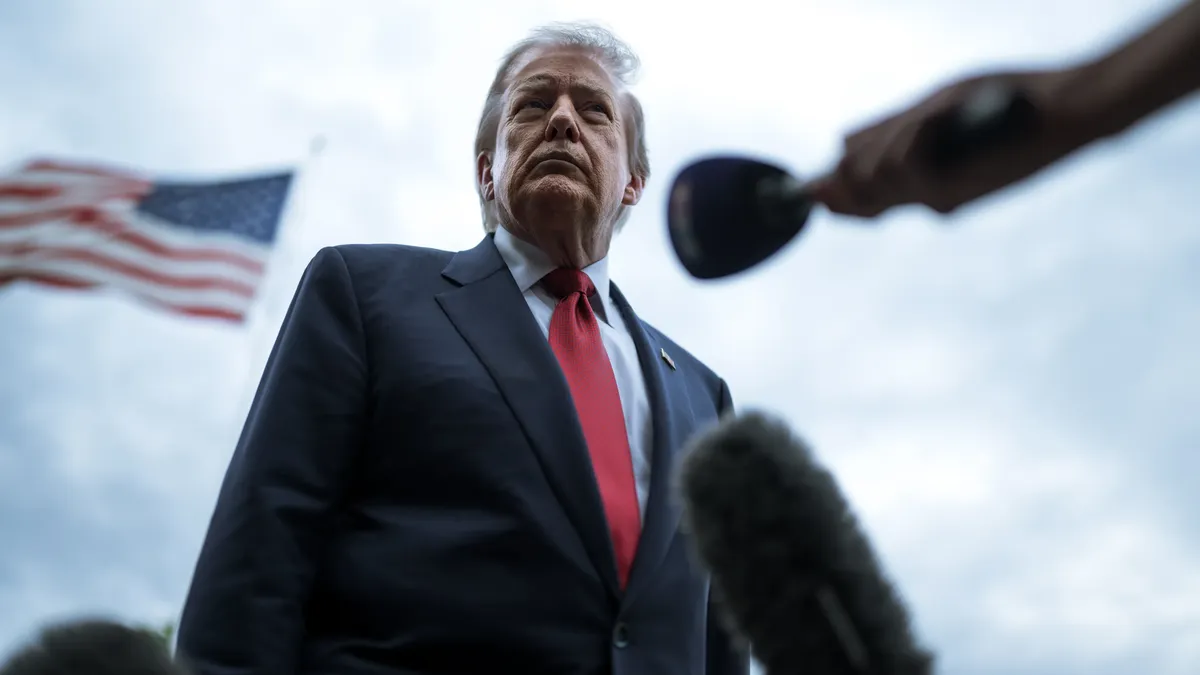
Donald Trump has found an unlikely reference point for his voter ID campaign: India's election machinery. On Monday, the US president took to Truth Social to recall a question he says was put to his administration earlier this month by Gyanesh Kumar, India's Chief Election Commissioner. The question, as Trump told it, was blunt. How can you run elections in the United States without a valid photo ID?
It's the kind of line that fits neatly into a speech, and Trump used it exactly that way.
"India's last Election had 646,000,000 Voters! Less than 1% voted by mail, and every single Voter had to have a VALID Photo Identity Document," Trump wrote, capital letters and all. He closed with his now-familiar demand: "We need to pass THE SAVE AMERICA ACT, now!"
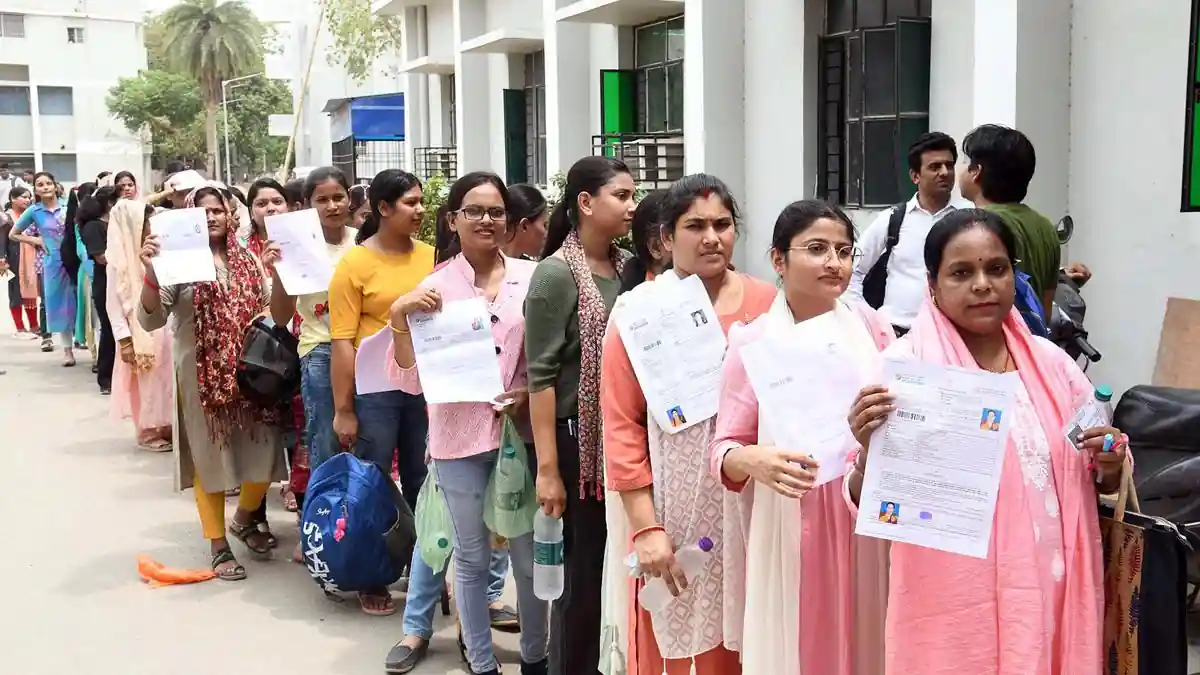
The number checks out, more or less. India's 2024 general election was the largest democratic exercise in human history, and its Election Commission does require voters to show one of several accepted ID documents at the polling booth. Trump's larger point, though, is less about India and more about the legislation he wants Congress to pass at home.
Within hours, the message had already crossed the ocean and back. Sergio Gor, the US ambassador to India, posted his own endorsement on X. "President Donald J. Trump is absolutely correct! 646 MILLION voters, every single one required an ID in India's last election. Congress should pass THE SAVE AMERICA ACT!" Gor's post read almost like an echo, which was probably the point. Having the sitting ambassador validate the president's framing, using India's own numbers, gives the claim an air of diplomatic weight it wouldn't otherwise carry.
This isn't the first time Trump has reached for India as a model. Back in March 2025, an executive order on election reform cited India and Brazil for linking voter identification to biometric databases, contrasting that with what the order called America's reliance on self-attestation of citizenship. So the comparison has some history behind it. It just hasn't gone away.
Formally known as the Safeguard American Voter Eligibility Act, the SAVE America Act would require documentary proof of US citizenship before someone can register to vote in a federal election, along with a valid photo ID at the polls. Acceptable citizenship documents include a US passport or a REAL ID card that specifically denotes citizenship, though only a handful of states currently issue REAL IDs with that marking.
A revised version of the bill narrowly passed the Republican-led House in February on a 218-213 vote, with a single Democrat crossing over. That was actually its second attempt. An earlier version had cleared the House back in April 2024 and then simply stalled in the Senate. This time, Senate Republicans forced the issue onto the floor for debate, and lawmakers voted 51-48 to open discussion, a largely party-line split that gives a sense of how the rest of the fight is likely to go.
Democrats haven't budged. Their objection isn't really about whether voters should have ID. It's about who gets left out. Groups like the Brennan Center for Justice argue that requiring documents like an original birth certificate or passport, matched to a person's current legal name, would disproportionately burden lower-income Americans, married women who changed their surname, and rural voters who don't have easy access to a passport office. Critics also point out that the federal government's own tools for checking voter rolls have found only a tiny handful of flagged non-citizen registrations, most of which turned out to be errors, undercutting the fraud argument Republicans lean on most heavily.
The White House frames it differently. Officials describe the SAVE America Act as a "common sense, bipartisan" measure built on a simple premise, that American citizens and only American citizens should decide American elections. Whether Senate Democrats can be persuaded of that in an election year is a separate question entirely, and right now the answer looks like no.
Trump has leaned into the India comparison before, but the timing here matters. With midterms approaching in November and the Senate having adjourned for a five-week recess without resolving the bill, invoking a democracy that just ran an election of unmatched scale, cleanly and with strict ID checks, is a useful shorthand. It sidesteps the messier debate over access inside the US and instead asks a simpler question: if India can do it, why can't we?
Critics would say that comparison flattens a lot of real differences between the two countries' voting infrastructure, documentation systems, and history of disenfranchisement. Supporters would say the core logic still holds. Either way, the argument isn't going away before the midterms do.
President Trump cited remarks he attributed to India's Chief Election Commissioner Gyanesh Kumar, along with India's 646 million-voter 2024 election, to renew his push for the SAVE America Act, which would mandate proof of citizenship and photo ID for federal voter registration. US Ambassador to India Sergio Gor quickly backed the claim on social media. The bill narrowly passed the House in February and is now facing a divided Senate, where Democrats argue the documentation requirements would disenfranchise millions of eligible citizens, while Republicans maintain the measure is a straightforward election-integrity fix ahead of November's midterms.