Six months into a war that shows no sign of ending, the Trump administration has decided the next battlefield is Iran's bank accounts.
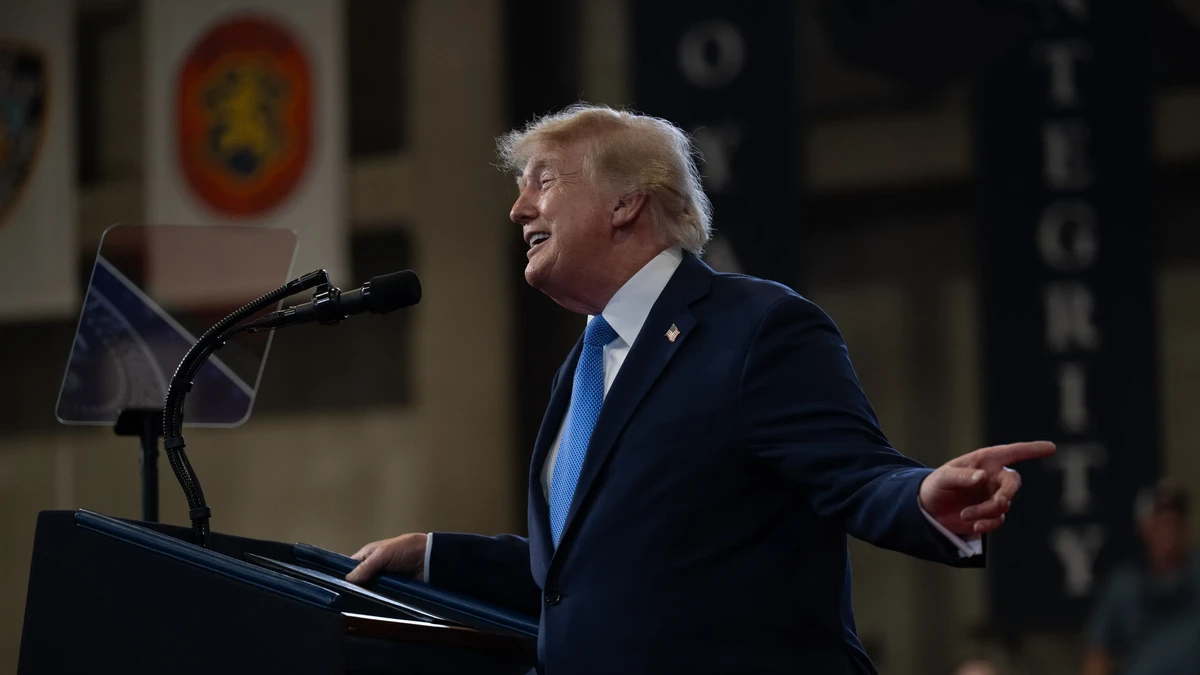
President Donald Trump announced this week that the United States will unleash what he's calling an "economic D-Day" against Tehran, a campaign he says will finally bring the regime to its knees after nearly five decades of American sanctions have failed to do so. Treasury Secretary Scott Bessent is set to lay out the specifics at a press conference on Monday, promising what he described as the most coordinated economic isolation effort the world has ever seen.
Details remain thin for now. But the outline is already visible.
Bessent framed the strategy as a one-two combination: the naval blockade already choking Iran's coastline, paired with sanctions he's calling the toughest in history. The goal, according to officials, isn't just to squeeze Tehran's oil trade the way Washington has done on and off since 1979. It's to cut the country off from any financial lifeline it has left.
The campaign has a name now too: Operation Economic Fury. Early phases targeted entities and individuals buying Iranian oil or banking with Iranian institutions. The next stage, Bessent hinted in a Thursday interview, will go further, threatening secondary sanctions on foreign nations and companies that keep doing business with Tehran at all.
That's a meaningful shift in emphasis. With American weapons stockpiles reportedly thinning and the war deeply unpopular at home, officials are betting that financial pressure can accomplish what airstrikes haven't. Bessent has argued that sustained economic pain removes the need for a return to large-scale military action.
Whether Tehran agrees is another matter. Iran's central bank chief said this week that oil exports have effectively fallen to zero. And yet the government shows no sign of folding.
Here's the complication: two of Iran's biggest remaining customers are China and India, and neither is eager to fall in line.
Beijing has been blunt. Chinese officials said this week that sanctions and pressure campaigns are not a solution, and that neither military strikes nor economic warfare will resolve the underlying conflict. China has also pushed back specifically against U.S. requests to help reopen the Strait of Hormuz, the narrow waterway both sides accuse the other of holding hostage.
India's position has been more measured. Officials there said New Delhi favors a peaceful resolution through dialogue and diplomacy, a familiar hedge for a country that has historically bought discounted Iranian crude while trying not to provoke Washington.
Whether China and India actually change their behavior once Monday's sanctions are unveiled, or simply absorb the penalties and keep trading, will say a lot about how much teeth this "D-Day" really has.
Traders aren't waiting for the fine print. Crude prices have climbed for a second straight week, with some benchmarks nearing the $100 mark as the market prices in tighter supply and rising geopolitical risk. Analysts point to the combined effect of the blockade, the looming sanctions, and general uncertainty over how Iran might retaliate.
That retaliation is the part nobody can predict. Iran's government has called the coming sanctions a form of economic terrorism and promised what it described as a devastating response, though officials have offered no specifics on what that would actually look like. A senior Tehran official said this week the country needs a plan to overcome what it considers unjust American penalties, a signal that Iran expects to weather this the way it has weathered every previous round since the 1979 revolution.
That history is really the crux of the skepticism surrounding Trump's plan. Iran has absorbed sanctions from six different U.S. administrations. Its economy has shrunk, its currency has collapsed repeatedly, and its people have suffered through shortages for generations, yet the regime remains standing.
Some Iran hawks are urging patience, arguing this round is genuinely different in scale and coordination. Other analysts aren't convinced, warning that Washington keeps repeating a strategy that has never actually produced regime change or a policy reversal, just prolonged hardship for ordinary Iranians.
Monday's press conference should clarify how far the administration is willing to go, and which countries it's willing to punish to get there. Until then, the war has effectively entered a new phase: fewer bombs, more balance sheets, and a bet that money can do what missiles couldn't.