For those who might have missed out on this historic event, here’s everything you need to know about it.
For most people, every Independence Day is just like the last one – hoists the tricolour and move on! But there are some moments which make you remember this day for life. And today we saw a ‘first’ after almost 150 years.This one didn't. When Prime Minister Narendra Modi climbed the ramparts of the Red Fort to lead the 80th Independence Day celebrations, the ceremony broke from eighty years of habit — instead of opening with the National Anthem like it always has, it opened with Vande Mataram. An Army band played it in full, and thousands of guests stood and sang along. Nothing like this has ever happened during an Independence Day ceremony.
And when the last note faded, those in attendance sensed they’d witnessed an event worthy of being recalled long after the holiday passed.
None of this was thrown together last minute. Defense Secretary Rajesh Kumar Singh laid out the new sequence a full day ahead of time—the prime minister arrives, the national song plays first, everyone stays standing through it, and then the anthem follows. Small change in order.
Big change in meaning. For the first time, Vande Mataram got a spot at the actual heart of the ceremony, not just a mention somewhere in the program. And officials made a point of saying the decision had been locked in long before it became a talking point online—it traced back to a much older anniversary that had been building quietly for months.
But why this particular date? August 15, 2026, will mark 150 years since Bankim Chandra Chattopadhyay penned his iconic piece Vande Mataram—written during Akshaya Navami on August 15, 1875, when he was based in the small Bengal town of Naihati.
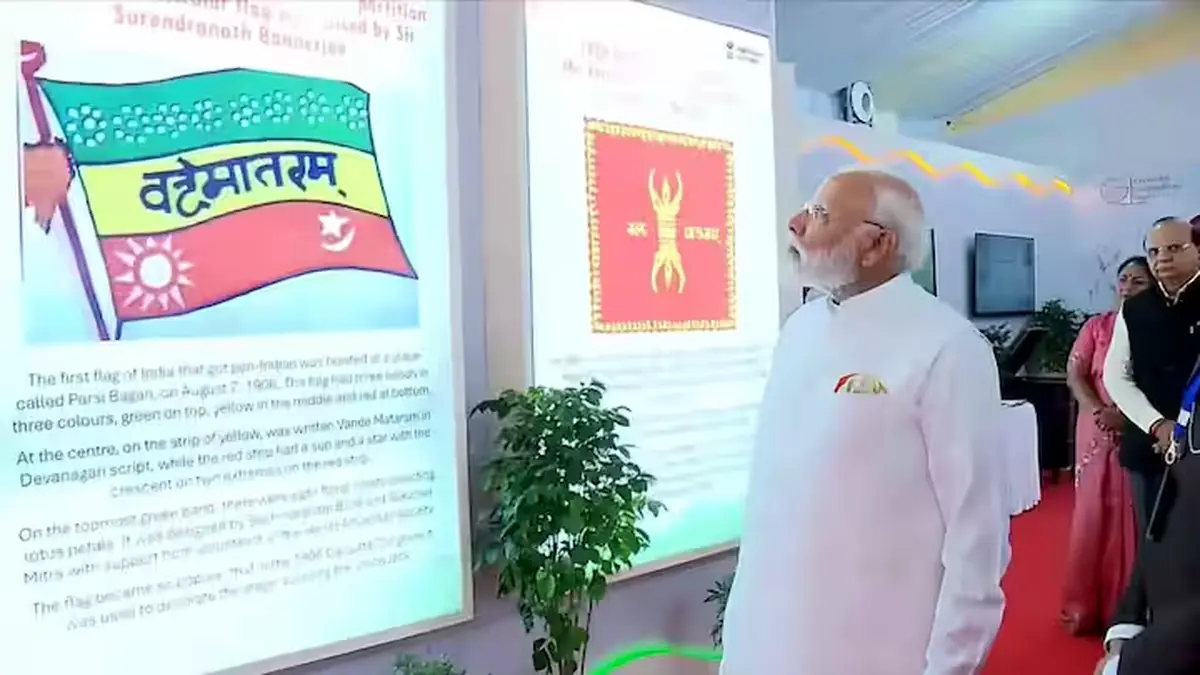
Just a handful of verses in Bengali (with an occasional foray in Sanskrit) would be enshrined as one of the key anthems of India’s freedom struggle and subsequently appear as part of his 1882 novel Anandamath.
The song really took off during the Swadeshi Movement, after Bengal's 1905 partition—it left the page and hit the streets, chanted at rallies and nationalist gatherings as a straightforward declaration of love for the motherland.
This didn't come out of nowhere either. The lead-up started back on November 7, 2025, and ran all the way through Republic Day 2026, when nearly 2,500 artists performed a choreographed tribute to the song on Kartavya Path, under the banner "Swatantrata Ka Mantra – Vande Mataram." Bands from the Army, Navy, Air Force, and Coast Guard took the tune to over a hundred locations nationwide, including Chattopadhyay's own ancestral home in Naihati. Red Fort, on August 15, was basically the closing chapter of all that.
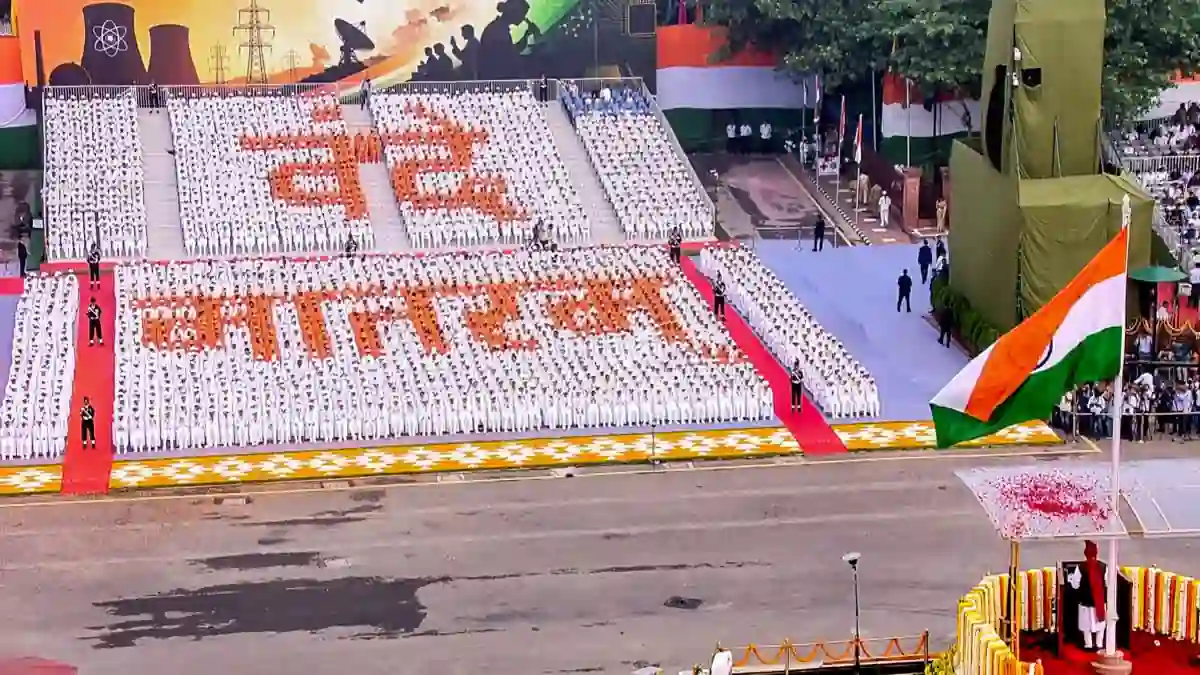
The visuals lived up to it. Flowers along the ramparts were arranged with the flag at the center and "Vande Mataram" spelled out in Hindi on either side. Guests sang as the band played, and then the ceremony slid into its usual rhythm—Modi hoisting the flag, a Rashtriya Salute, and the anthem. Two Air Force Mi-17 helicopters with the national flag and a banner (Vande Mataram) also flew over to drop flower petals at this climax moment of the ceremony. Modi also made mention of the chant of Vande Mataram being resonating in every heart across the country on that day.
He called it historic—the first time, he said, that Vande Mataram had echoed at the Red Fort on the 15th of August since independence.
It's tempting to call this just a scheduling tweak. It isn't. Vande Mataram was never just a song. Its opening line—"I bow to thee, Mother"—paints the nation as a living mother: full of flowing rivers, cooled by orchard winds, dark with the weight of her harvests, and glowing under moonlight.
It's older than the Republic itself, and putting it into the flag-hoisting sequence does something specific—it says, in effect, that independence didn't start in 1947. It started decades before, carried by lines exactly like these.