
Heart attacks have become increasingly common in India. According to the National Sample Survey Office (NSO) Health Survey and the Beat by Beat report, India is considered one of the world's largest centers of heart disease and heart attack cases.
People of South Asian origin in India are often believed to have a genetic predisposition to narrower heart arteries from birth, which may increase the risk of developing blockages and heart disease at an earlier age.
Similarly, high blood sugar levels, or diabetes—which affects more people in India than in almost any other country—can damage the inner walls of the arteries over time. According to NSO findings, excess sugar in the blood can harm blood vessels, increasing the risk of heart disease and heart attacks.
In India, almost every second person has excess belly fat, which is not good for heart health. It is important to avoid and reduce abdominal obesity to lower the risk of heart disease.
According to the NSO report, many people in India have low levels of HDL cholesterol, which is known as the “good” cholesterol, while the levels of artery-blocking fats are often higher, increasing the risk of heart disease.
Eating habits in India have become so unhealthy that it is hard to measure the impact. Almost everyone is consuming oily foods, which are not good for the body or the heart at all.
Mental stress is also a major issue in India. If we look at the World Happiness Index, India ranks 116th out of 147 countries. This suggests that stress levels are a significant concern, and chronic mental stress is not good for heart health.
Nicotine (from tobacco and cigarettes) narrows the blood vessels and can make the blood thicker, increasing the risk of blood clots. Both of these effects are harmful to heart health and can raise the risk of heart disease and heart attacks.
No exercise and sitting on a chair all day without any physical activity is also not good for your health.
As Indians, it may be better not to even talk about air pollution, as India is one of the most polluted countries in the world, and many of the world's top 10 most polluted cities are located here. Air pollution is also harmful to heart health, so we should do our best to protect ourselves from it.
If you experience chest pain or a rapid heartbeat repeatedly, you should consult a doctor.
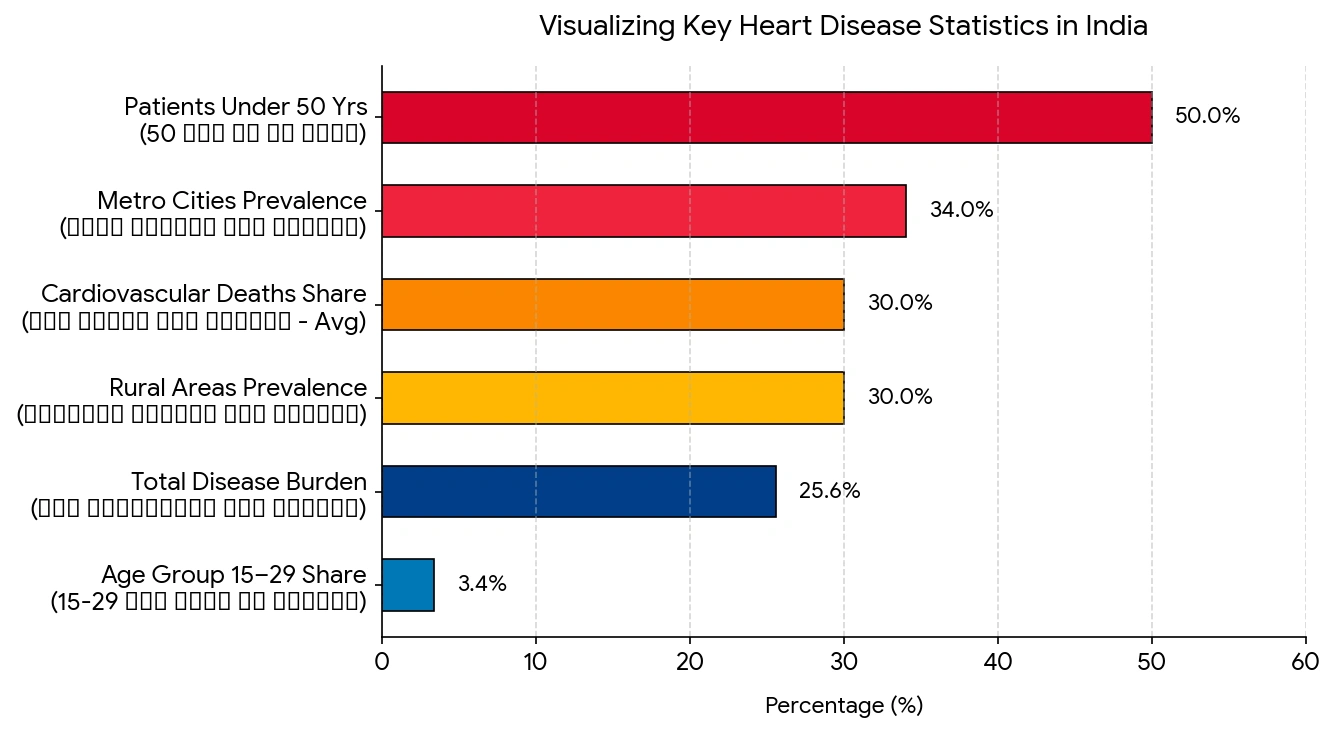
Photo: @Graph
About India, around 2.86 million people die every year due to cardiovascular diseases.
If this figure is divided by the number of days in a year, it means that around 7,800 people die every day in India due to cardiovascular diseases.
In India, cardiovascular diseases account for a significant share of total deaths, with approximately 27% to 33% of all deaths being linked to heart-related conditions. This is a very large number and a major public health concern.
About diseases in India, heart disease is among the leading health concerns, accounting for approximately 25.6% of the total disease burden.
Over the past seven years, the number of heart patients in India has increased threefold.
According to the Indian Heart Association, the risk of heart disease among young people has been increasing in recent years. While around 50% of heart patients are over the age of 50, a significant number are under 40 years of age.
The most alarming fact is that, in India, people in the 15–29 age group have accounted for 3.4% of heart disease cases in recent years, making it a serious cause for concern.
If we look at the data from India, men have been found to have a higher risk and incidence of heart attacks compared to women.
Heart disease is more common in India's metro cities, where the prevalence is around 34%, compared to about 30% in rural areas.
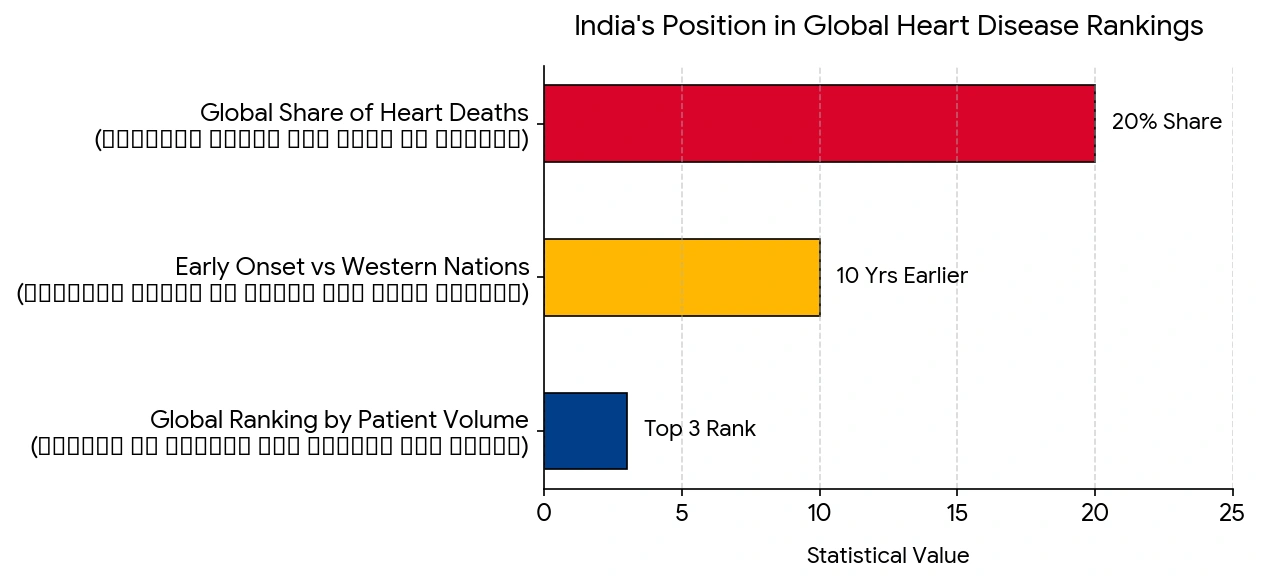
Photo: @Graph
India accounts for nearly 20% of the world's heart disease cases and deaths, which is an alarmingly high share of the global burden.
In terms of the number of heart disease patients, India ranks among the top three countries in the world.
Compared to Western countries such as the United States and those in Europe, heart disease tends to develop about 10 years earlier in India.
According to WHO data, India's heart disease statistics are among the most alarming and aggressive in the world.