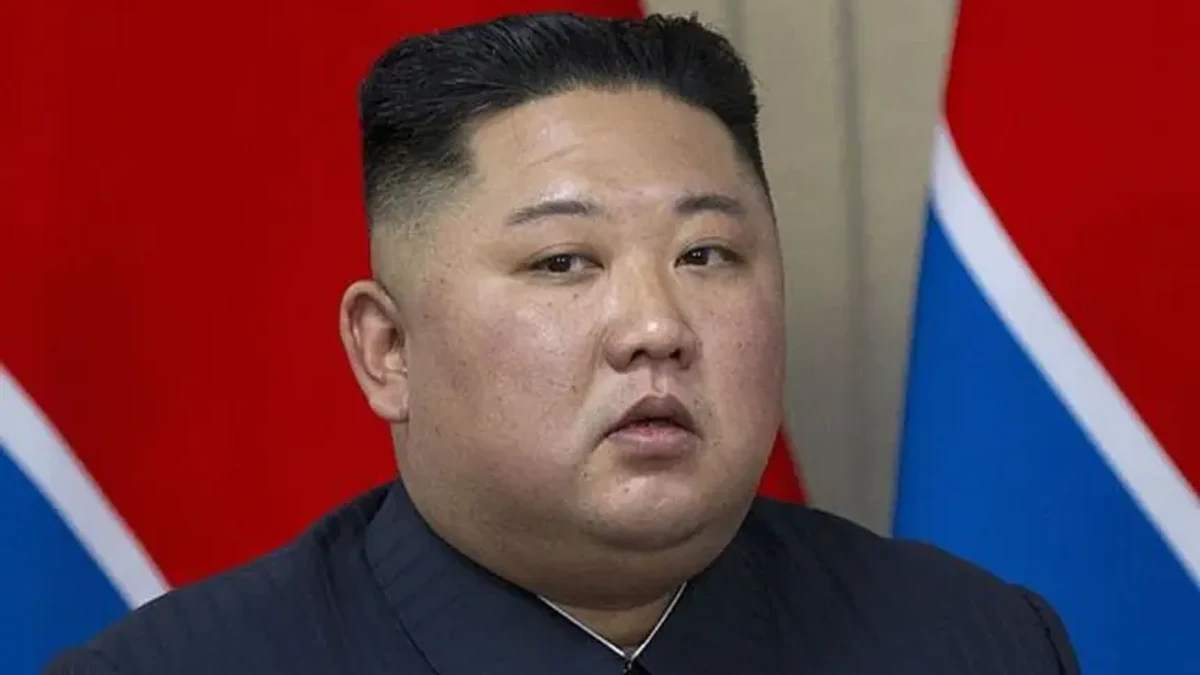
Around October 18, accounts on X began circulating a story that read like a thriller treatment. Kim, the posts said, had suffered a severe cerebral haemorrhage and slipped into a coma. Doctors from Peking Union Medical College Hospital were flown in, he was moved to Beijing, and by the time anyone acted the window for treatment had closed. His body, the story went, was quietly carried home.
It got bigger from there. One version claimed China had put a theatre command on high alert and sent 9,000 troops to Pyongyang to protect his daughter, Kim Ju Ae, and her place in the line of succession. Two purported Trump posts also did the rounds, one mourning Kim and one calling the rumours exaggerated. Neither has been verified. A separate claim attributed to the defector Ji Seong-ho, saying he was "99%" sure Kim was dead, went around too, again with nothing to back it up.
None of it traces to a named, checkable source.
South Korea's intelligence service told officials it has picked up no indication of any health issue with the North Korean leader, according to reports published Monday. Fact-checking desks that looked at the claim reached the same verdict: false, no credible evidence.
The paper trail from Pyongyang points the same way. State media published policy statements from Kim's sister, Kim Yo Jong, on October 19. Kim himself was last shown around October 10 and 11, attending a celebratory performance for the 81st anniversary of the ruling Workers' Party and the opening of a new defence museum, with his wife Ri Sol Ju and daughter Kim Ju Ae beside him.
That is not proof of anything. Two quiet weeks in a country this closed prove very little in either direction. But it is worth remembering April 2020, when Kim vanished for about 20 days, missed his grandfather's birthday celebrations, and was written off as dying or dead by plenty of outlets. He turned up cutting a ribbon at a fertilizer plant on May 1.
The rumour landed in a news cycle already heavy with military theatre.
On October 3, North Korea fired an intermediate-range missile using a hypersonic weapons system, KCNA reported the next day. Kim watched. The projectile flew northeast over the sea off the eastern coast and hit a designated target roughly 1,000 kilometres away, state media said, adding that the test was meant to sharpen the country's nuclear deterrent.
Then came the museum. The Defence Revolution Museum opened on a Sunday in mid-October, with Kim cutting the tape while the national anthem played. Photos released by state media appeared to show the Hwasong-20 intercontinental ballistic missile on display, a weapon Pyongyang has called its strongest nuclear strategic system. His wife and daughter walked past the towering hardware in the pictures.
The party anniversary on October 10 added the usual pageantry. According to a weekly review of KCNA output, the celebratory performance was Kim's only public activity reported that week. The same coverage showed Pyongyang keeping up a hostile line on South Korea and the United States, including two statements from Kim Yo Jong and one from the Foreign Ministry. Kim also sent Vladimir Putin a birthday message on October 7, stressing the partnership between the two countries.
Not everything out of Pyongyang is missiles.
NK News reported on October 8 that the country had published its first biography of Kim's "revolutionary" life, a book that may point to a push to build up stories about his childhood. A day later, state media boasted of a strong autumn harvest ahead of the party anniversary. And on October 15 came word that North Korea had opened about a dozen barbecue restaurants, a campaign to promote meat eating in a country where beef is still a luxury. The openings were framed as proof of Kim's concern for ordinary people.
The reason a rumour like this travels so fast is that nobody knows what comes next. Kim is 42. His daughter appears at more and more official events, and the question of whether she is being groomed has been argued over for years without an answer.
Earlier this year, the Telegraph reported, citing a briefing by South Korea's intelligence agency, that North Korea had revised its constitution to demand a retaliatory nuclear strike if the leader were assassinated or incapacitated. That report came after the killing of Iran's Supreme Leader in an Israeli strike. Whatever the exact wording of that rule, it explains why an invented death story can rattle markets and military planners before anyone has checked it.
For now, the checkable facts are modest. Kim has appeared in state photographs this month. His sister's statements are still being released. South Korean intelligence sees nothing unusual. Anyone claiming more than that is working from a tweet.