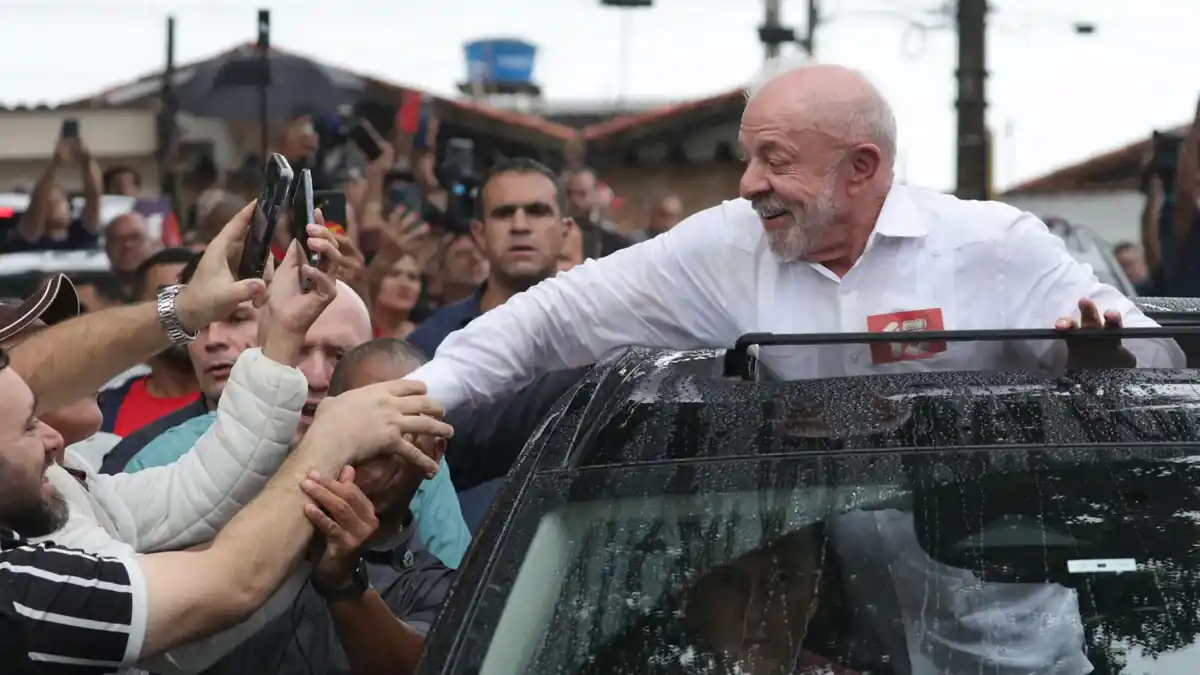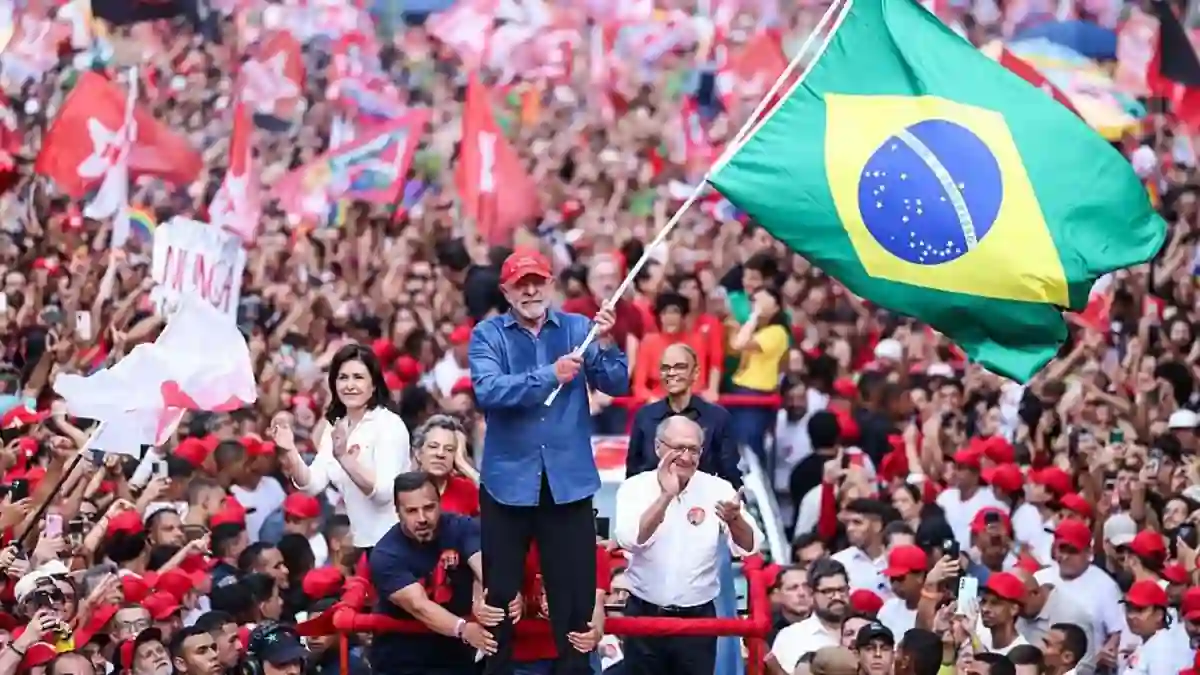
- Lula won the October 25 runoff with 51.79 percent of valid votes to Flávio Bolsonaro's 48.21 percent.
- He is the first candidate since 1985 to win a Brazilian runoff after finishing second in round one.
- Bolsonaro wants the result annulled, but his own Liberal Party has accepted it.
- The real had its worst day in over two decades, and Trump called the vote rigged without offering evidence.
Luiz Inácio Lula da Silva will govern Brazil for a fourth time. The electoral court confirmed his runoff win over Senator Flávio Bolsonaro on Sunday night, ending a race that most polls in the final fortnight had tilted the other way. Markets, which had been pricing in a Bolsonaro victory, reacted badly. Washington did too.
Lula took 51.79 percent of valid votes, roughly 64.26 million ballots. Bolsonaro got 48.21 percent, or 59.83 million. The gap is about 4.4 million votes, more than double the margin by which Lula beat Bolsonaro's father, Jair, in 2022.
Three weeks earlier the picture was reversed. In the October 4 first round, Flávio Bolsonaro led with 47.03 percent against Lula's 45.16 percent, a cushion of around 2.2 million votes. Polls published in mid-October still had him slightly ahead, though all of them sat inside their margins of error.
Turnout rose to 80.8 percent from 78.92 percent in the first round. Pollsters say the extra voters mattered.
Analysts point first at Lula's own campaign, which by several accounts treated the first round as already won. Gustavo Ribeiro, editor-in-chief of The Brazilian Report, described a mostly offline effort that only woke up after the shock of finishing second.
What followed was a hard turn toward digital and grassroots work. Young Brazilians organised themselves online after the first round into what became known as "Lula's army," then took that energy into the streets. Lula, who turns 81 on Tuesday, also leaned on the advantages of being the sitting president.
Bolsonaro, meanwhile, helped nobody but his opponent. One academic told Al Jazeera that within a week of the first round he was behaving like a president-elect, even naming ministers. Others noted he ran largely on his father's surname rather than any charisma of his own.
Flávio Bolsonaro refused to concede on election night. He called the outcome unacceptable and promised to ask the courts to annul it.
His target is Supreme Court Justice Cristiano Zanin, who ordered polling stations to stay open two extra hours. Zanin was once Lula's personal lawyer, and Lula appointed him to the court in 2023. The complaint has a hole in it, though. Both campaigns had asked for more time. Bolsonaro's side cited heavy rain across the conservative south. Lula's side accused some cities of cutting public transport to keep working-class voters home.
Pedro Burgos, a professor at the Insper institute, estimated the extension added about 35,000 votes nationwide, less than 0.03 percent of the total. Lula's margin was well over 100 times that.
On Monday the Liberal Party's president, Valdemar Costa Neto, put out a statement recognising the result, while adding that the issues raised needed to be "properly clarified." Folha de S.Paulo reported that advisers and allies were pushing Bolsonaro to drop the annulment push. Federal police also asked him to hand over his passports amid talk he might leave the country. He said he would comply, had no plans to go anywhere, and would work to organise the opposition.
His father is serving a 27-year sentence for plotting to overturn the 2022 election. Analysts do not expect Flávio to build the same kind of movement.
Speaking to reporters on Monday, Trump said the Brazilian vote "looked like another rigged election." He offered no evidence. He also said he had not taken sides, and he never formally endorsed Bolsonaro before the vote.
That claim sits awkwardly beside Reuters reporting that State Department officials led a campaign to return the Bolsonaros to power. In September, Lula's coalition asked Brazil's electoral court to investigate possible US interference in the race. World leaders, for their part, have been congratulating Lula.
Investors had bet on a Bolsonaro win, and the unwinding was brutal. Brazil's real fell 8.1 percent against the dollar, its steepest one-day drop since 2002, according to Reuters. The stock exchange posted its worst single day since 2020. A Tokyo-listed exchange-traded fund tracking Brazil's Bovespa index fell nearly 15 percent in Asian trading as the result came in.
The victory does not come with a working majority. The Liberal Party and its allies could control more than 280 of the 513 seats in the lower house and as many as 50 of 81 in the Senate, per Al Jazeera's analysis. Fernando Brancoli of the Federal University of Rio de Janeiro expects small wins and a lot of negotiation.
The economy offers little cushion. Public debt is above 82 percent of GDP, according to the World Bank, and the government forecasts growth of just 2.3 percent next year. Crime and household debt, the two issues that kept this race tight, are still sitting there. So is a harder question inside the Workers' Party, which has no obvious successor to an 80-year-old leader.
Lula told cheering supporters in São Paulo that the fight continues and that he must govern for everyone, including those who did not vote for him. He is due to take office on January 1.