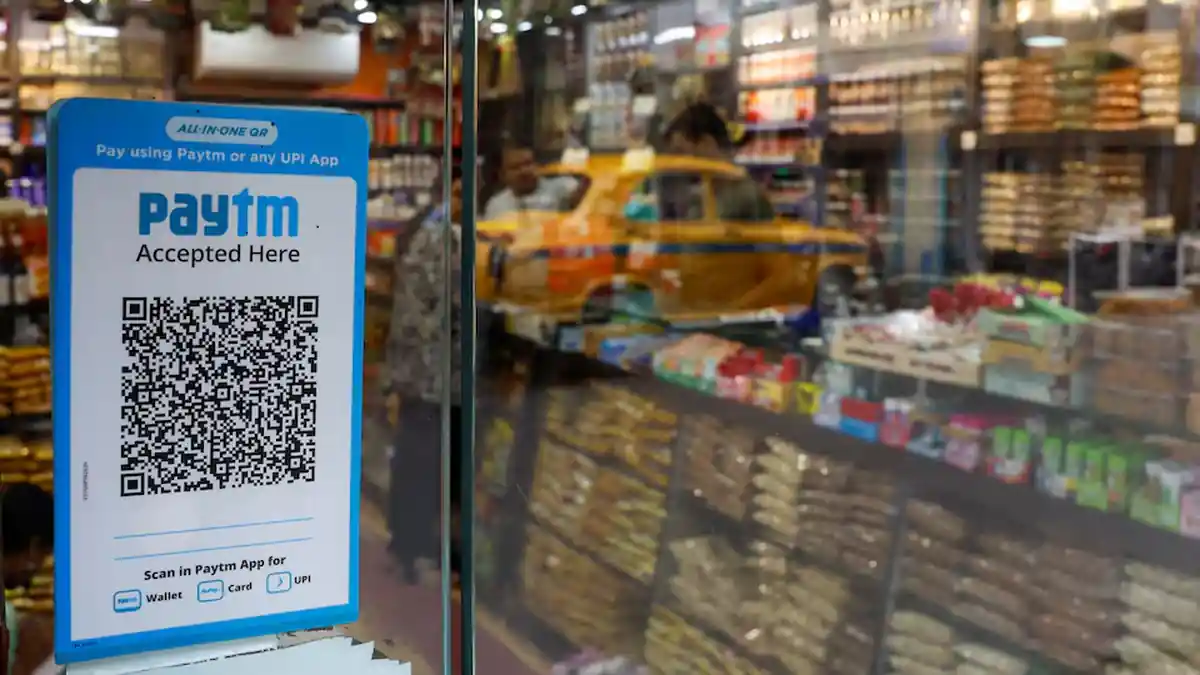
The Paytm wallet was the icon of the digital payments revolution in India. On Friday, November 13, the company made a big move in its efforts to regain its lost glory.
India's Paytm got preliminary approval from the country's central bank to issue prepaid payment products, including its popular digital wallets, in a development that saw its shares reach an all-time high.
This is an initial clearance. Paytm Payments Services obtained provisional clearance to run the payment system that provides prepaid payment instruments, including wallets.
It is not the final clearance. The company will have the ability to provide wallet services to its customers once it gets the final clearance from RBI, said One97 Communications in a stock exchange filing.
Paytm had been operating without any formal sanction. It got the clearance following the bankruptcy of Paytm Payments Bank and would now be able to manage the operation separately from the payments bank in which it had been operating.
Paytm set up its wallet service in 2014 and became the biggest digital wallet firm in the nation.
It started with the regulatory issues. The company was in trouble in 2022 when the RBI did not allow the bank to onboard new customers, thus freezing wallet loading activities.
In 2023, the RBI had revoked the banking license of the Paytm Payments Bank resulting in the shutdown of the company.
The stock performance on the day was positive yet controlled. The stock gained as much as 1.8% to reach 1,960 rupees and closed up by 0.8% on Friday.
The gain came after a good performance. On Thursday, the stock of Paytm gained 7.31 per cent to close at Rs 1,925, above the level of Rs 1,900 for the first time since its listing in 2021.
However, the "record high" is misleading. Paytm hit its record high at ₹1,961.05, which was recorded on its listing date, when shares were allotted to IPO investors at the IPO issue price of ₹2,150. This shows that the share price is hovering around its listing day high but is lower than the price paid by the IPO investors. The lowest price ever recorded by Paytm is ₹310, recorded on May 9, 2024.
Patience was advised. As one analyst, Dama, pointed out, “This being just an in-principle approval, it will take some time before the actual license is granted, with any effect on earnings being reflected in FY28.”
It may be a lengthy process. In the case of Paytm’s in-principle approval for its operations as a payment aggregator, it took about three months for the final approval to be granted.
There were other factors behind the positive move. The stock prices of the company have been boosted by the expectation of a new framework for merchant discount rates on UPI payments. Analysts were waiting for a regulatory catalyst.
The JM Financial brokerage company estimated last year that the UPI monetization and Paytm wallet could boost its EBITDA estimates by about 25-30 per cent. This was a projection made at an earlier point in time.
There have been positive changes in the financial state of Paytm. Specifically, in 2025, it showed 1.23 billion rupees in net income during the quarter ending June, as against a loss recorded the previous year. It is noteworthy that Paytm declared its financials for the quarter in question on October 27.
Many questions still remain unanswered. First, the Reserve Bank of India may have some terms for issuing the license, but there is no information about when that would happen. Moreover, there is no information about what kind of compliance and capital requirements the unit will have to adhere to based on the studies done.
It is also very competitive out there. There are many companies competing in the wallet business and Paytm will need to win back those customers that left because of the ban.