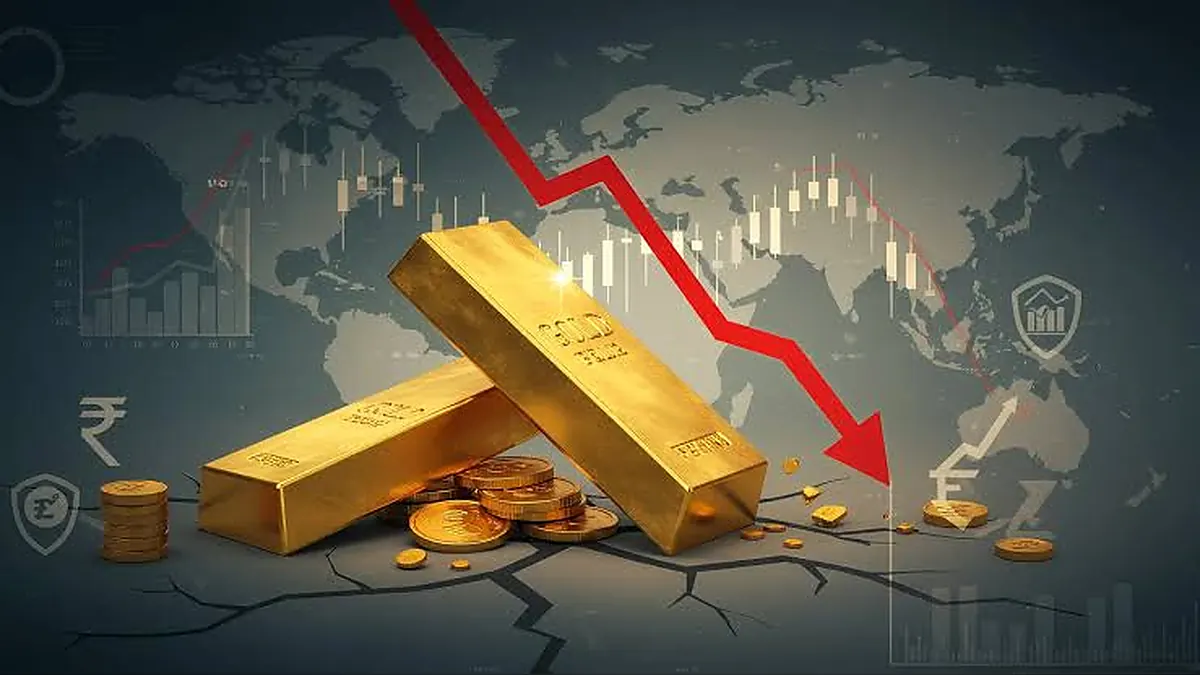
Gold, known for being one of the best investment products for investors, is going through some correction in November 2026. On Thursday, November 19, the international gold price hit a 14-month low, marking a fall that has taken many by surprise because they thought gold would keep growing in price.
As reported by Reuters, the spot gold price fell to $3,693.13 per ounce on Thursday, only to regain somewhat, but was still trading at about $3,710 per ounce, pressured by the strength of the US dollar and the changed perspective regarding the American monetary policy.
The fall comes after a dramatic rally that happened in January 2026, where the gold price climbed to its record high of approximately $5,595 per ounce. Since then, however, the gold price has been falling substantially as investors have been reevaluating their positions and thinking whether there are better ways of investing.
One big question arises amid this situation – why does gold fall despite being known as one of the most secure investments?
One of the leading causes of the decrease in the price of gold is the rise in the US dollar.
Gold is quoted in the US dollar internationally, and therefore any increase in the value of the American dollar will have an impact on international investment demands.
The dollar has strengthened over time, which has made it difficult for investors to buy gold at their expense. It makes gold expensive for the buyers to purchase. This has led to a fall in prices.
The US Dollar Index has risen to its highest level since April 2025, thus exerting pressure on dollar denominated commodities.
The relation between gold and the dollar is very important due to the fact that international investors usually compare the performance of the precious metals against other financial instruments.
As the dollar rises, investors may start liking dollar investments rather than gold.
Another cause of the decline is the expectation for interest rates from the Federal Reserve.
Recent statements by some members of the Federal Reserve have supported expectations that interest rates may rise again in December.
As per Reuters data based on the CME FedWatch market expectations, there was a near 91% probability that the Fed will hike interest rates by 25 basis points at the December meeting on Thursday.
This situation has led to problems for gold since the metal is not a source of consistent interest revenue.
With a rise in interest rates, people receive higher interest gains from interest-bearing assets like bonds and savings. Hence, gold appears to be comparatively less attractive to buy.
The opportunity cost of holding gold is the name given to this phenomenon, which is the most crucial element behind precious metal prices.
The rising US treasury yields are yet another factor adding downside pressure to gold.
Treasury bills are perceived as safe investments, and they tend to get more appealing when people anticipate higher interest rates.
The yield on the 10-year US Treasury bond stayed above the significant level of 5% on Thursday amid fears of rising inflation and tight monetary policy.
Higher Treasury yields can encourage investors to shift money away from gold and toward interest-bearing investments.
This contributes further to selling pressure especially once financial markets start to anticipate interest rate hikes instead of interest rate cuts.
For gold, the presence of a stronger dollar together with rising interest rates on bonds is an unfriendly environment to invest in.
Changing expectations regarding interest rates are not the only factor causing a price correction in recent times. The behaviour of investors also contributes to selling pressures.
Gold has witnessed a rally earlier in 2026, hence investors started building their positions with prices touching record highs.
But when market expectations changed, some investors were forced to sell in order to earn profit or minimize losses.
Investors have been able to get exposure to gold without the need of buying physical gold by investing in gold exchange traded funds (ETF).
According to a report from Moneycontrol, gold ETFs such as GLD, IAU and SGOL saw net outflows of around $14.5 billion in 2026.
This indicates that there is reduction in investments by some investors in precious metals.
Large investors withdrawing from the gold-linked financial instruments is another factor that may contribute to selling pressure in the underlying market.
The drop in prices of the precious metal has affected even the prices of gold in India where domestic rates of gold are determined by the international rates of the bullion, foreign exchange movements, cost of imports, and local demand.
According to MCX on Thursday, the December gold future contracts fell to an intraday low of approximately ₹1,28,721 per 10 grams.
The contract rebounded a bit and was being traded at approximately ₹1,29,381 per 10 grams at about 2:42 p.m. IST, showing a fall of about 0.33 percent from its last closing price.
Spot gold on MCX was priced at ₹1,29,599 per 10 grams.
This fall in prices is of great interest to investors in India who know that gold still plays a significant role in investment and saving.
But the fall in international rates of gold does not directly translate to movement in domestic rates of gold.
Similarly, a lower rupee can make gold imports costlier in India despite the fall in international prices.
Although gold has been seeing selling pressures, the experts have not completely dismissed the possibility of a comeback in gold prices.
Some investors might see lower prices as an opportunity to buy gold, especially because they continue to view the precious metal as a safe haven for the long run.
According to Reuters, gold saw some bargain buying and short covering on Thursday at its lowest level in 14 months. Nonetheless, analysts have stressed that the bounce back does not necessarily mean the end of the current downward trend.
Any sustainable comeback will depend largely on expectations about the Federal Reserve, the US dollar, Treasury yields, as well as consumer and central bank demand.
In case the inflation starts to decline along with expectations about further rate hikes, gold might find favor once again.
However, if inflation remains elevated and more monetary tightening is implemented, pressures on precious metals may remain.