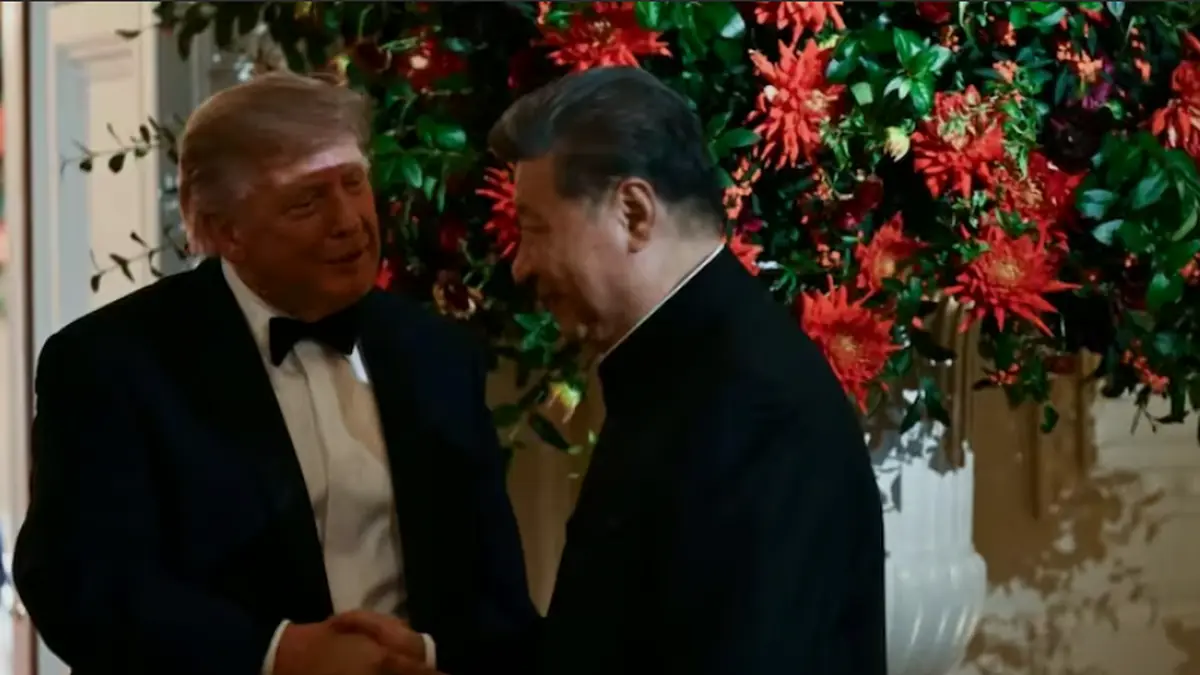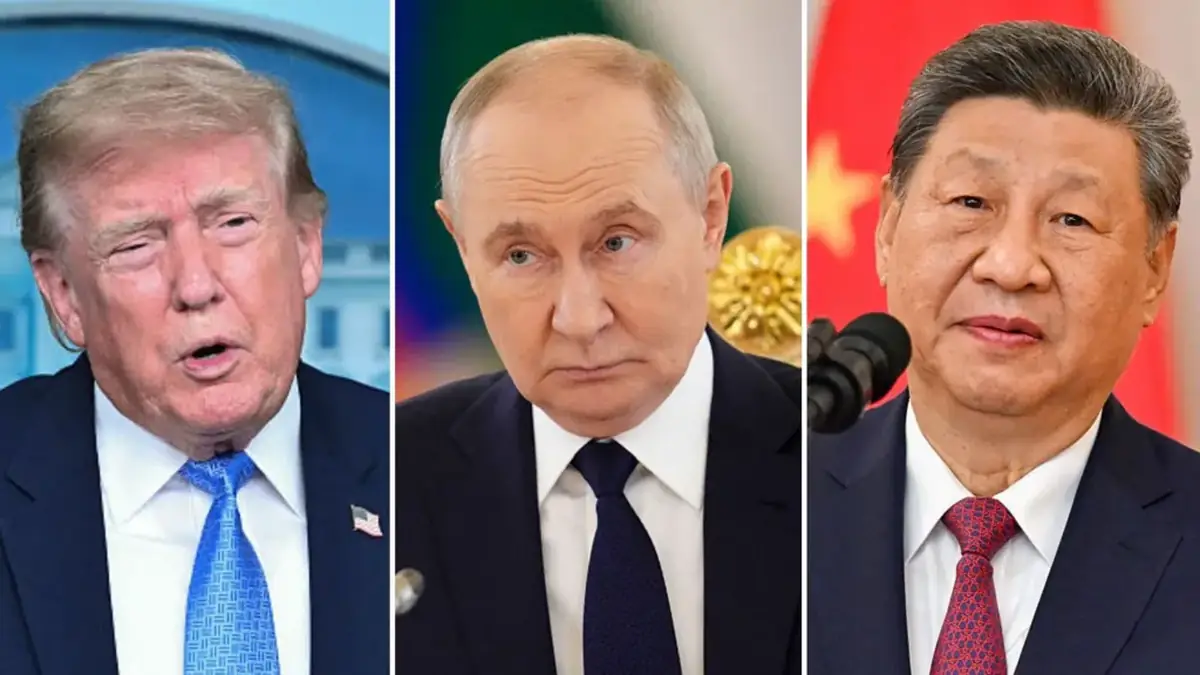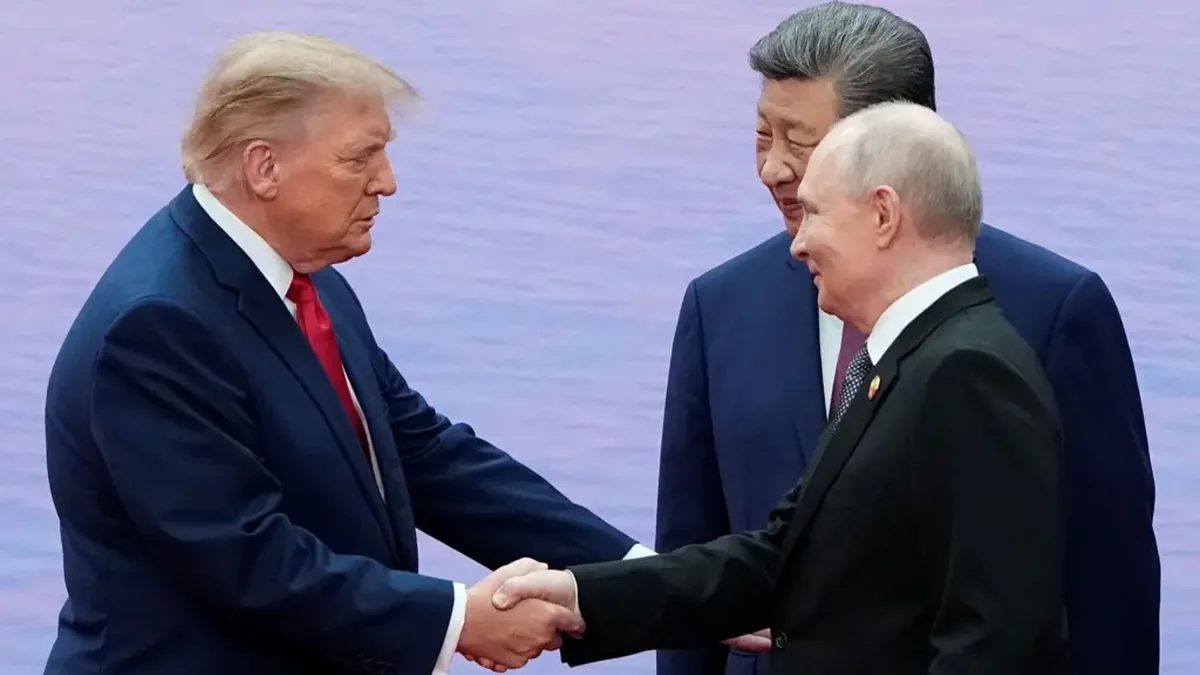
Three leaders of countries holding the majority of the nuclear arsenal of the world are scheduled to meet for the first time ever on Thursday, November 19 at one table in Shenzhen, outside the Asia-Pacific Economic Cooperation forum.
The first-ever trilateral meeting of US President Donald Trump, Russian President Vladimir Putin and Chinese leader Xi Jinping will take place on November 19 in Shenzhen. This article was published prior to the meeting without any announcement about the results.
This proposal came from Moscow. The initial suggestion to hold the trilateral meeting was made by Putin during a phone conversation with Trump in October.
The Chinese Foreign Ministry has announced this meeting on Monday, while Putin’s participation in the talks was already confirmed earlier by the Kremlin.
At the forefront, the White House has placed nuclear weaponry. According to it, Trump is willing to talk about the war in Iran and also about a potential three-nation deal on nuclear armament.
The scene has set an expiring treaty. The New START treaty between Russia and the United States that had put a cap on strategic nuclear arms had expired in February.
Trump has shown willingness. He said in an exclusive interview on Fox News that he was willing to talk about the limit on nuclear arms with China and Russia.
This meeting is related to two other conflicts. First one is Iran and here talks between the US and Iran are stalled at the question whether they should discuss first the Strait of Hormuz and financial incentives for Iran or its nuclear program.
The second conflict that the summit might talk about is the situation in Ukraine, which is even more doubtful as Ukraine is not going to be included in the official agenda.
According to Putin’s foreign affairs advisor Yuri Ushakov, the leaders will likely mention the war in Ukraine.
Analysts have different objectives. According to Diplomat analysis, Trump aims to make discussions on nuclear weapons, whereas Putin aims to discuss Ukraine.
According to The Atlantic Council, Putin desires that Xi should back him to compel Trump to apply more pressure on Ukraine, and that Xi has no objective of discussing arms control.
These are analyst opinions and not statements of the leaders.
China is already sending signals of opposition. In an article dated last Wednesday, the spokesman for China’s foreign affairs ministry, Guo Jiakun, said that the participation of Beijing in trilateral nuclear disarmament discussions is neither "reasonable nor realistic." This news is reported from an opinion article, so it would be necessary to verify the exact quote from the ministry transcript.
China did not call this discussion an exercise in arms control. It is difficult to arrive at any trilateral agreement without the first discussion having taken place.
Most people have certainly moved the goalposts. According to a senior US official before the visit: "We do not expect to achieve any kind of agreement here."
"Talk of a dramatic breakthrough after one meeting seems unlikely," Daryl Kimball of the Arms Control Association was quoted as saying. "At best, it could only launch the process of negotiations."
In its headline, The Diplomat was even more direct: "Best case scenario: photo opportunity."
The meeting has also been interpreted from the angle of US politics. A bipartisan group of politicians has accused Trump of violating a federal law meant to punish Russia for the war it waged against Ukraine. It was an allegation by the politicians and none of the articles reviewed mentioned the reaction from the White House.
Such an outcome would include a pledge for future negotiations, or the creation of a working group, or some kind of joint declaration concerning the lowering of nuclear risks. All of this was not yet known at the time of writing this essay.
However, a harsher outcome would be for there to be a public disagreement between the two sides. The analysts were of the view that any discussion of spheres of influence would raise red flags.