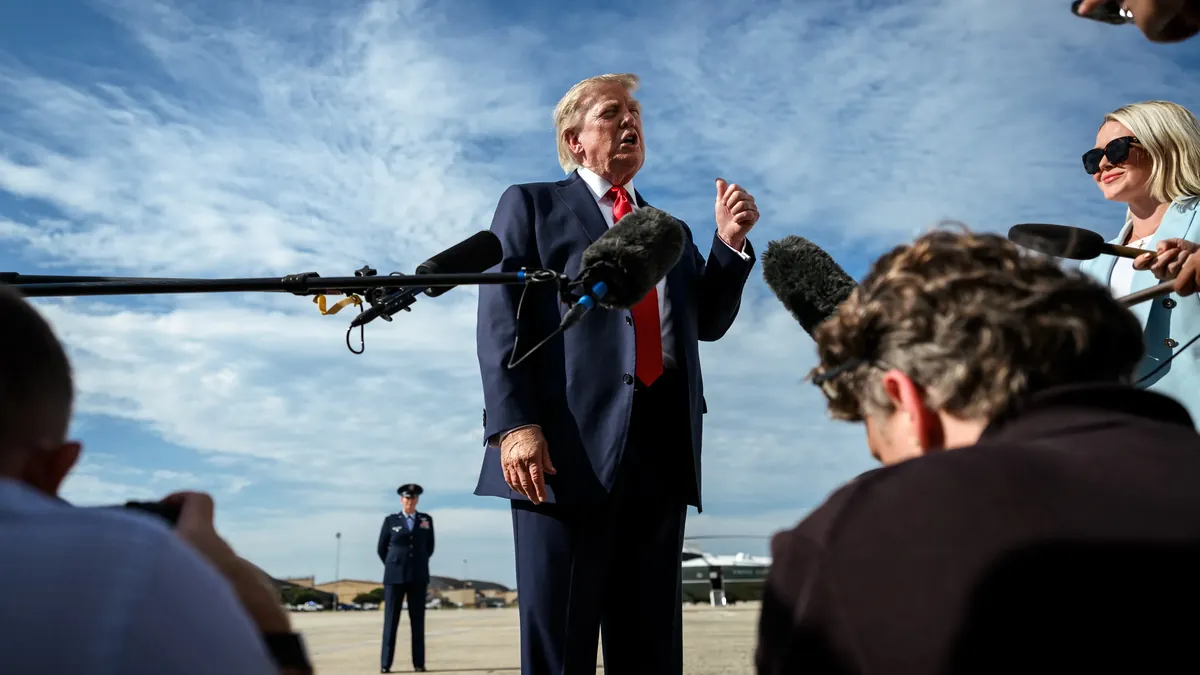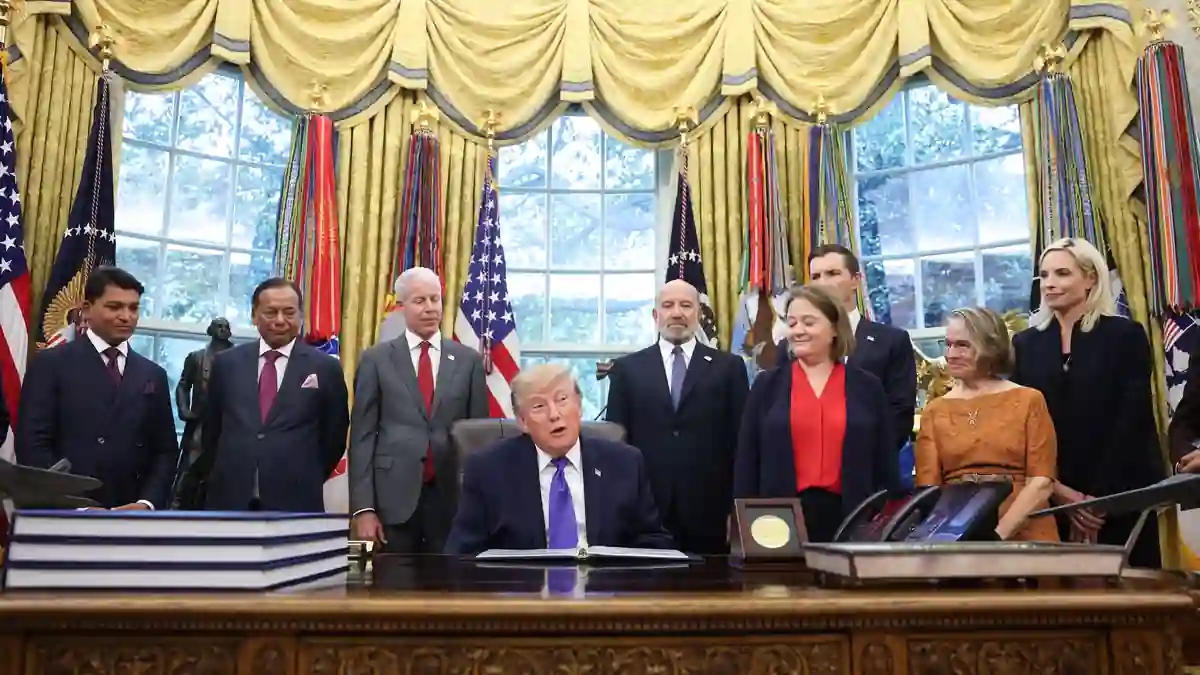
Trump stood in the Oval Office on Monday with steel executives, Energy Secretary Chris Wright and members of Iowa's congressional delegation, and put a number on it. Fifteen billion dollars. A steel mill in Lee County, in the southeast corner of Iowa, that he says will be the largest in American history.
He has used that "largest ever" line for other manufacturing projects during his second term, so it's worth treating as a White House claim rather than a settled fact. The plan itself is real enough. Mesabi Metallics, based in Nashwauk, Minnesota, will build it. Trump called the investment "tremendous" and promised "some of the highest quality, most affordable steel anywhere in the world."
The administration's figures are big, and they come from the administration. The mill would create 1,750 permanent jobs in Iowa and support as many as 6,000 construction jobs while it goes up. Nearly 2,000 more manufacturing and mining jobs are tied to it more broadly. The White House puts the economic boost at about $95 billion over ten years.
Steel production is meant to start in 2030. Full capacity, 10 million tons a year, comes later.
Republican Rep. Zach Nunn, whose district includes the site, called it a major opportunity for the region. He also pointed to close to $5 million his office helped secure for skilled-trades training at local community colleges. Somebody has to fill those jobs, after all
The mill won't work without raw material, and that part already exists. Mesabi Metallics runs a $2.5 billion mine and pellet plant on more than 16,000 acres of Minnesota's Iron Range. It only recently began commercial operations, and it's the first new iron ore mine and pellet plant in the state in about 50 years.
The pellets are a direct-reduction grade, the kind electric arc furnaces use. That route is generally considered cleaner and more efficient than the old blast furnace method.
Essar has put more than $2 billion of its own equity into the Minnesota project. Financing also came from the US Export-Import Bank, Macquarie Group and Breakwall Capital.
Trump raised steel import tariffs to 50% in 2025, and on Monday he said they've pushed the industry to come "roaring back to life." Commerce Secretary Howard Lutnick reportedly made the same case, saying tariff policy is what pulled Essar's money into the country.
Sen. Joni Ernst said in a statement that the news shows the president's commitment to rebuilding American steel. Jeff Kaufmann, who chairs the Iowa Republican Party, gave credit to the state's own GOP leadership, Gov. Kim Reynolds included. Investments like this, he said, don't land in Iowa by accident.
Mesabi CEO Joe Broking called it a big moment for American-made steel and pointed to demand from defense, automotive, shipbuilding and infrastructure.
Whether tariffs really drove this decision is a fair question, and one the announcement doesn't answer. Companies rarely commit $15 billion for a single reason.
Then there's the clip. Several outlets, Hindustan Times among them, noted that Trump appeared to nod off briefly during the event, shortly after mocking Joe Biden as "Sleepy Joe." Social media did the rest.
This is not new. Trump, the oldest person ever inaugurated as president, has drawn similar commentary at public events throughout his second term. The White House has pushed back before, saying he was blinking, not sleeping. I haven't seen full video of this particular moment, so it's a headline story more than a confirmed one.
Essar is an Indian industrial group founded in 1969 by brothers Shashi and Ravi Ruia. It spans energy, infrastructure, metals and mining, and technology, with annual revenue of roughly $15 billion.
Shashi Ruia died earlier this year at 81. The next generation of the family now runs things, including director Prashant Ruia. Essar has also been putting money into low-carbon steel in Saudi Arabia and the UK.
Iowa has competitive races coming up in 2026, including one for governor and one for a US Senate seat. Reporting on the event says Trump wants to fire up Republican voters there. A big jobs announcement in a swing-leaning state, months before ballots go out, doesn't need much explaining.
The White House framed it as part of a wider push to bring manufacturing home, saying in a social media post that Trump is putting hardworking Americans ahead of foreign labor. The irony didn't escape some readers. The company building the plant is owned by an Indian conglomerate.
Steel stocks, Nucor among them, reportedly slipped after the news, apparently on worries about how a huge new domestic producer could affect supply. Exact numbers weren't confirmed in the coverage I reviewed, so treat that as unverified for now.