It is quite difficult to serve legal papers on foreign government officials. In the case of serving papers on an official of India, it has been a long process, with attempts failing after failed attempts, and now even a request made directly to the Indian courts.
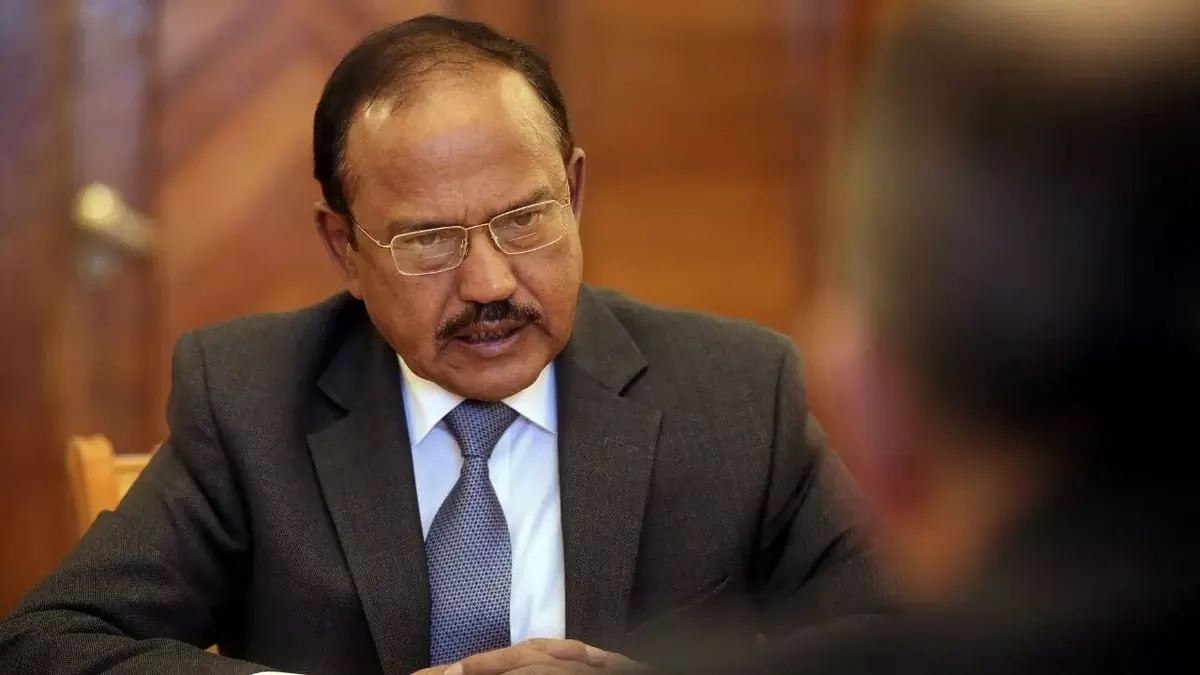
The US Federal Court has issued a summons to the National Security Adviser of India, Ajit Doval, and former Research and Analysis Wing Chief Samant Goel via Delhi courts for a suit brought by Khalistani separatist Gurpatwant Singh Pannun. This information came out of Washington on November 19.
It was issued earlier than this one. US District Judge Katherine Polk Failla, in an order issued on November 9, granted the application of Pannun for service of process upon the two Indian officials through the district courts in Delhi in accordance with the Hague Convention for service abroad of judicial and extrajudicial documents.
The court had directed the Patiala House, Dwarka and Tis Hazari courts to serve the summons on Doval and Goel after their initial efforts of serving the summons fell flat. The judge had relied on the Hague Convention and the Code of Civil Procedure of India in stating that foreign courts could issue summons through Indian courts.
The road has been blocked by several refusals. One of the refusals was when India refused the previous request for serving the summons through its central authorities under the Hague Convention.
In the last month, US court tried to send the summons through diplomatic note from the State Department to the Indian Embassy in Washington. And the US court also accepted the position of the State Department that service through diplomatic note under the Foreign Sovereign Immunities Act was not possible due to India's reservation under Article 8 of the Convention.
It had rejected the attempts by Pannun to serve the summons through email to India's Attorney General, through counsel for an unrelated criminal matter, and through publication on April 1.
The court took recourse to Article 19 of the Convention. The court was in agreement with Pannun’s view that Article 19 enables service of process on Doval and Goel by way of summons addressed to those courts.
Pannun based his submissions on Indian law. He submitted that under India’s Code of Civil Procedure, foreign summons may be served upon Indian courts and treated as having been issued by them, given the January 2009 notification extending Section 29 to civil courts of nations parties to the Hague Convention.
The reports were precise about this. The notice is issued in regard to the service of the summons procedure in an ongoing civil suit and is not a judicial determination of any misconduct on the part of Doval and Goel.
It should be noted that the notice does not indicate that Doval and Goel have been served with the summons. They have to be served by the Delhi courts, and this has not happened yet in the cases analyzed.
India has refused the case all along. India has referred to the case as "fabricated and malicious". The sources consulted did not have any updated comment from the Ministry of External Affairs or Doval's office on this order.
Panunu is a controversial individual as well. Panunu is a wanted individual in India for several terrorist activities. The case filed by Panunu alleges conspiracy against his life in the US.
The civil case should not be taken to mean the criminal proceedings as well. The US government is not part of this civil lawsuit, which is independent of the US criminal case brought against the Indian national Nikhil Gupta and former RAW official Vikash Yadav for conspiracy to commit murder.
It was indicated in one of the DH links regarding the story that the US Court will pass judgment on November 20 concerning the murder conspiracy case. The reports analyzed did not indicate whom the above statement referred to.
Steps will follow. The Delhi courts will have to determine what actions to take regarding the request. Doval and Goel can respond by challenging jurisdiction and ignoring the summons. The process under the Convention through the central body is very lengthy, with one estimate being between four and twelve months.
The sources that were reviewed did not indicate whether the Delhi courts received the documents or the response of India's government to the court system's request.
The two issues include sovereign immunity and sovereignty, which are very protected by any government. India views the accusations internally, but Mr. Pannun's legal team claims that a citizen of the United States can sue in an American court.
The way an Indian court may deal with the request will be under scrutiny. There was no analysis in any of the reports analyzed about how it could decide.