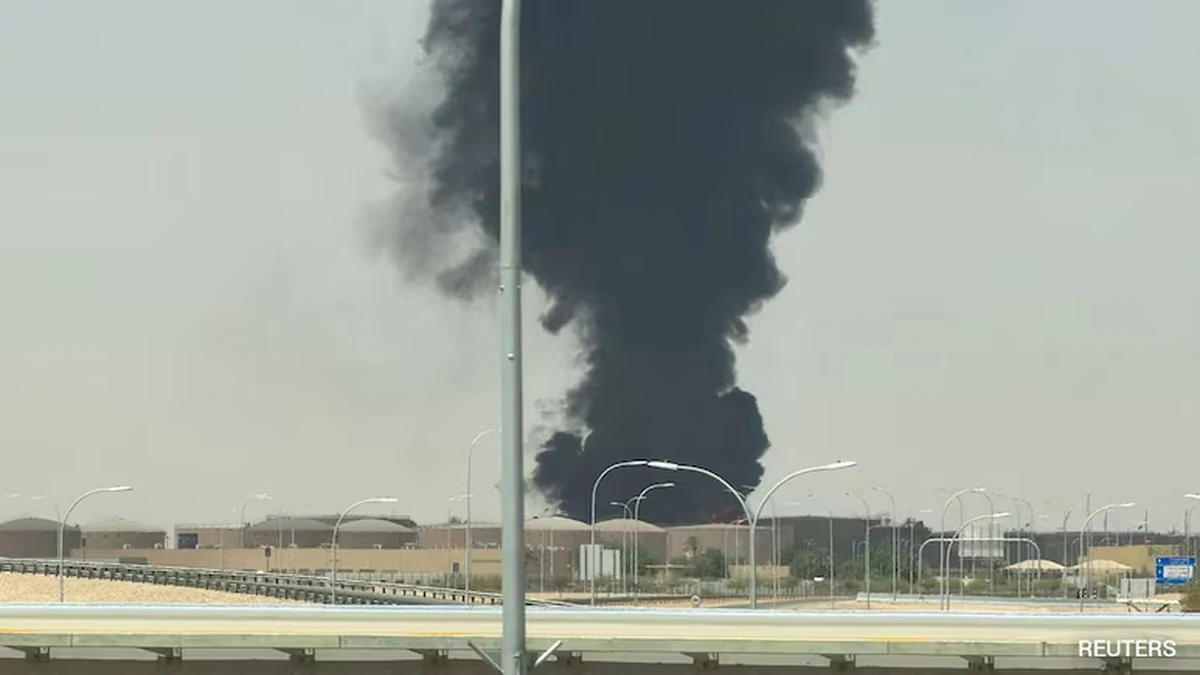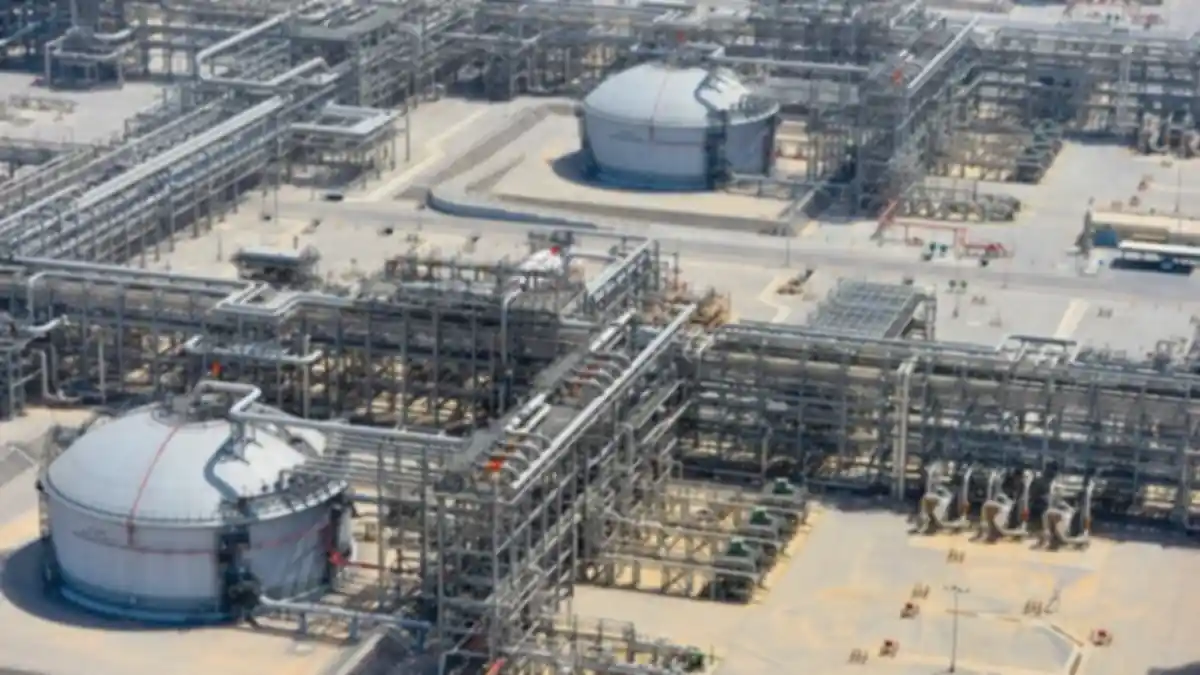
- A witness told Reuters on Saturday that a large plume of smoke and fire was rising near an Aramco facility in Riyadh. Saudi authorities and Aramco have not confirmed the incident or its cause.
- No one has claimed responsibility. Houthi-linked media talked about "Saudi aggression" against the capital but gave nothing specific.
- Meanwhile, Trump's national security team met at Camp David on Iran and Yemen, and about 9,000 more US troops are on their way to the region.
A witness in Riyadh told Reuters on Saturday that a large plume of smoke and fire was rising near an Aramco facility. Satellite images then showed a big fire in the city, and fire-detection data picked up unusual heat at the site, according to regional outlets. Videos are everywhere on social media. Most of them haven't been checked.
Saudi authorities haven't confirmed the fire. Aramco hasn't commented. Nobody has said if anyone was hurt, and nobody has stepped forward to claim it.
A number of outlets jumped straight to a Houthi drone or missile strike. For now that's a guess. The reports available at the time of writing don't rule out an accident, either.
Al-Masirah TV, a Houthi-affiliated channel, reported "Saudi aggression" against the capital on Saturday. No specifics. AFP correspondents also heard loud explosions in Sanaa, the Yemeni capital, around the same time.
Then there's last week. The Houthis said they'd gone after Aramco's Yanbu facility with missiles and drones, and Saudi Arabia said it intercepted six ballistic missiles with no damage reported. Back in July, Aramco shut its Jazan refinery after a fire that social media accounts and satellite data tied to a Houthi attack.
So when smoke goes up over a Saudi oil site right now, that's where people's minds go.
The worst of Saturday's fighting was in the southwest, around Taiz and Lahej, where displacement is approaching 200,000 people. It was the biggest escalation there in three weeks, and the heaviest since September.
It's a big change for Saudi Arabia. The kingdom and the Houthis had been through years of relative calm under a fragile truce. Houthi forces are now clashing with Saudi-backed government troops near Taiz again, and Saudi territory is back in range.
The Houthis are aligned with Iran, which matters a lot when the US has been at war with Tehran since February 28. That's when American and Israeli strikes began. Back in March an Iranian official had warned that if the US ever sent ground troops into Iran, Tehran would activate the Houthis against Red Sea shipping.
Washington clearly has Gulf energy sites on its mind. Axios reported that two more Patriot batteries have gone to Saudi Arabia and Qatar to cover oil and gas facilities. It also reported that Trump's national security team held talks at Camp David on the Iran war and Yemen, and that the meeting wasn't announced in advance.
Then there's what the president is saying in public. In Denton, Texas, on Thursday night, Trump said Iran "is ready to fold up" and that the war would be won "right after the election." The midterms are November 3. He added "maybe before." Asked by TIME whether he might ramp up bombing after the vote, his answer was one word: "Possible."
On the same day, a US official told CBS News and the Associated Press that the USS Theodore Roosevelt carrier group and the USS Makin Island amphibious group are headed to the Middle East. About 7,000 sailors and 2,000 Marines are involved. They could get there by the end of October, which would give the US three carrier groups and roughly 20,000 personnel in the area.
Iran's side isn't buying the confident talk. One Iranian official said Trump can win every day in his own imagination.
Brent crude went back above $100 a barrel in September for the first time in six weeks, and the Strait of Hormuz is still the main sticking point in the war. A confirmed hit on an Aramco site in the capital would add to that. Fuel prices are also one of the things Republicans are most nervous about heading into November.