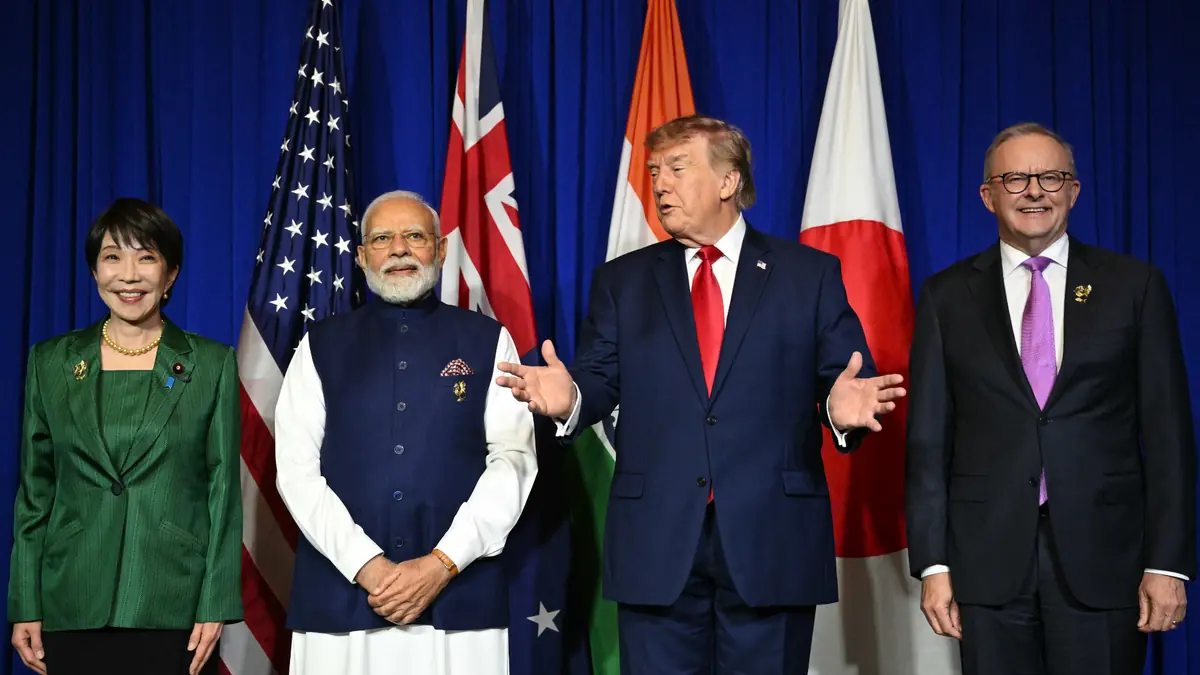
The four leaders gathered for the Quad Summit at the Solaire Resort in Manila on Tuesday. Trump set a highly personalized tone during his opening remarks. He referred to Modi as a "great leader" and a "friend of mine". He also called the Indian Prime Minister a "very tough man" and a "tough guy". Trump extended similar rhetoric to Japanese Prime Minister Sanae Takaichi. He noted she may be "even tougher".
Modi focused on practical outcomes. He told the room that the Quad serves as a trusted partnership for India. He later posted on X that the meeting gave fresh momentum to their shared vision for a free and open Indo-Pacific. A minor viral moment occurred during the leaders' photo opportunity. Modi noticed an Indian flag marker on the floor and picked it up. Trump reacted to the gesture by telling Modi to "save it".
Modi also used his time in Manila to meet with Philippine President Ferdinand Marcos Jr. He congratulated the Philippine leader on a successful ASEAN Chairmanship. The two leaders discussed expanding cooperation in defense, maritime security, space, technology, infrastructure, and energy. Modi departed Manila for New Delhi late Tuesday evening following the conclusion of the ASEAN and Quad summits.
Trump announced the creation of the Quad Super Intelligence accelerator during the summit. The initiative will coordinate technical assistance and fund deployments of artificial intelligence across the Indo-Pacific. The four countries plan to spend more than $85 million on this trusted superintelligence ecosystem. Trump stated they want to ensure nations sharing their values dominate the future of critical technologies. The summit shifted the Quad's focus heavily toward economic security and advanced technology.
The leaders also addressed supply chain vulnerabilities. Trump announced the completion of several new critical mineral and rare earth deals among the member nations. He said these agreements will secure supply chains and ensure no single foreign supplier can coerce the Quad countries.
The leaders expressed grave concerns over economic coercion and arbitrary export restrictions in their formal joint statement. They did not name China directly. The language targets Beijing's dominance over rare earth elements and mineral exports. The group will also launch the first Quad Business Leaders Forum next year to elevate economic cooperation. India is scheduled to host that inaugural business event.
The four nations pushed forward on defense cooperation to counter regional threats. They announced a new Indo-Pacific Maritime Surveillance Collaboration. The initiative aims to enhance information sharing and maritime domain awareness across the region.
The leaders committed to physical deployments to back up the data sharing network. The four countries will fly their respective P-8 and P-3C patrol aircraft together in a joint maritime exercise in 2027. This marks the first time these surveillance aircraft will conduct a joint drill within a formal Quad context. Japan, the US, Australia, and India also agreed to their first antisubmarine drill. The joint statement reiterated a shared commitment to protecting freedom of navigation and overflight throughout the Indo-Pacific.
The published announcements lack specific funding and execution details. The leaders did not specify exactly how the $85 million AI accelerator fund will be distributed. They also did not announce which private sector companies will participate in the technology buildout.
The new critical mineral deals lack specific public quotas or timelines. Building entirely new supply chains for rare earths requires years of infrastructure development and heavy capital investment. It is not clear how quickly the four nations can transition away from existing suppliers.
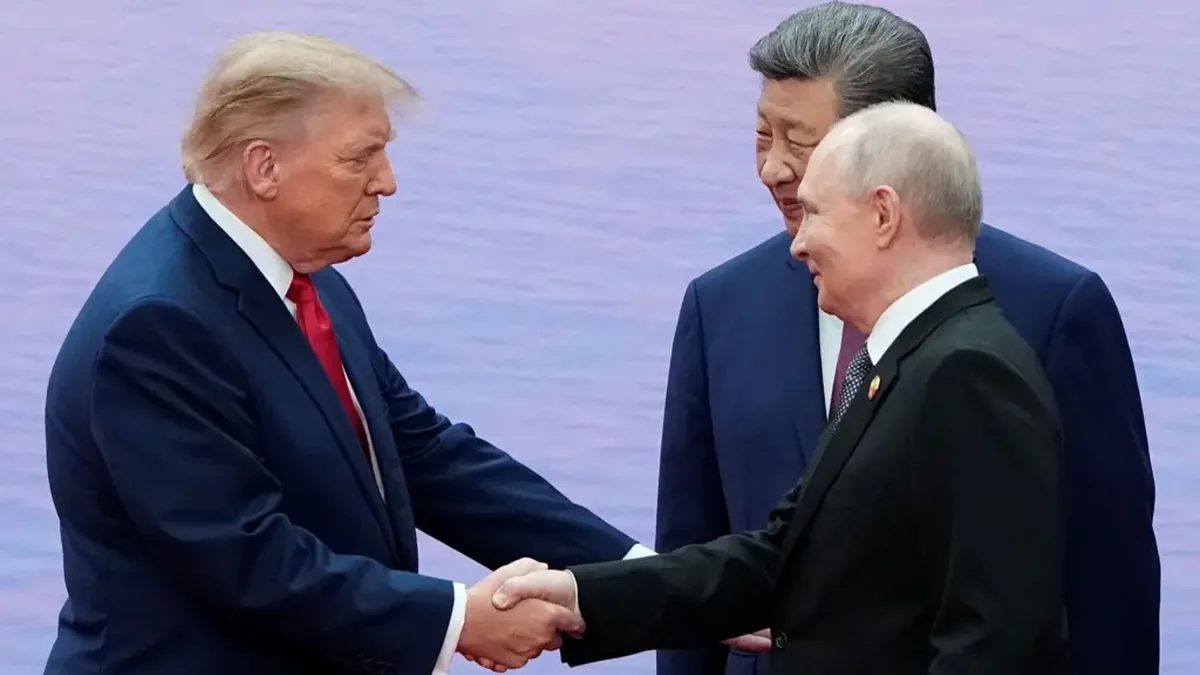
Trump will travel to China later this week to hold direct talks with Chinese President Xi Jinping and Russian President Vladimir Putin. Washington is preparing for these delicate negotiations following the strong rhetoric delivered in Manila. Some analysts suggest the new maritime patrols and economic frameworks serve as bargaining chips for trade discussions. The ultimate impact of Tuesday's announcements will depend heavily on Beijing's response to the Quad's expanding regional influence.