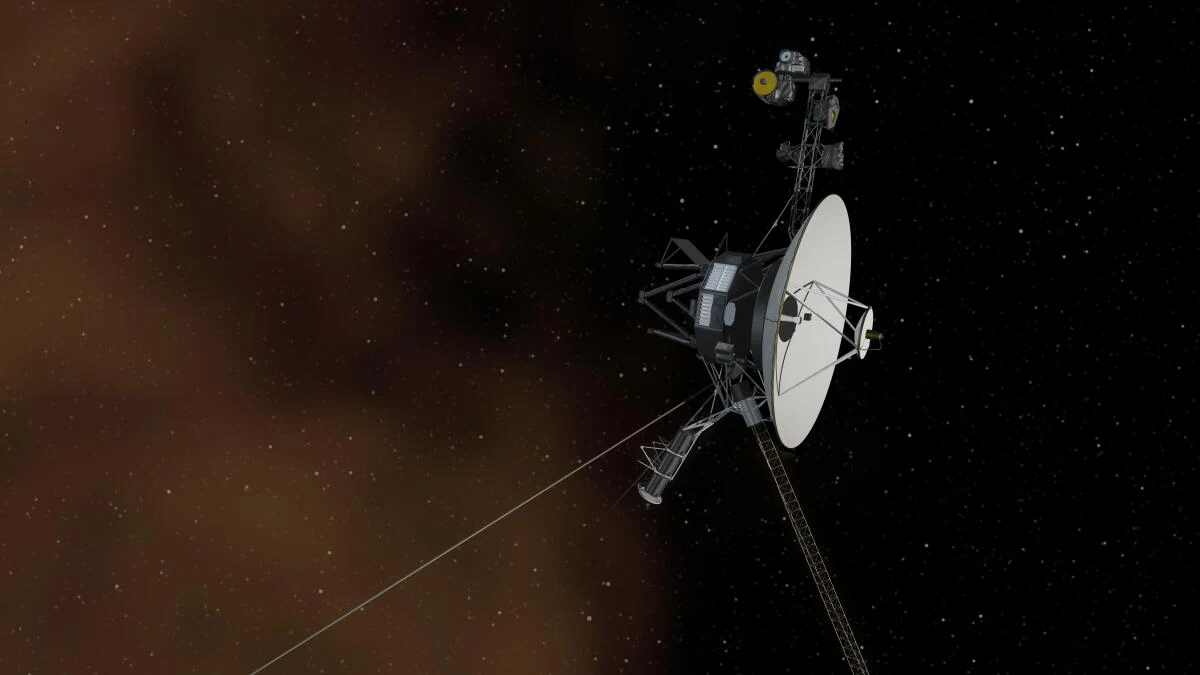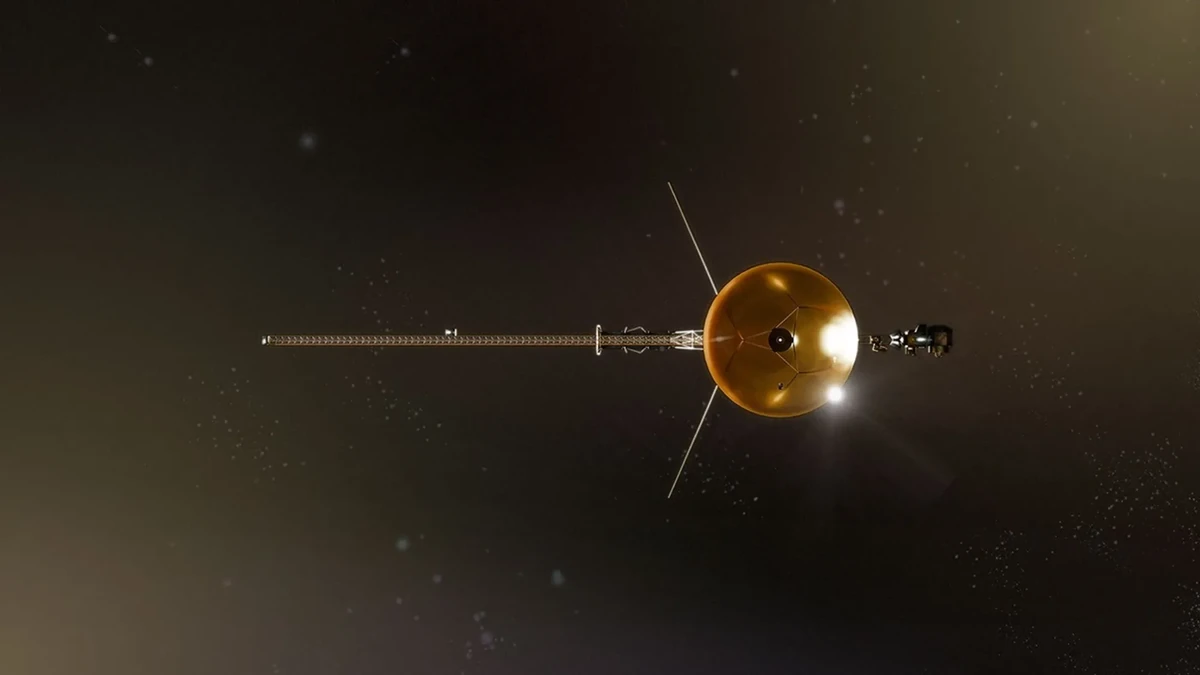
At 5:16:07 a.m. Eastern on November 18, NASA's Voyager 1 will sit 25.9 billion kilometres from Earth. In India that is 3:46 p.m. The number is not random. It equals exactly how far light travels in a day, which makes Voyager 1 the first human-made object to be one full light-day from home.
The spacecraft itself will notice nothing. NASA has been plain about this: no change in its surroundings, no change on board. The line is ours, drawn on a map the probe cannot read.
Voyager 1 left Cape Canaveral on September 5, 1977. Getting here took 49 years, 2 months and 11 days. The probe flew past Jupiter and Saturn, crossed into interstellar space in 2012, and has kept going at roughly 17 kilometres per second since. That is around 61,000 km/h, and it still needed nearly half a century to cover this much ground.
One light-day works out to about 173 times the distance between Earth and the Sun. Its twin, Voyager 2, took a longer route past Uranus and Neptune and trails behind. NASA does not expect it to hit the same mark until November 2035.
Tucked inside both craft is the Golden Record, a message from humanity etched for anyone who might find it. Greetings in Hindi, Rajasthani and Punjabi are among those carried on board, a detail that has been getting plenty of attention in Indian coverage this week.
The timing could have been awkward. On October 18 and 19, NASA's Deep Space Network failed to pick up Voyager 1's signal during two scheduled contact attempts, spaced 24 hours apart.
The suspect was the spacecraft's own fault protection, a built-in safety routine that makes the probe pause operations and settle into a stable configuration while engineers on Earth figure out what went wrong. Contact returned. A JPL official said the team was relieved to be back in touch and keen to understand what happened.
Some reports link the episode to a power adjustment the team nicknamed the "Big Bang," and one suggests a group of thrusters going offline may have played a part. NASA has not publicly settled on a single cause.
That uncertainty is the real story underneath the celebration. Voyager 1's operating margins are thin. Several of its ten original science instruments were switched off decades ago to save power, and every new fix is a trade between keeping something alive and risking something else.
Distance changes how conversation works. Anything sent from Earth on Wednesday morning reaches the spacecraft on Thursday morning. If the probe answers, that reply lands back here on Friday.
There is no live troubleshooting at this range. When something goes wrong, the spacecraft has to protect itself first and wait for a human response that arrives two days late. The mission team has already been working under those conditions for months, and the delay will only keep stretching as Voyager 1 pulls further away.
NASA has turned the moment into a public event it calls "Shine Bright for Voyager's Light-Day." After sunset on Tuesday, November 17, anyone can point a flashlight, bike light or phone at the sky and flash V-G-R, the mission's call sign, in Morse code. There is also an automated flasher on NASA's website for people who would rather not fumble with dots and dashes.
The idea has a nice bit of physics tucked into it. Light from Tuesday night's flashes needs a full day to travel the distance, so it arrives at the spacecraft right around the time Voyager 1 crosses the threshold. Nobody expects the probe to respond. NASA is asking participants to film their signal and tag @NASA.
Mission members and agency leaders will also take part in a public discussion hosted by JPL on November 19, covering the status of both Voyagers and the science they still collect.
Not forever. NASA has estimated that the Deep Space Network will lose contact with Voyager 1 around 2036, well before the probe could reach a second light-day. Before that, the team expects more surprises like October's. Voyager 2 may fall silent before it ever makes its own light-day.
Until then, the instruments that are left keep measuring the space between the stars, one slow signal at a time.