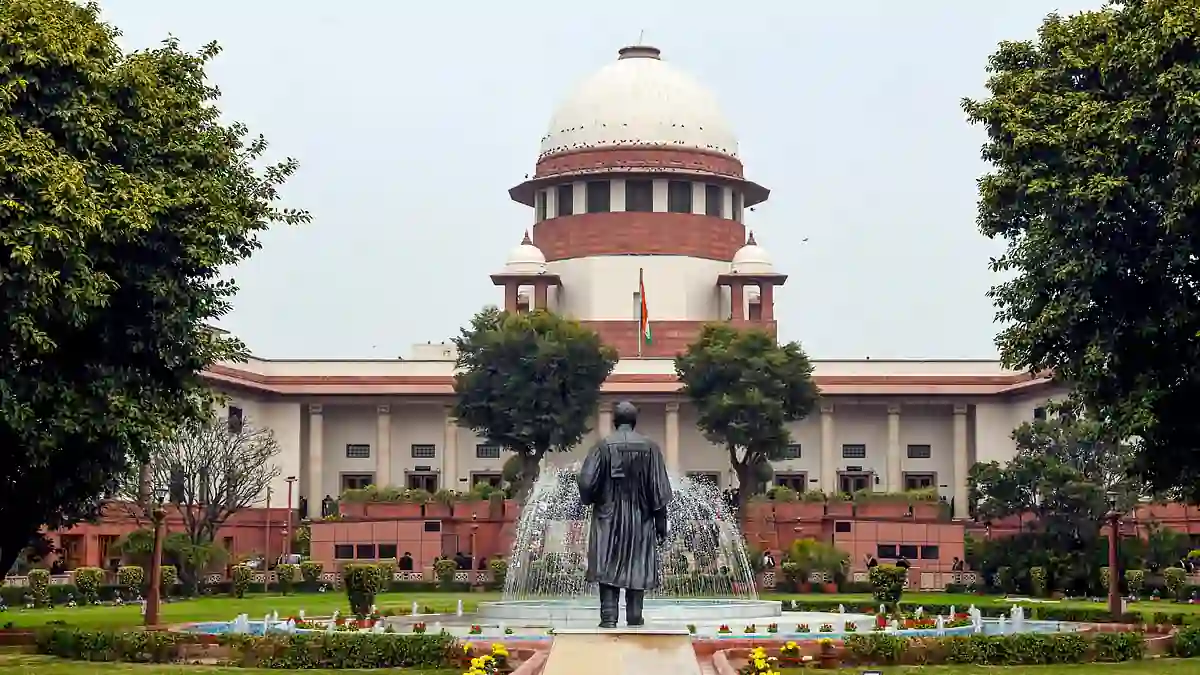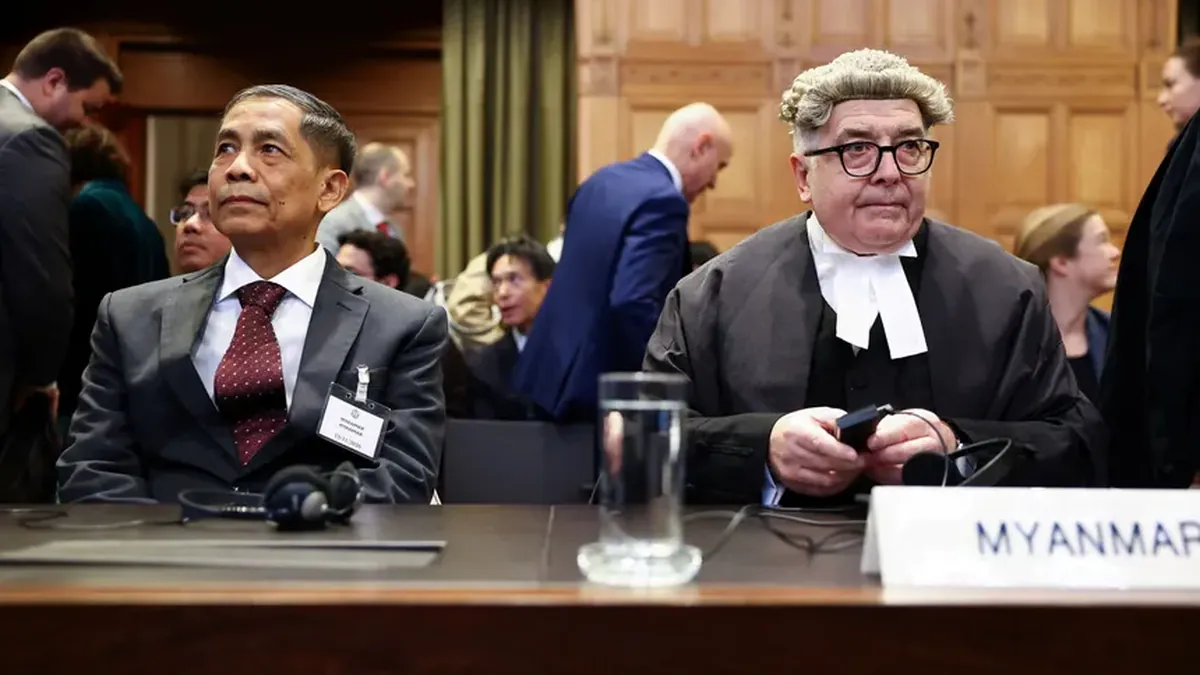
International Court of Justice Announcement at the Peace Palace on Thursday Morning The judges said Myanmar had committed mass atrocities with intent to destroy a substantial part of the Rohingya population in violation of the 1948 Genocide Convention. Myanmar cannot appeal the decision.
The court's findings center on "clearance operations" undertaken by Myanmar's army, the Tatmadaw, in northern Rakhine state in 2016 and 2017. Judges reported state forces had killed thousands of Rohingya men, women, and children. Judges found that the court had been presented with evidence of massrapes, rampant sexual violence, and the total or partial destruction of more than 180 villages. The crackdown drove more than 740,000 Rohingya to flee to neighboring Bangladesh. Most are in Cox's Bazar, the world's largest refugee camp.
Amnesty International called the ruling "historic and rare" for survivors. Human Rights Watch hailed the ruling as well. The ruling officially acknowledges long-denied Rohingya who have been living in camps in Bangladesh as exiles and stateless people for almost a decade.
The high-profile case was stirred up on 11 November 2019 when The Gambia filed a 35-page application against Myanmar. The tiny West African nation had no direct border or previous connection to the row but acted with the backing of the Organization of Islamic Cooperation. The Genocide Convention provides for the right of any state party to hold any other to account for violations of the treaty. Myanmar became a party to the convention in 1956.
Myanmar's first representative in The Hague was former civilian leader Aung San Suu Kyi. She argued that the military was responding to a "internal armed conflict" launched by Rohingya militants. The ICJ found that framing insufficient in January 2020 to order provisional measures, calling on Myanmar to abstain from any further genocidal acts and to provide an account of its work to that end.
The case exploded in the years to follow. After eleven nations had filed joint declarations to intervene in the case, they were Belgium, Canada, Democratic Republic of the Congo, Denmark, France, Germany, Ireland, Maldives, Netherlands, Slovenia, and United Kingdom. Public hearings on the merits were completed in late January 2026 under ICJ President Iwasawa.
The decision comes amid a global storm of controversy surrounding international law. Legal commentaries and diplomats were watching what the ICJ said about "genocidal intent" and Thursday's verdict. That standard of law has direct implications for South Africa's separate genocide case against Israel over the Gaza war.
The Guardian said fears were growing on the eve of the ruling of U.S. sanctions against ICJ judges over the Myanmar decision. Human rights activists were quick to react. "Threatening the world's highest court for politically inconvenient findings undermines the whole system of international accountability," Erika Guevara Rosas said on X. Washington has already attacked the International Criminal Court over cases concerning Israel and US interests.
"Meanwhile, the humanitarian … situation of the Rohingya in Myanmar has not changed," he said to reporters in New York. A UN expert said days before the verdict that the refugees are becoming more vulnerable as the civil war in Myanmar rages on and global donor funds dwindle. Many Rohingya undertake perilous boat voyages to seek safety and employment.
The ICJ has adjudicative authority for disputes between states but is not a criminal court with the authority to arrest generals. It also has no police to enforce its rulings. That implies a huge gap between a Hague ruling and real change in Rakhine State.
Gambia requested the court to order sweeping remedies, including safe return of displaced refugees, restitution of property, full right to citizenship, and trial of military officers. But who will enforce such demands against Myanmar's ruling military junta is unclear.
It also isn't clear how the U.S. will back up its threats of sanctioning ICJ judges or how the United Nations Security Council would respond in the event Myanmar simply disregards the ruling. But the most basic question of all, and the one that must weigh most heavily on the minds of the hundreds of thousands of Rohingya still marooned in Cox's Bazar, is simply this: When, or if, can they go home?