Xiaomi didn't waste any time answering Apple on this one.
Days after the iPhone 18 Pro Max hit shelves, Xiaomi fired back with its own Pro and Pro Max in China on September 23. Same three obsessions as always: camera specs that sound made up, batteries that just keep growing, and a display trick that's turning out to be genuinely more useful than it sounds on paper.
This is the part everyone's actually talking about. Xiaomi built something called a Privacy Display into both phones, hardware level, not software. It narrows how wide an angle the screen is readable from, so the guy standing next to you on the train has a much harder time reading your texts over your shoulder.
Samsung tried something similar on the Galaxy S26 Ultra earlier this year, and Xiaomi clearly noticed. What's interesting is Xiaomi didn't just copy the idea, it put the feature on both phones, the flagship Pro Max and the smaller Pro, instead of locking it behind the top tier model the way Samsung did. Some of the launch coverage also mentions location based triggers, meaning the phone can automatically hide sensitive stuff, alerts, floating windows, whatever, depending on where you physically are.
Will this actually stick around as a real industry standard, or is it a cool launch feature that quietly disappears by month two? Too early to say. But Huawei's messing with a similar idea on its Mate XT 2 foldable too, so at minimum, three big manufacturers currently think it's worth the engineering effort.
Strip away the privacy angle and this is still a seriously stacked spec sheet on both models.
The Xiaomi 18 Pro comes with a 6.4 inch LTPO AMOLED display, 2436 by 1120 resolution, running Qualcomm's Snapdragon 8 Elite Gen 6, backed by a 7,000mAh battery. Step up to the Pro Max and you get a 6.9 inch panel at 2624 by 1208, the beefier Snapdragon 8 Elite Extreme Gen 6, and an 8,500mAh battery.
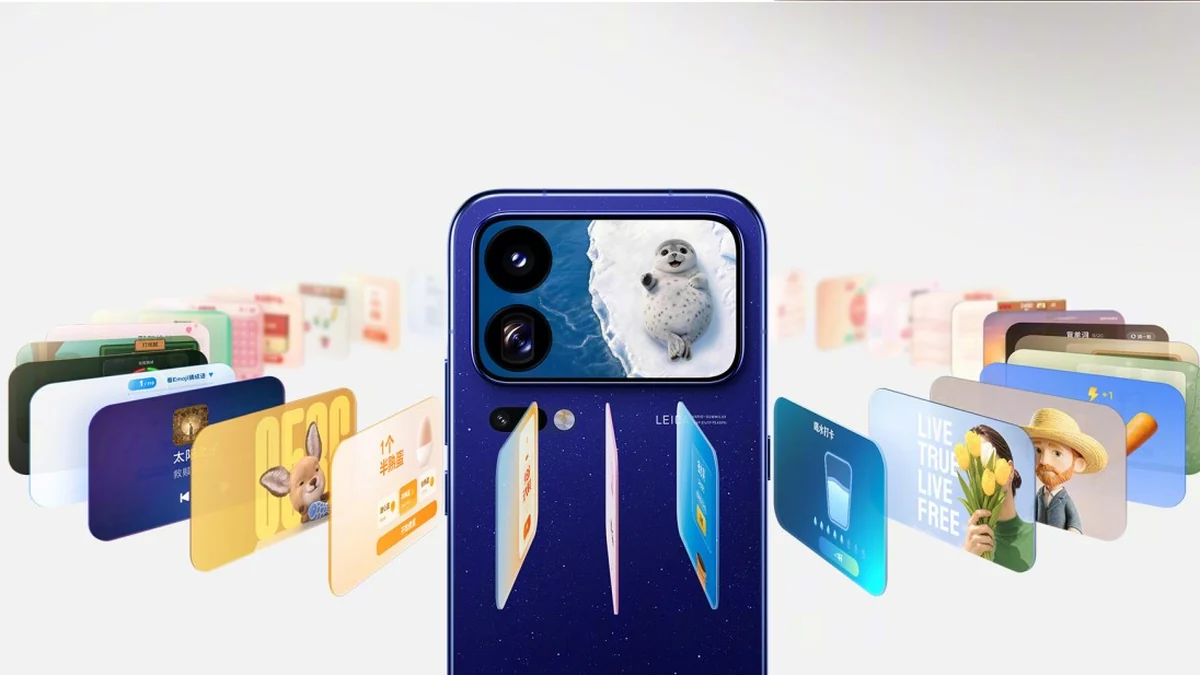
Both share a lot beyond that. Up to 4,000 nits peak brightness, 120Hz refresh, Dragon Crystal Glass 3.0 on top, bezels shaved down to just 0.99mm thanks to new LIPO packaging, IP68 or IP69 rated against water and dust, UWB support, and a customizable AI button. The rear display carries over from last year too, now doing more with new AI features instead of just flashing notifications at you.
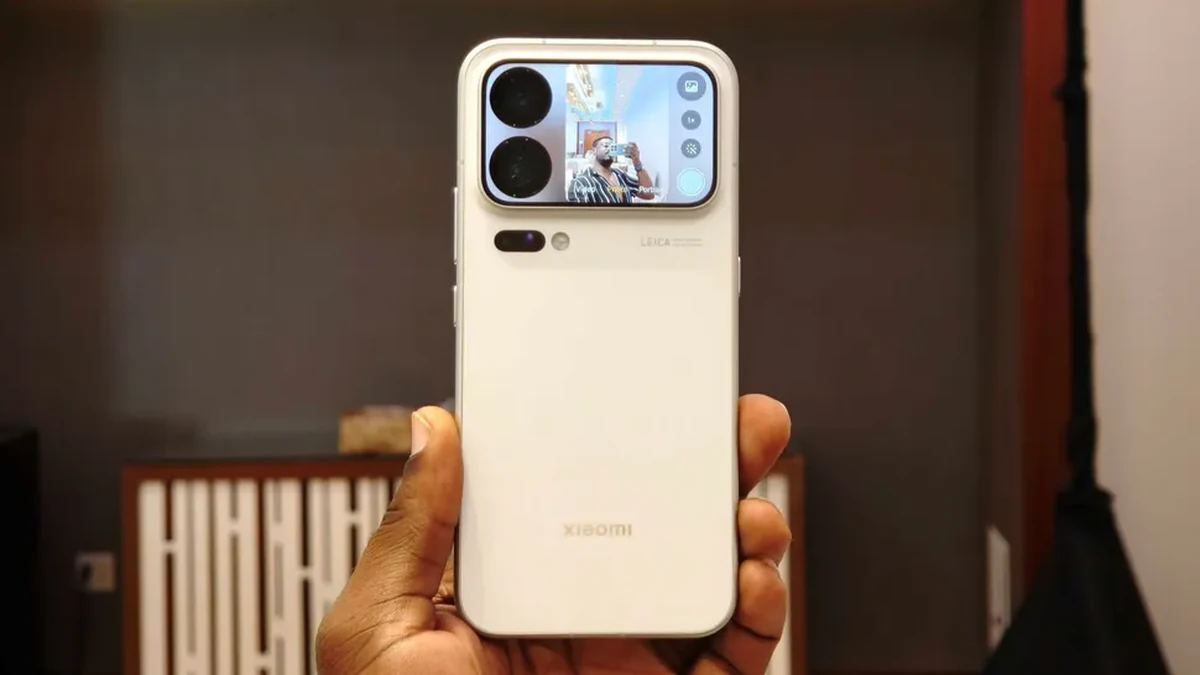
Photo: Xiaomi
Camera setup is identical across both phones, which is honestly a little unusual. 200MP Leica branded main sensor. 200MP periscope telephoto with OIS. 50MP ultrawide. 50MP selfie camera. Dual 200MP sensors on one phone still isn't something most manufacturers are doing yet, so that's worth sitting with for a second.
Xiaomi 18 Pro starts at CNY 5,999, roughly $895. Pro Max starts at CNY 6,999, around $1,045, climbing past $1,300 once you hit the top spec 16GB plus 1TB configuration.
There's also a Satellite Edition, a transparent backed Pro Max finished in red, bringing back a design Xiaomi hasn't touched since the Mi 10 Ultra Transparent Edition back in 2020. Pure nostalgia play, and it's locked to the highest storage tier only.
Here's where it gets fuzzy. Xiaomi has confirmed a global launch is coming later this year, and that alone is notable, last year's 17 Pro and 17 Pro Max never left China at all. But there's no date yet. No country list. No international pricing.
For India, early signs point toward a partial rollout, only the standard 18 Pro might actually show up, alongside a separate 18T model, while the Pro Max could skip the country entirely. Some Indian retail tracking sites are already listing an expected price around ₹89,990 for a Pro Max variant, but take that with a grain of salt until Xiaomi actually confirms anything.
Also worth knowing, Xiaomi has a habit of shrinking battery capacity slightly on international versions compared to what ships in China. So don't assume the exact numbers from this week's launch travel unchanged wherever the global version eventually lands.
There's a smaller, nerdier reason this one stands out too. The 18 Pro is the first commercially available phone running Qualcomm's brand new Snapdragon 8 Elite Gen 6, launched within hours of Qualcomm revealing the chip at its own Snapdragon Summit. Being first out the door with a new flagship chip is its own kind of bragging right in this industry, even if most people buying the phone will never think twice about it.
Between the privacy screen, the camera setup, and the timing right against both Apple and Qualcomm, this doesn't feel like a quiet incremental update. Xiaomi's clearly trying to make noise with this generation. Whether the global version, whenever it actually shows up, lives up to what just launched in China is the part everyone outside China is stuck waiting on.