Steve Jobs once said touchscreen laptops were a bad idea. His reasoning, roughly, was that holding your arm up to a vertical screen all day would be awful for your body. One outlet this week even ran with a headline calling it “ergonomically terrible,” Jobs-style. Apple, now run by CEO John Ternus, has apparently decided that was a conversation for a different decade.
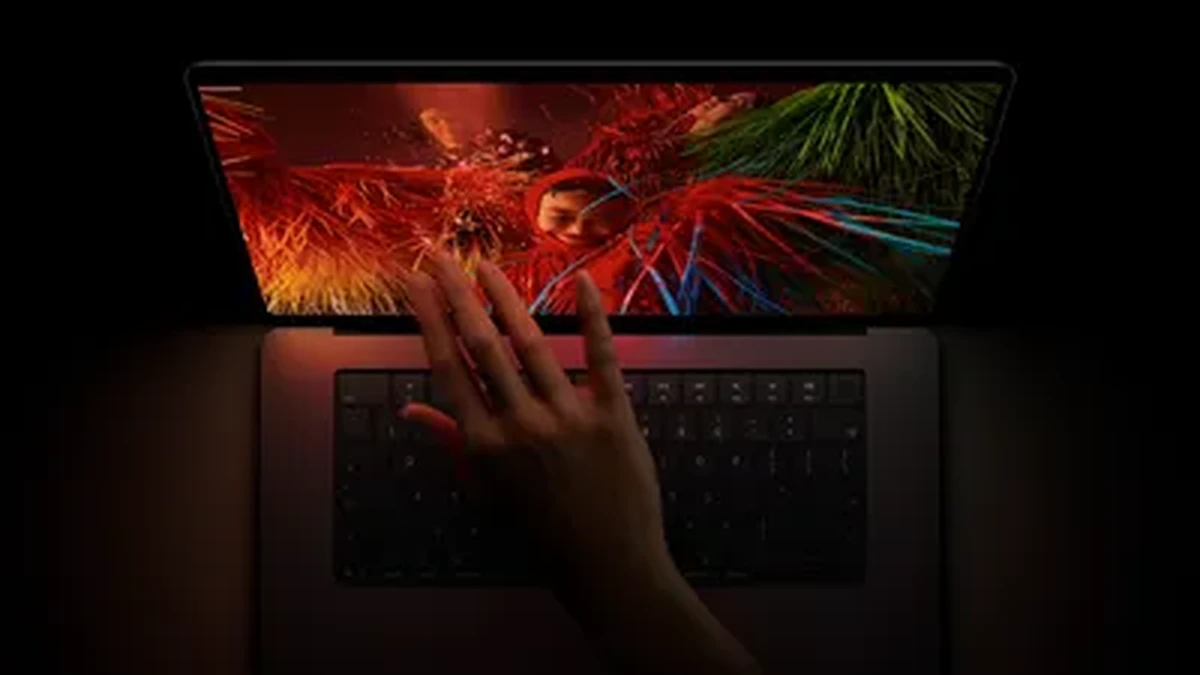
The headline piece is the screen. Apple calls it PROLED XDR, a tandem OLED panel that goes up to 2,000 nits of brightness at 120Hz and replaces the mini-LED display on the regular MacBook Pro. It comes in a 14.2-inch and a 16.3-inch size, and for the first time, you can touch it.
Under the hood are the M5 Pro and M5 Max chips, with up to 128GB of unified memory on the Max and storage you can push all the way to 16TB. Ports are what pros would expect: three Thunderbolt 5, HDMI, an SD card slot, MagSafe, and a headphone jack. Wi-Fi 7, Bluetooth 6, Touch ID and a 12MP Center Stage camera round it out. Apple also made the machines thinner and lighter than before, and yes, the Dynamic Island from the iPhone is now sitting at the top of the display.
Here’s what it’ll cost in the US:
- 14-inch, M5 Pro: $2,899
- 16-inch, M5 Pro: $3,399
- 14-inch, M5 Max: $4,499
- 16-inch, M5 Max: $4,799
That’s before you add memory or storage. MacRumors worked out that a fully loaded M5 Max with 128GB of memory and 16TB of storage runs as high as $14,549. In India, one outlet pointed out the top-end model costs more than a Hyundai Creta. TechCrunch described the whole thing as pushing laptop pricing to “a new extreme.”
Bloomberg’s Mark Gurman had a simpler framing earlier this week: Apple is betting MacBook Pro buyers will pay more for a touchscreen.
One thing Apple has been careful about is not making touch mandatory. CNBC’s early hands-on described it as “totally optional,” and PetaPixel reported that Apple isn’t locking peak MacBook Pro performance behind the touch hardware. A touch-friendly interface is also on the way in macOS, with developer videos out now and live sessions coming in November.
First impressions from reviewers have been mixed in a predictable way. Ars Technica said the OLED looks great on a Mac. Engadget called it familiar and radically improved at once. CNET’s Jeff Carlson had a lot to say about fingerprints, and 9to5Mac’s Ryan Christoffel said it has everything he wanted, minus one thing.
There’s one odd wrinkle. The touchscreen MacBook Pros run on M5 Pro and M5 Max chips, but Apple also announced M6 machines, including a new iMac and a non-touch MacBook Pro, a day earlier. That means the most expensive, most advanced-looking new Mac laptop isn’t running the newest chip family. Red Shark News pointed this out directly, noting it puts the touchscreen models effectively a generation behind.
Pre-orders are open in 30 countries and regions, with deliveries and in-store availability starting Friday, November 6. Best Buy was already offering a $100 gift card with pre-orders by Wednesday afternoon. TrendForce is forecasting global OLED notebook shipments to grow over 40% year-on-year in 2027, which suggests the industry expects Apple’s move to pull others along with it. Whether buyers actually line up to pay a $700 premium for touch is the part nobody can answer yet, and it’ll probably be clearer once real customers, not reviewers, start using these things every day.