- Vice President JD Vance reportedly sent a letter to Mohsen Rezaei, secretary of Iran's Supreme National Security Council, to revive stalled peace talks.
- One source told the Wall Street Journal the letter went out at Trump's direction. Trump denied ordering any talks and said the contact was about getting supplies to people who are unwell.
- The outreach has not produced a detailed peace proposal, and Trump has said he expects to resume strikes on Iran after the November 3 midterm elections.
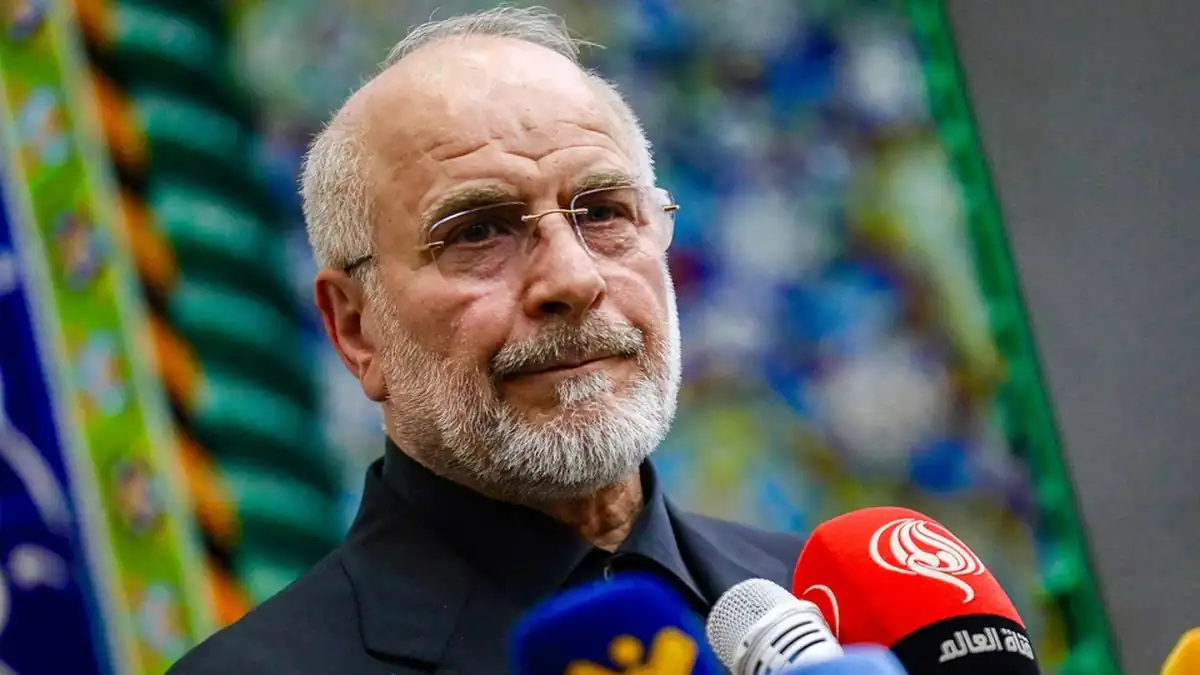
Vice President JD Vance has reached out to one of Iran's most powerful hard-liners in an effort to get stalled peace talks moving again, the Wall Street Journal reported on Wednesday. The letter went to Mohsen Rezaei, secretary of Iran's Supreme National Security Council and the longest-serving commander the Islamic Revolutionary Guard Corps has had.
The report cites US officials and people familiar with the matter. One of them said the letter was sent at Trump's direction and that the president knows about the outreach. No detailed peace proposal has come out of it so far.
Reporters at Joint Base Andrews asked Trump on Wednesday whether he had told Vance to restart negotiations with Tehran. He said he had not. He described the contact as an effort to get supplies in to help people who are not well.
None of the coverage explains how a letter to Iran's top security official fits that description. The two accounts sit side by side, unreconciled.
Some US officials believe the people now holding real influence in Tehran are not the diplomats Washington dealt with earlier in the war. US and Israeli strikes killed senior regime leaders at the start of the conflict, and hard-liners have gained ground since. Talking to them directly, the thinking goes, could produce a better deal than talking around them.
Earlier rounds ran through other channels. Vance led the American delegation to Islamabad in April, and a June meeting in Switzerland brought Foreign Minister Abbas Araghchi to the table with Pakistani and Qatari mediators in the room. Neither track ended the war.
A person familiar with the exchanges told the Journal that Vance's letter, and the messages that followed between American and Iranian officials, have dealt with how negotiations might be set up. Terms have not been discussed in any detail.
Vance has been firm on what Washington wants. In an interview with Reuters this week he said Iran would have to meaningfully cut its enrichment capacity before the United States would agree to end the war. Promises of future reductions would not be accepted as a substitute, he said, calling it a very basic threshold issue.
That position leaves a narrow path. Tehran has said it will not bargain under threats, and Araghchi repeated as much at the UN General Assembly in September while presenting a seven-day plan to reopen the Strait of Hormuz. Trump rejected that plan late last month.
The fighting has been quiet since a ceasefire in mid-April, but the quiet comes with conditions. The Journal reported in September that Trump told aides he expects to resume bombing Iran after the midterms, though officials described him as reluctant to launch major combat operations and said his view could change with the election results.
On October 8 Trump posted that the United States would not attack Iran before the midterms and that his team was having productive discussions with Tehran. A separate report carried by Israel National News says Gulf allies have been told to prepare for possible strikes once the votes are counted.
Iran appears to be reading the calendar the same way. A person familiar with Tehran's thinking told Bloomberg that Iranian officials are bracing for a fresh American bombing campaign around the election and preparing to hit back across the region, with Israel and the United Arab Emirates among the possible targets.
The economics are not helping anyone. The conflict has disrupted energy flows out of the Persian Gulf, and Brent crude is up more than 80 percent this year. A US naval blockade continues to bite, and traders are watching for signs of escalation after November 3.
Ali Vaez of the International Crisis Group has argued that both Trump and Israeli Prime Minister Benjamin Netanyahu could see a new round of war as a political escape hatch, a way to show strength at home. Whether that describes Washington's calculation is something neither capital has said.
Rezaei has not been quoted publicly on the letter in the reports reviewed, and it is unclear whether he has replied. Tehran's response, or its silence, will say a lot about whether the hard-liners want a deal or only want to see what Washington is offering.
The midterms are five days away.