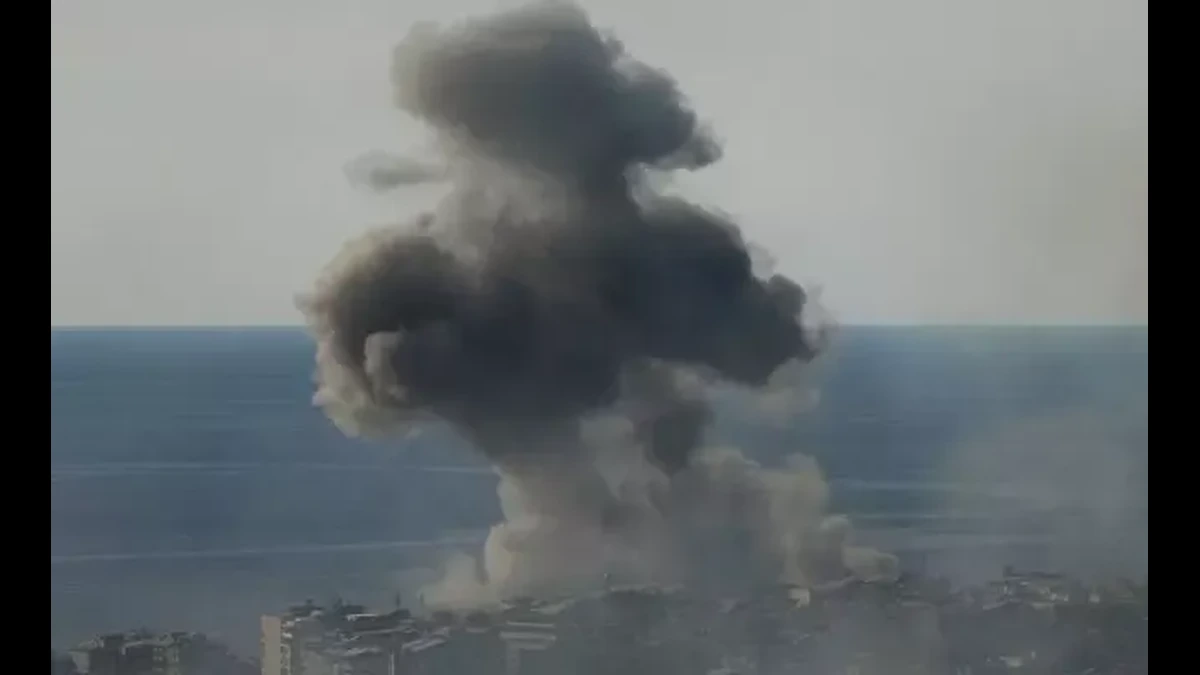
Riyadh’s financial district isn’t supposed to be a target. It’s a showpiece of the kingdom’s economic reform push, with glass towers, shops and a busy metro station. On Sunday morning, residents heard loud explosions.
The official account is cautious and brief. The Energy Ministry said an Aramco administrative building in Riyadh was damaged by falling shrapnel, with no injuries or deaths. It described the incident as an “attempted attack.” The coalition’s spokesman, Turki al-Maliki, said air defenses had intercepted and destroyed two ballistic missiles launched by the Houthis toward Riyadh. ABC reports that two cruise missiles were also stopped, and another ballistic missile aimed at the southern region overnight.
The people who saw the building tell a more dramatic story. A Reuters witness saw blown-out windows across several floors of Aramco Tower, one of the tallest buildings in the district. AFP spoke to three witnesses who confirmed damage to multiple floors, and one said it was the Aramco tower for sure. The ministry calls the damage limited. Aramco hasn’t commented in the reports I found.
The Houthis hadn’t issued a statement about the tower’s damage at the time of the reports. Their narrative is about the day before. On Saturday, military spokesman Yahya Saree said the group had carried out six operations using ballistic missiles, cruise missiles and drones against Aramco facilities, Riyadh’s airport and Saudi troops and military sites. The statement claimed the operations had succeeded and caused casualties among Saudi ranks. Saudi authorities haven’t confirmed that.
They frame it as retaliation. A Houthi health ministry spokesman said Saudi airstrikes on Saturday hit homes in al-Shariya, near Sanaa, killing at least 27 people. A day earlier, the Houthis said Saudi strikes killed 30 people at a market in Taiz. The Saudi-backed Yemeni government denied that and said a Houthi missile was fired toward the market. Both claims are unverified, and I haven’t found a Saudi comment on the Sanaa strike.
The pattern is the concern. Al Jazeera notes the Houthis have attacked Riyadh and Dammam airports, the Ras Tanura and Rabigh refineries and other Aramco sites across the kingdom. The Times of Israel adds that Aramco’s headquarters suffered extensive damage in an attack in October. This is a fight over Saudi Arabia’s economic core, with the oil infrastructure the kingdom depends on.
It also overlaps with a larger regional crisis. The Houthis are Iran-aligned, and Saudi Arabia has been under pressure from Iranian strikes this year. Analysts disagree on how directly Tehran steers the Houthis’ actions, and I haven’t seen evidence in these reports either way.
Earlier this week, Arab countries and the Muslim World League condemned a Houthi attempt to target Mecca and Medina. The Houthis haven’t publicly responded in anything I found, and Saudi officials have said missiles were intercepted.
Three questions stand out. First, how serious is the damage to the tower, and will Aramco say? Second, how many people died in the Yemen strikes, since the only figures come from Houthi officials? Third, what does Riyadh do next? A coalition response isn’t in these reports, and a wider escalation is possible, though that’s an analyst’s reading and not an official position.
For the people in Riyadh, the answer is simpler. Schools in the capital were reportedly due to return to in-person classes after weeks of remote lessons caused by earlier threats. I’ve only seen that in one source, so check it.