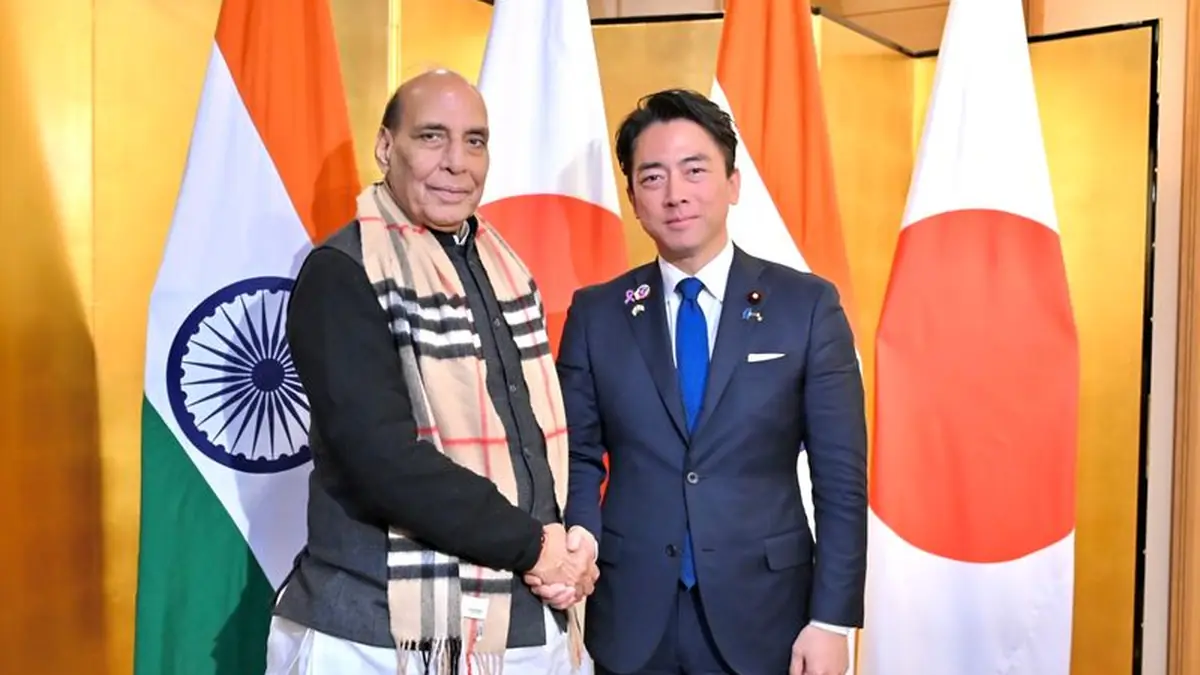
On the day prior to the commencement of the discussions, the defence minister of India took to the deck of one of the latest warships of Japan. In less than 24 hours, both nations were having discussions for constructing ships jointly.
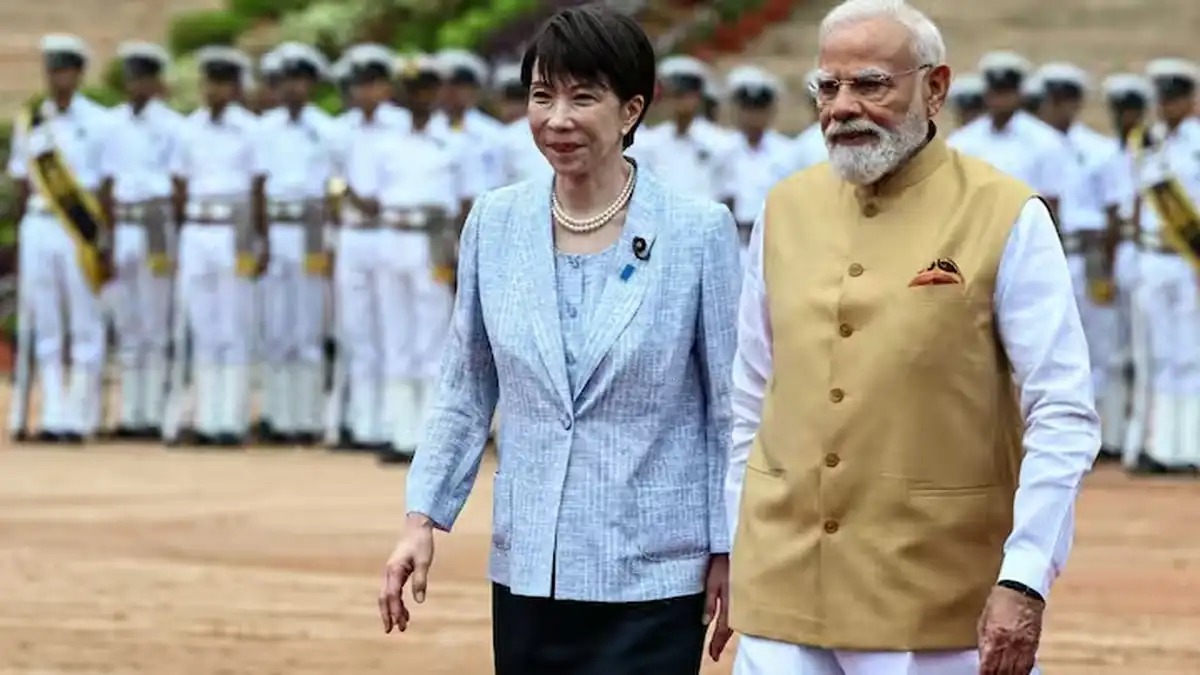
The Indian defence minister Rajnath Singh was escorted by his Japanese counterpart Shinjiro Koizumi for visiting the Mogami-class frigate JS Natori of the Yokosuka naval base.
The meeting on Thursday, November 19, at Iikura Guest House featured the presence of Singh and India’s Minister for External Affairs S Jaishankar with Koizumi and Japan’s Minister of Foreign Affairs Toshimitsu Motegi. This was the fourth India-Japan 2+2 Dialogue.
A working group of officials was to work on further development of mine countermeasure capabilities as well as on the joint development of naval shipbuilding and design. The important word here is “explore.” As per the reports analyzed, there is no contract, ship number, or time frame mentioned.
There were no specific joint developments in respect of underwater and missiles projects.
The news certainly did not come out of the blue. It comes following an offer from Tokyo, made a few months back, to design their latest warships from the Mogami class in India.
Koizumi invited Singh for a ship tour prior to the meeting. He said that he would be glad to have the Indian minister visit him in his native place of Yokosuka.
Japan's design certainly has global recognition. Improved versions of the Mogami class warships are to be used as replacements for the aging Australian navy fleet.
The ministers expressed that they look forward to deepening defense industry collaboration under the "Design with Japan, Make in India" concept. They also expressed their welcome towards the third India-Japan Defense Industries Forum in Tokyo held in October.
The Defence Research and Development Organization of India and the Acquisition, Technology, and Logistics Agency of Japan will collaborate on advanced missiles and defensive technology. The two parties also called for early completion of an agreement on development and production of specialized radio communication equipment for warships.
The UNICORN mast is a link between the two navy fleets. An agreement on co-development was signed between India and Japan on November 15, 2024.
However, the discussion was not limited to building ships. Among the matters that were discussed were mutual access to repair facilities for ships. Koizumi noted that Japanese Self-Defence Forces will use a shooting range in India for the first time in 2027.
Additionally, the ministers welcomed the participation of Japanese Air Self-Defence Force fighter jets in the exercise Veer Guardian 26 in India for the very first time.
"As a result of our collaboration, we aspire to be the lynchpin for the Indo-Pacific region," Motegi said at a joint press conference. According to Koizumi, "this is a significant strategic milestone."
The talks were "fruitful," said Singh. He added that both sides confirmed the "Special Strategic and Global Partnership" and a commitment to a "free, open and rule-based Indo-Pacific."
Jaishankar felt that India and Japan as two dominant countries in the region must protect their interests while empowering their partners. None of the above statements mentioned China.
Geopolitical environment is clear despite the diplomatic language used by the Ministers. Both India and Japan are members of the Quadrilateral grouping together with the United States and Australia, whose intention is to counter the growing power of China.
This relationship has developed in phases, whereby the third 2+2 conference took place in New Delhi on August 20, 2024, while the second took place in Tokyo on September 8, 2022.
But many issues are still unclear. The identity of the Indian shipyards involved, the type of ships to be built, and the extent of technical cooperation that Japan will allow remain unanswered. Japanese defense exports are known to have been severely limited before.
There has been no figure for the cost, and the Indian shipbuilders have made no public comments. It is a very long way from a working group to the production line.