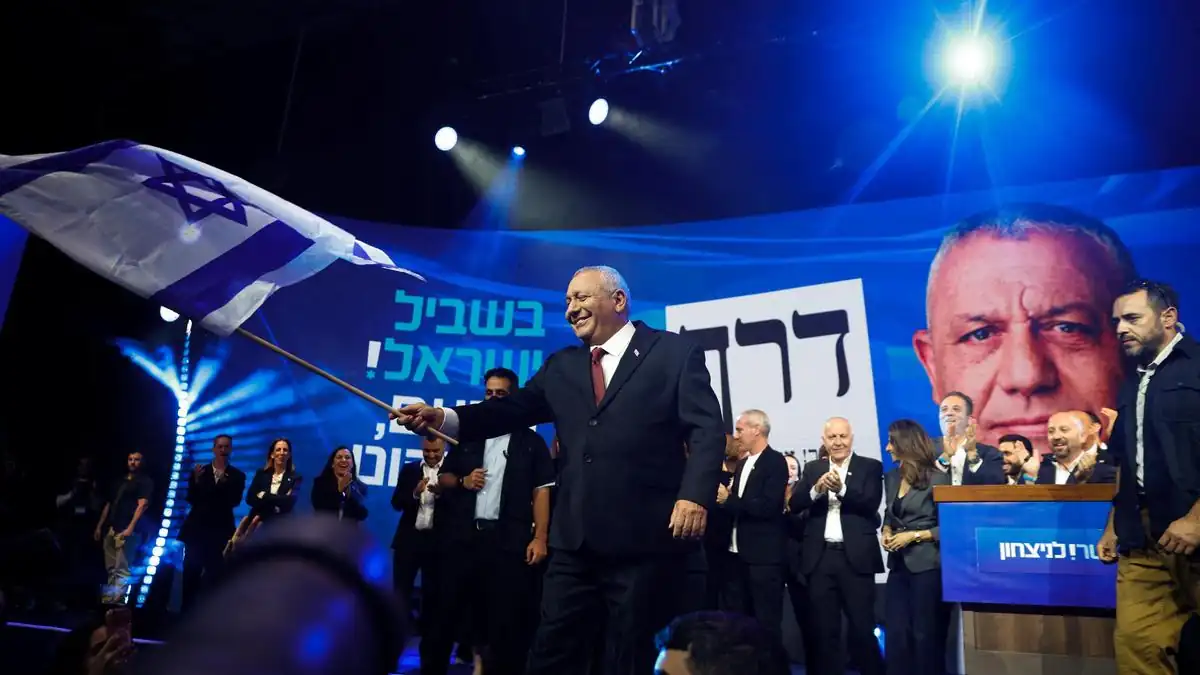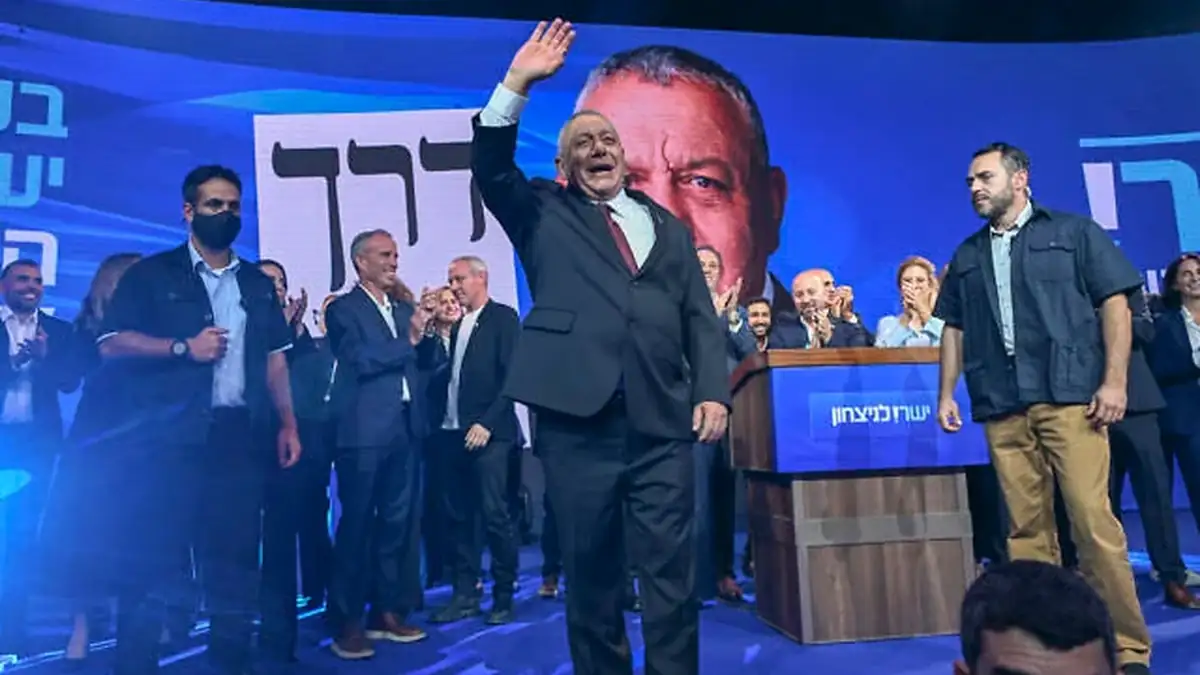
Israelis voted in numbers not seen since 1999. Turnout reached 77.7 percent, about seven points above the 2022 election, in the country's first national vote since the Hamas-led attack of October 7, 2023. The war that followed shadowed almost every campaign speech.
Exit polls on election night pointed to a stalemate. Two of the three major networks gave Eisenkot's bloc a thin lead. Channel 13 had the two camps level at 51 seats apiece.
The real count told a slightly different story. With roughly 86 percent of ballots tallied, Netanyahu's bloc of right-wing, far-right and ultra-Orthodox parties stood at 53 seats. Eisenkot's alliance had 48, and the Arab-led parties 19. Likud was the biggest single party on 26 seats, ahead of Eisenkot's Yashar on 21.
About half a million double-envelope ballots, cast by soldiers, hospital patients and diplomats, were still outstanding at that point. Reports since the final count have described the same basic picture: uncertainty, and no bloc close to a majority.
Netanyahu's coalition went into the vote with around 68 seats. Dropping to the low 50s is a heavy loss by any measure, and Eisenkot's camp has framed it exactly that way. He told supporters Netanyahu was a caretaker with no mandate. Yair Golan, who leads the left-wing Democrats, put it more bluntly on X, saying he knew how to count to 120.
Netanyahu's side reads the same results differently. His camp points to Likud finishing first and to what Reuters described as unexpectedly strong support among Jewish voters. He has called for a strong right-wing government. Some in his party have gone further and claimed the election was stolen by Arab parties, a charge opponents reject.
On paper, Eisenkot's 48 seats plus the 19 held by Arab parties come to 67. Politics rarely follows paper.
Arab-led parties had their strongest showing in years, up from 10 seats in the outgoing Knesset. That changes the maths for everyone, and nobody looks comfortable about it.
Eisenkot's party has asked Arab factions to affirm that Israel is a Jewish and democratic state, that Hamas must be disarmed, and that both ultra-Orthodox Jews and Arab citizens should lose their exemptions from military service. Yousef Jabareen, who leads the Joint List, has instead called for what he describes as a true and equal Jewish-Arab partnership. Ra'am's Mansour Abbas has said he hopes the final tally lets the opposition and his party reach 61.
One regional report said both Netanyahu and Eisenkot had ruled out partnering with Arab-led parties. Eisenkot's allies have publicly argued against erasing Arab votes, while also keeping their conditions on the table. Both positions can be true at once, and that is the problem.
Israeli law gives President Herzog a defined role here. Once official results are published, he consults the parties and must assign the task of forming a government within seven days. He is free to pick the person he thinks has the best chance, who is not always the leader of the biggest party.
Until a government is sworn in, Netanyahu keeps his job. Experts note a caretaker government faces some limits but retains powers, including over the war with Iran. That is one reason a stalemate is not simply a defeat for him.
Herzog has said he will do everything he can to avoid another election. Sources in Eisenkot's party claimed before the vote that the president had floated a Netanyahu-Eisenkot unity government. His office flatly denied it, and Eisenkot has said Netanyahu cannot serve as prime minister, minister or deputy minister under any arrangement.
Four outcomes are being discussed in the Israeli press.
Eisenkot could try to build a government that relies on Arab parties, either inside the coalition or from outside. A unity deal remains the option both leaders publicly reject. Netanyahu could try to peel off individual lawmakers from the opposition. And if everything fails, voters go back to the polls, as they have done repeatedly in recent years.
The opposition has also been looking at Knesset arithmetic. Eisenkot's bloc and the Arab parties together hold 66 or 67 seats, and one report said they were weighing a move to replace Speaker Amir Ohana of Likud. Eisenkot has vowed to use that parliamentary majority quickly. Thousands of people rallied this week urging a Jewish-Arab coalition to remove Netanyahu, according to Al Jazeera. The Times of India reports that the anti-Netanyahu camp is also considering a direct prime ministerial election bill to break the logjam, though details remain thin.
Nothing is settled until Herzog speaks to the parties. Coalition talks in Israel have run for weeks or months before, and the electoral threshold of 3.25 percent means even small shifts in the final tally can move seats around. Official results arrive on November 4.