The alert went out at 2:48 pm, India time.
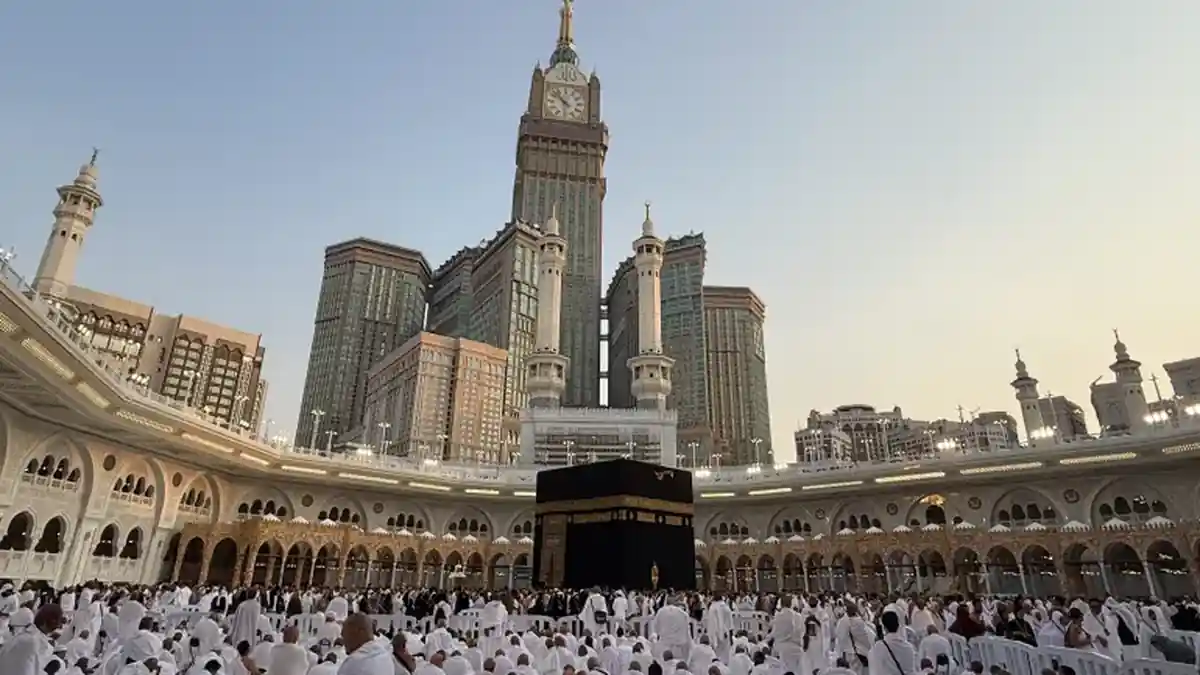
Saudi Arabia's General Directorate of Civil Defence pushed a warning of "potential danger" to Mecca. Also Jeddah, 70 km west on the Red Sea. Also Taif. Get inside, it said. Away from windows, balconies, rooftops. If you're driving, pull over, and not under a bridge or next to a high-rise.
Three hours on, the same account posted that the danger had passed in Mecca, and asked people to stop crowding and stop filming.
Now, the Houthis have aimed at Mecca before. October 2016, a ballistic missile, intercepted about 65 km out. The Arab League called it a violation of a holy place. Turkey's foreign ministry put out a statement within hours. Qatar called it a blatant assault on the sanctity of Islamic holy sites.
But that was an interception announced after the fact. This was a siren. People in Mecca were told to take cover in real time, and going by every record anyone can find, that is a first.
Monday's barrage.
The Houthis fired ballistic missiles and drones at Saudi air bases and cities. Col. Turki al-Maliki, the Saudi-led coalition spokesman, put the injured at 13, across Khamis Mushait, Abha and Taif. He called the attacks heinous and deliberate, said they targeted civilians, and promised the coalition would respond firmly and take what he described as all necessary operational measures.
Tuesday's launches went at the western coast, according to Israel Hayom, which is what set off the Mecca, Jeddah and Taif alerts. Saudi jets hit Houthi positions near Taiz the same day.
One technical detail worth sitting with. The missiles reaching western Saudi Arabia have a range of roughly 680 km. That is modest by Houthi standards. The ones they have fired at Israel travel more than three times that far. And the group is thought to hold hundreds of the shorter-range type, maybe thousands. None of them will win a war. All of them, fired often enough, can keep a country of 35 million permanently jumpy, which appears to be the point.
Crown Prince Mohammed bin Salman was in Egypt when the alerts went off, on a state visit, meeting Sisi.
The missiles get the coverage. The ground war is the bigger story.
Houthi forces spent the weekend pushing down Yemen's Red Sea coast and took Mocha port. On Monday they grabbed the Greater and Lesser Hanish islands, roughly 100 miles north of the Bab al-Mandeb Strait. UN special envoy Hans Grundberg told the Security Council the group now has a direct presence on the shores of what he called the world's most vital straits.
Grundberg's briefing was not diplomatic in the usual sense. He said his warnings about a slide back into large-scale war had turned into harsh reality. Fighting in Marib, Jouf, Al-Baida. Civilians killed in Taiz and Hodeidah. Shelling of displacement sites in Marib that killed children and destroyed shelters. Over 11,400 households displaced since September 3, most of them from Taiz.
Back up eight days and the September 8 attacks had already wounded 73 people in southern Saudi Arabia, women and children among them, with fires at a Jazan refinery
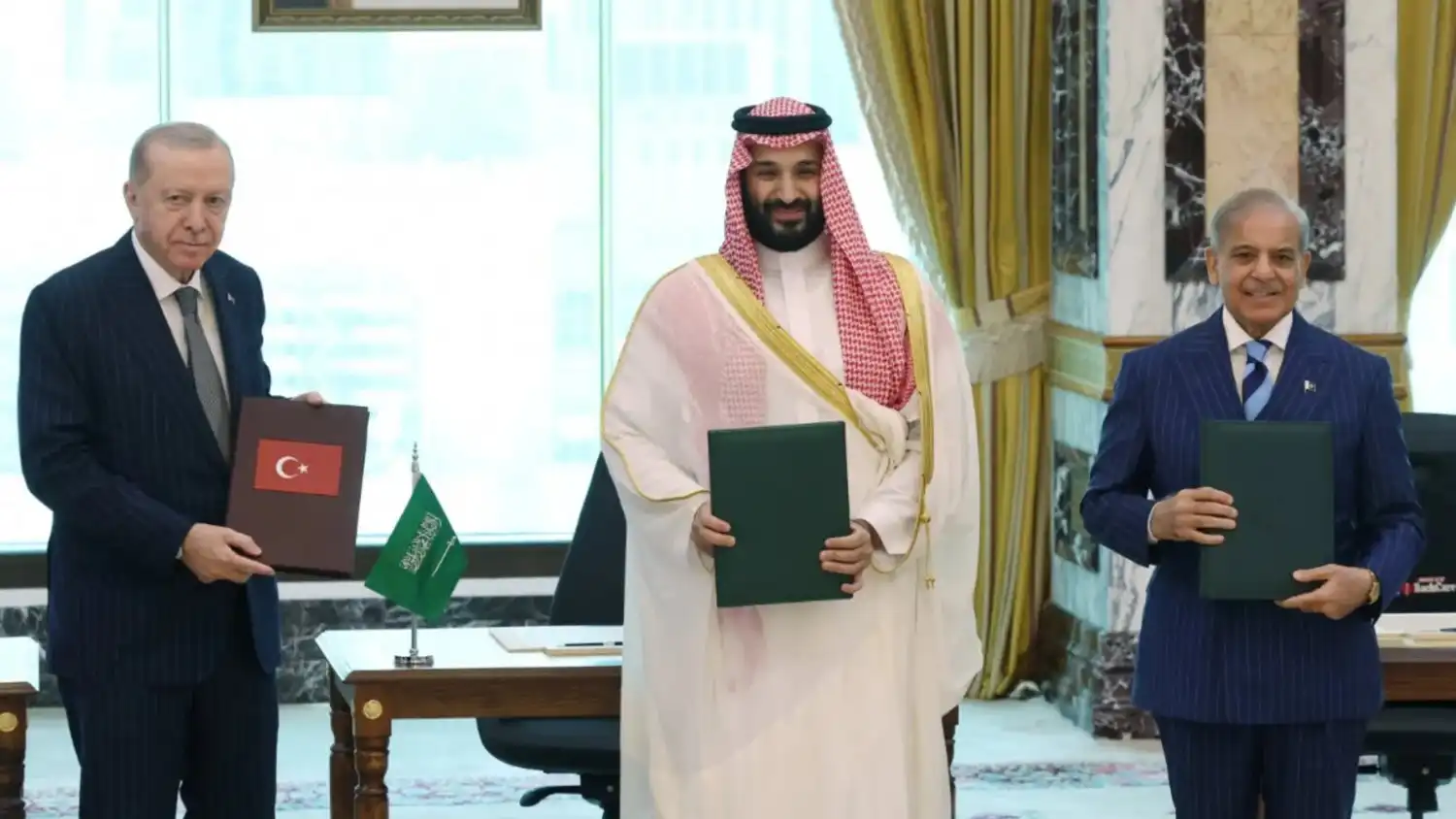
August 7. Mecca. Mohammed bin Salman, Erdogan and Shehbaz Sharif sign the Mecca Joint Defence Agreement. An attack on one is an attack on all, NATO-style. Big photographs, bigger headlines.
August 9. A Houthi drone hits the Jazan refinery.
Nothing from Ankara. Nothing from Islamabad. And that pattern has held through every attack since.
Pakistan's defence minister Khawaja Asif said on Geo News last week that unprovoked aggression or spillover from Yemen would definitely make the agreement operational, that there should be no doubt, that Pakistan is bound by the terms. Within days, the foreign ministry walked the tone back. Spokesperson Sajjad Haider Khan said no military response had been discussed, and that when the time comes, Pakistan will act under the agreement.
So why the gap between the language and the silence?
Because the pact, according to people who study these things, is mostly a signature. The text has never been published. There is no joint command. No standing force. No specified trigger. A Turkish official told Middle East Eye that none of the three countries has actually ratified it yet. The Arab Center in Washington put it plainly in an analysis last week: political weight, not operational content.
There is also the practical side. Pakistan already has around 16 JF-17s and thousands of troops stationed in Saudi Arabia. Sending them at the Houthis means, sooner or later, a fight with Iran. Islamabad has been down the road of fighting someone else's war before, in Afghanistan, and it is still paying for it along its western border. A domestic consensus for another one does not exist.
Strip away the religious symbolism for a second and there is a shipping lane under all of this.
Bab al-Mandeb is 29 km across at the narrowest point. Roughly 12 percent of the world's seaborne oil trade goes through it. That share matters far more this year than last, because Hormuz has been disrupted since the US-Iran war and Saudi Arabia's workaround was to pump crude 1,200 km across the country through the East-West pipeline to Yanbu on the Red Sea.
Which means the oil leaves Yanbu and then has to squeeze through Bab al-Mandeb anyway.
Both exits, one chokepoint, one militia now sitting on the coastline next to it.
India is caught on both ends of that. Crude and petroleum come in through the route. Going the other way, Indian refiners met roughly 60 percent of Europe's diesel demand in August, and most of those cargoes crossed the same strait. Reroute around Africa and you add weeks and a lot of freight cost. The government has said it is deeply concerned about blockades at both Hormuz and Bab al-Mandeb. Qatar warned on Tuesday of severe global consequences if the strait shuts.
Condemnations arrived from Kuwait, Qatar, Egypt, Jordan and the Muslim World League, whose secretary-general Mohammed Al-Issa has repeatedly described the attacks as criminal and a violation of religious values. The GCC secretariat issued its own statement. The Security Council met on Yemen.
Riyadh says it will respond firmly. It has said that before, several times this month.
Saudi Arabia sounded an air raid alert for Mecca on Tuesday for the first time on record, along with Jeddah and Taif, after Houthi missiles were fired at the kingdom's western coast.
The warning was lifted after about three hours.
It came a day after attacks that injured 13 people in the south and a week after a September 8 barrage that wounded 73 and set fires at a Jazan refinery.
On the ground the Houthis have taken Mocha port and the Hanish islands, putting them within reach of the Bab al-Mandeb Strait, which carries about 12 percent of global seaborne oil.
The Mecca Joint Defence Agreement signed in August by Saudi Arabia, Turkey, and Pakistan has produced no military response, and analysts point out it has no published text, no joint command, and no ratification. India's exposure is direct: crude imports on one side and the diesel exports that supply most of Europe on the other, both moving through the same 29-km gap.