Roman was never supposed to last this long. When NASA and its contractors drew up the mission's propellant budget years before launch, they planned for a five-year primary mission and a five-year extended mission with a 10-year fuel allowance, full stop. This week, the agency said that number is off by more than a factor of two.
Jamie Dunn, center director at NASA's Goddard Space Flight Center in Greenbelt, Maryland, said the observatory now has fuel for at least 22 years of potential science operations, crediting precise orbital planning, careful execution by the operations team, and an accurate launch from SpaceX.
That is not a firm mission extension. NASA funds Roman's operations in phases, as it does with most long-running observatories, but it is a substantial cushion that mission planners did not expect to have this early.
The story traces back to a single maneuver. On August 31, the Roman team executed its first mid-course correction burn to steer the observatory toward its final orbit, hitting more than 99% accuracy while using less than 10% of the fuel that had been budgeted for the maneuver—roughly 40 pounds, against an allocation of 441 pounds. That single burn alone is credited with adding about four years to the mission's potential lifetime, according to NASA's account of the analysis.
A second, unrelated factor compounded the savings. Roman launched lighter than planners had assumed: engineers had budgeted propellant against a conservative maximum weight of 21,605 pounds, well above the spacecraft's actual weight of 17,760 pounds. Because the fuel budget was built around that heavier, worst-case figure, ground teams were able to top off the tanks beyond what the 10-year mission alonerequired, bankingg roughly four more years of potential operation before the telescope ever left the ground.
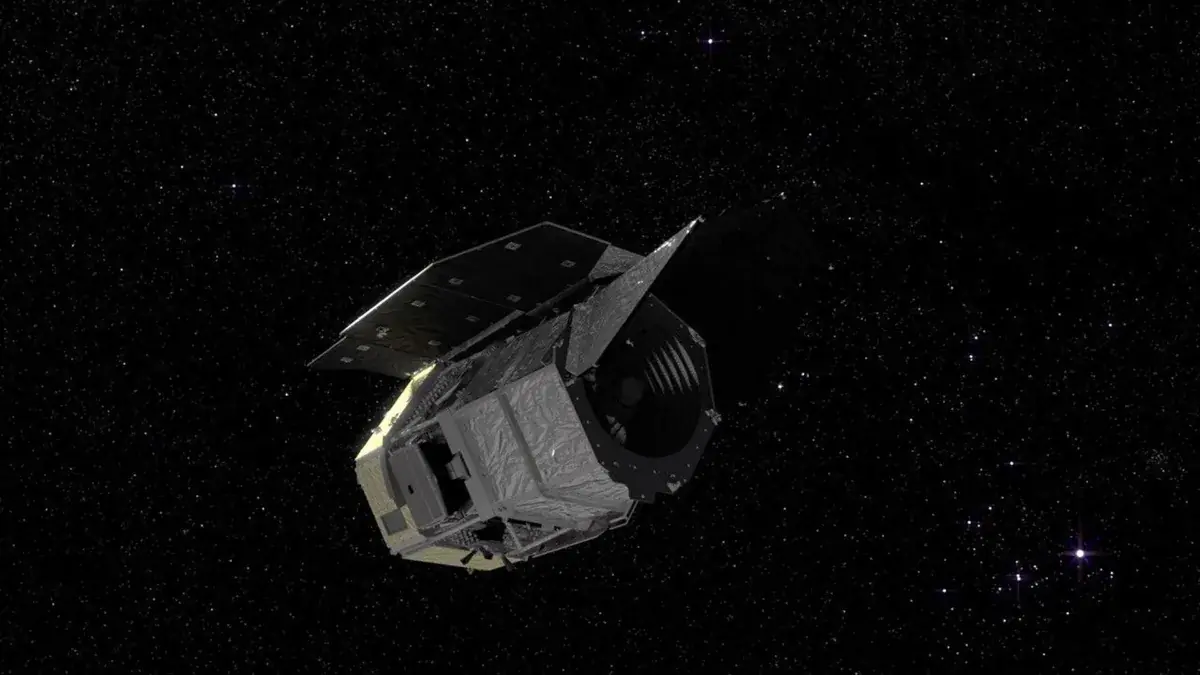
The Nancy Grace Roman Space Telescope is managed out of NASA's Goddard Space Flight Center in Maryland, where it was built, assembled, and tested before shipping to Florida for launch.
Dunn, Goddard's center director, delivered the headline figure. Alison Rao, the mission's propulsion lead at Goddard, explained that spacecraft mass typically shifts during design and construction, which is why teams size the propellant budget to a conservative maximum rather than a best-case estimate and why Roman's lighter-than-expected final weight translated directly into spare fuel.
The telescope itself is named for Nancy Grace Roman, NASA's first chief of astronomy, and was previously known during development as the Wide-Field Infrared Survey Telescope. It launched aboard a SpaceX Falcon Heavy rocket.
Roman is NASA's next flagship astrophysics observatory, built to work alongside the Hubble and James Webb space telescopes rather than replace either. Where Webb offers deep, narrow views of the cosmos, Roman is designed to survey enormous swaths of sky quickly, using a 300-megapixel Wide Field Instrument to produce panoramic images roughly 100 times larger than Hubble's field of view at similar resolution. Scientists have described the difference as Hubble and Webb peering through a keyhole while Roman takes in the whole room.
The telescope is headed for the Sun-Earth Lagrange point 2, or L2, a gravitationally stable location roughly 930,000 miles from Earth where Webb already operates. Orbital insertion is expected around 100 days after launch, putting it in early December. Once settled at L2, Roman will need only periodic station-keeping burns, roughly every 28 days, to maintain its position, a routine fuel draw that mission planners factor into the long-term budget separately from the initial course-correction maneuvers.
Laid out in sequence, the fuel math behind NASA's 22-year projection breaks down into three components: the original 10-year design life; an estimated four additional years from the accuracy of the first burn; roughly four more years from the surplus propellant loaded before launch because the spacecraft came in under its budgeted weight; and a further gain also estimated near four years expected from an upcoming second course-correction burn that NASA says should require even less fuel than the first, in part because the first burn was so precise that less correction is needed.
NASA has cautioned that the second burn's savings remain a projection until it is actually flown, later this month.
NASA's public statements on the fuel savings have been unambiguously positive, framed as validation of years of orbital-dynamics planning and a clean launch.
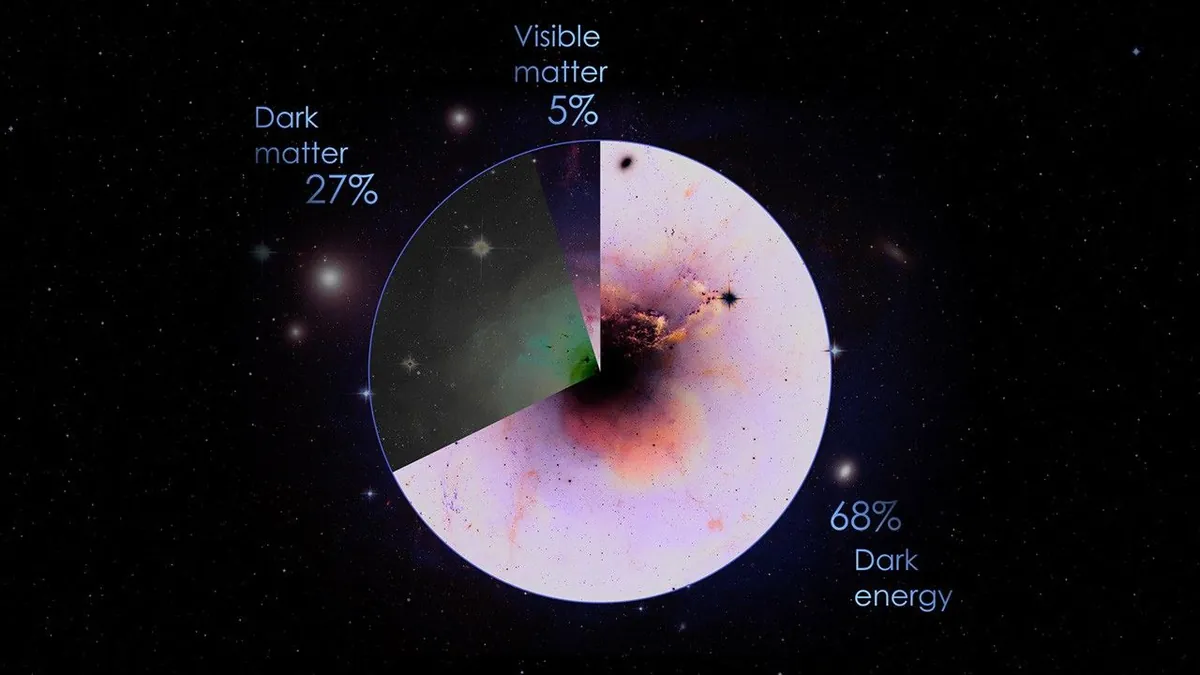
Independent astronomers who have discussed the mission publicly in recent weeks have focused less on the fuel milestone and more on Roman's scientific reach, its ability to gauge dark energy's influence across cosmic time, and its ability to conduct a systematic census of exoplanets, work expected to turn up discoveries nobody has specifically anticipated.
Additional fuel does not by itself guarantee more years of funded operations; congressional appropriations, competing budget priorities, and the telescope's actual performance over its first years will determine whether NASA seeks to extend the mission that far.
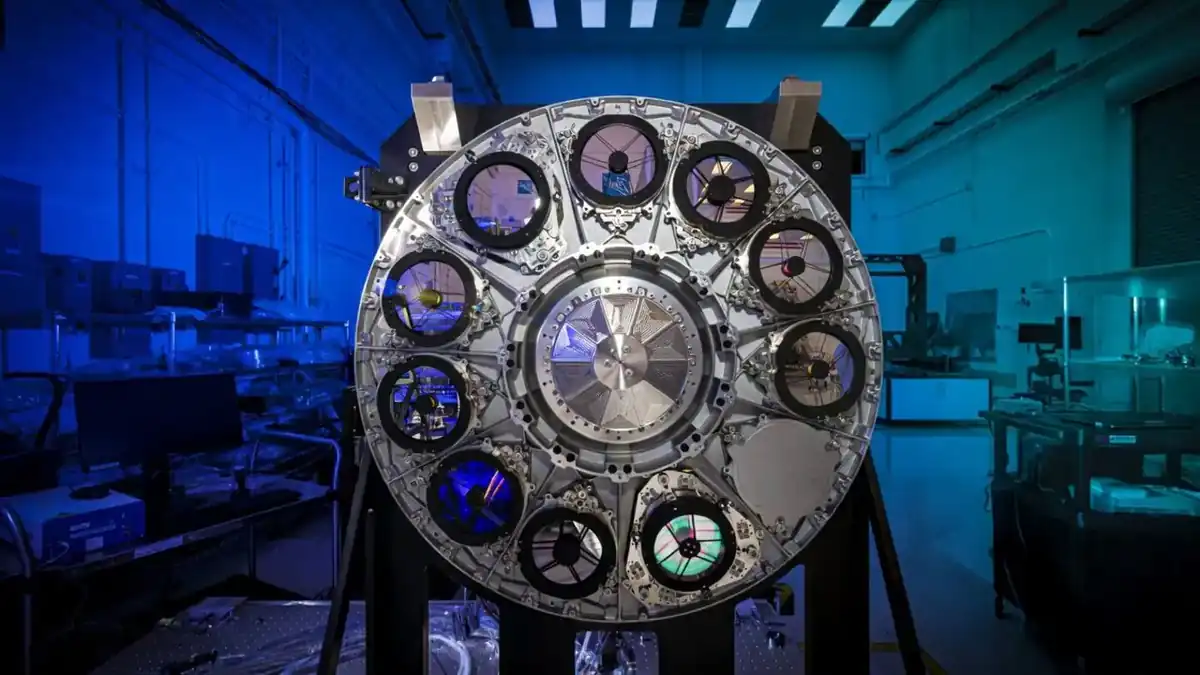
Commissioning continues through the fall. NASA has already begun powering on Roman's instruments, including its Wide Field Instrument and a coronagraph technology demonstration designed to block starlight and directly image planets around nearby stars.
The second mid-course correction burn is expected later this month, followed by orbital insertion at L2 roughly 100 days after the August 30 launch. Routine science observations are not expected to start until sometime after that, once the observatory is fully checked out in its operational orbit.
Fuel, not hardware degradation, is usually what ends a space telescope's working life; it is the one consumable a spacecraft cannot resupply once it leaves Earth.
A 22-year fuel runway does not guarantee Roman will operate that long, but it removes the single biggest hard constraint on how long the mission could eventually run, assuming its instruments continue functioning and Congress continues funding operations.
For a telescope built to hunt dark energy, map dark matter, and catalog exoplanets across the galaxy, more years in orbit means more sky surveyed and, potentially, more of the discoveries mission scientists say they cannot yet predict.