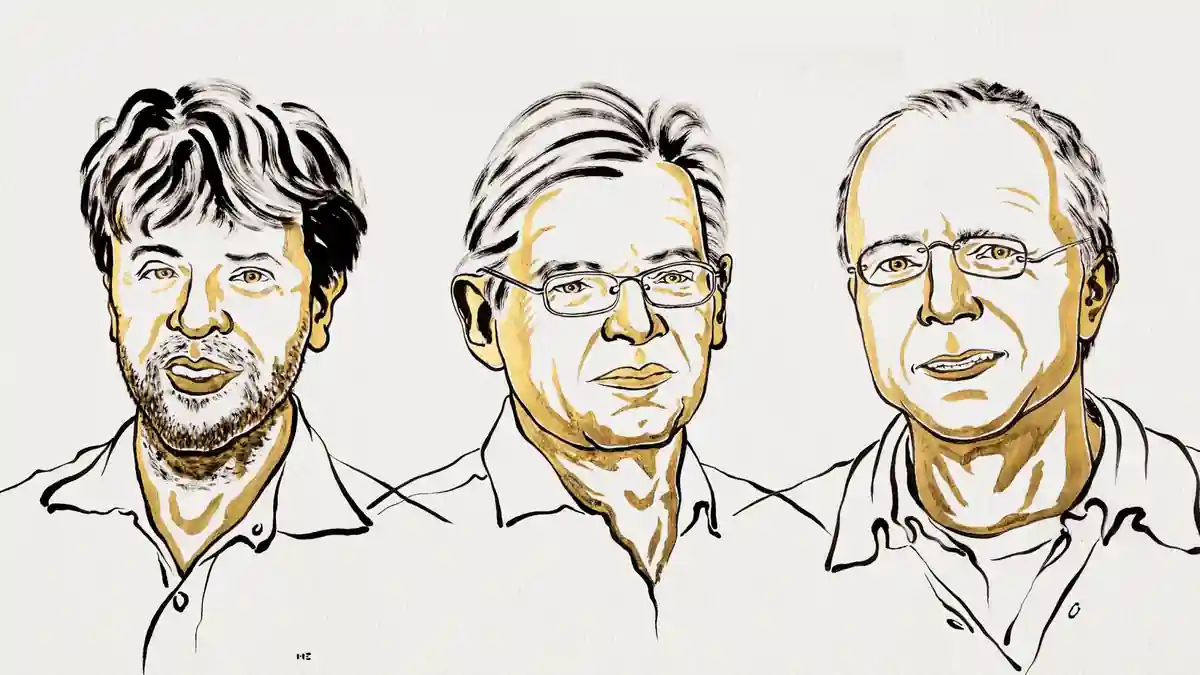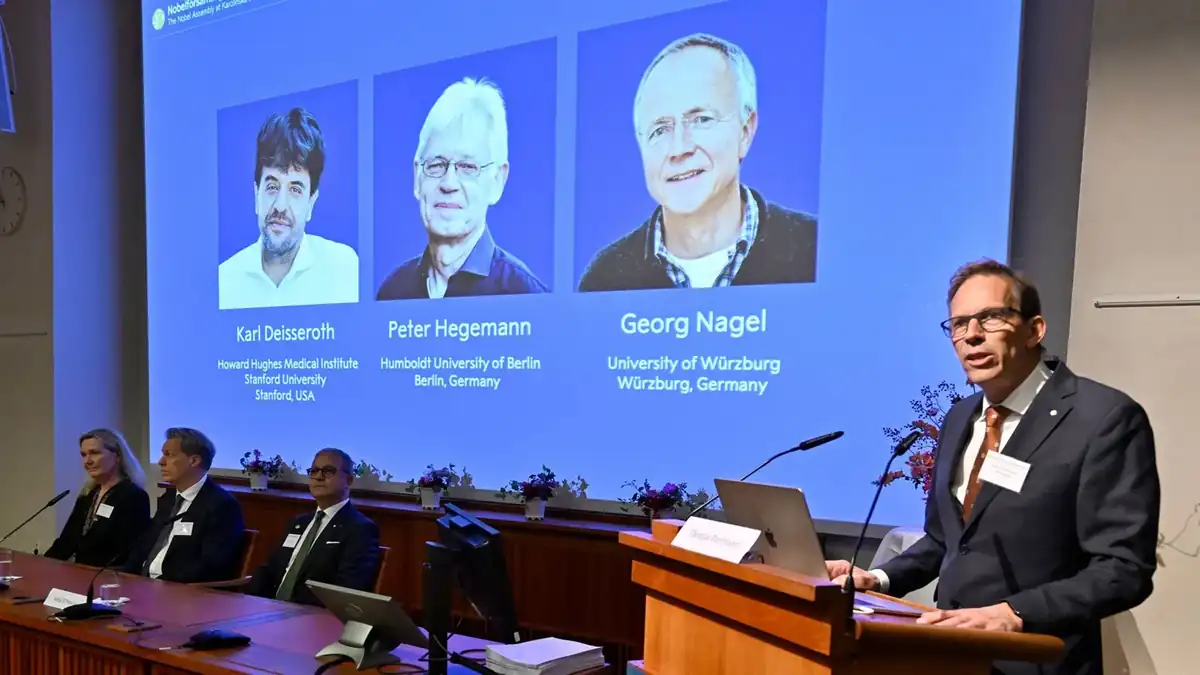
The Nobel Prize in Physiology or Medicine of the year 2026 has been given to Karl Deisseroth, Peter Hegemann, and Georg Nagel for creating optogenetics, which enables researchers to activate or deactivate individual brain cells in a living organism through the use of light.
This announcement came from the Nobel Assembly at the Karolinska Institute in Stockholm on October 5, 2026. The award citation reads: “For discoveries of light-gated ion channels and optogenetics.”
This technique uses light-sensitive proteins, which can enable researchers to switch on or switch off certain neurons to know how particular neural circuits regulate behavior.
"This is a technique that is presently being used in laboratories throughout the world to solve the secrets of the brain," stated Thomas Perlmann, Secretary-General of the Nobel Assembly at Karolinska Institutet, explaining how "the technique gives us the possibility to control individual nerve cells in the living brain."
"Optogenetics enables us to explore the brain in ways that were not even imaginable previously," noted Per Svenningsson, Chairman of the Nobel Committee for Physiology or Medicine.
The discovery started with the protein existing in algae. The two German scientists, Hegemann and Nagel, discovered and characterized channelrhodopsin, a light-sensitive protein existing in microorganisms.
Deisseroth, who is a neuroscientist from America working at Stanford University, then expanded on this discovery. As explained by the Nobel committee, he "developed a method enabling the manipulation of nerve cells with light." The technique was first used on rat neurons in 2005, and the method was called optogenetics a year later.
According to Anna Wedell, who is part of the Nobel Prize committee, the new method became "a light-sensitive switch," allowing researchers to "map which cells are responsible for which function" in the brain.
With the emergence of optogenetics, it has become possible for scientists to pinpoint specific neural circuits responsible for different types of behavior.
The Nobel committee says the use of this technique has enabled scientists to find out circuits that control pain, social behavior, thirst, appetite, rewards, and attention.
Optogenetics enables scientists to illuminate circuits "responsible for specific memories, feelings, and behaviors associated with neurological and psychiatric disorders."
Speaking to CNN, Andrea Benucci, a neuroscientist, said that "the ability to turn on or off neurons in the brain using laser light has brought us a precision that we didn't have before."
Scientists outside the award itself have noted that optogenetics is one of the most important techniques created in modern-day neuroscience.
David Pendlebury, Director of Research Analysis at Clarivate's Institute for Scientific Information, said that the prize "demonstrated the profound impact that has been made by a scientific discipline that has completely altered the way in which science understands the brain and nervous system." He went on to say that "the award further demonstrates the immense influence that has been made through this work, revolutionizing neuroscience through the use of light."
This announcement must have come to at least one laureate under rather odd circumstances. As reported by Perlmann, "Deisseroth was very tired when he answered, he was definitely asleep, but he woke up" to receive the news of winning the prize.
As reported by Perlmann, the reaction from all three scientists, after realizing what had happened, was almost identical: "All three said the same thing, that they thought it was absolutely wonderful to receive the prize with the other two."
The three individuals will be sharing the award money, which amounts to 12 million Swedish Kroner, or approximately $1.2 million.
The prize of this year is being conferred on the 117th occasion, since its very inception, to have bestowed upon the recipients of the Nobel Prize in Physiology or Medicine. Some of the past recipients include Alexander Fleming, awarded for his discovery of Penicillin in 1945, and Karl Landsteiner for the discovery of human blood groups in 1930.
Additional four Nobels in Physics, Chemistry, Literature, and Peace are due to be awarded this week, while the fifth one – Nobel Memorial Prize in Economic Sciences – will be awarded next Monday.
All winners of these Nobel prizes this year, Deisseroth, Hegemann, and Nagel among others, are expected to accept the prizes at the official ceremony in Stockholm on December 10.