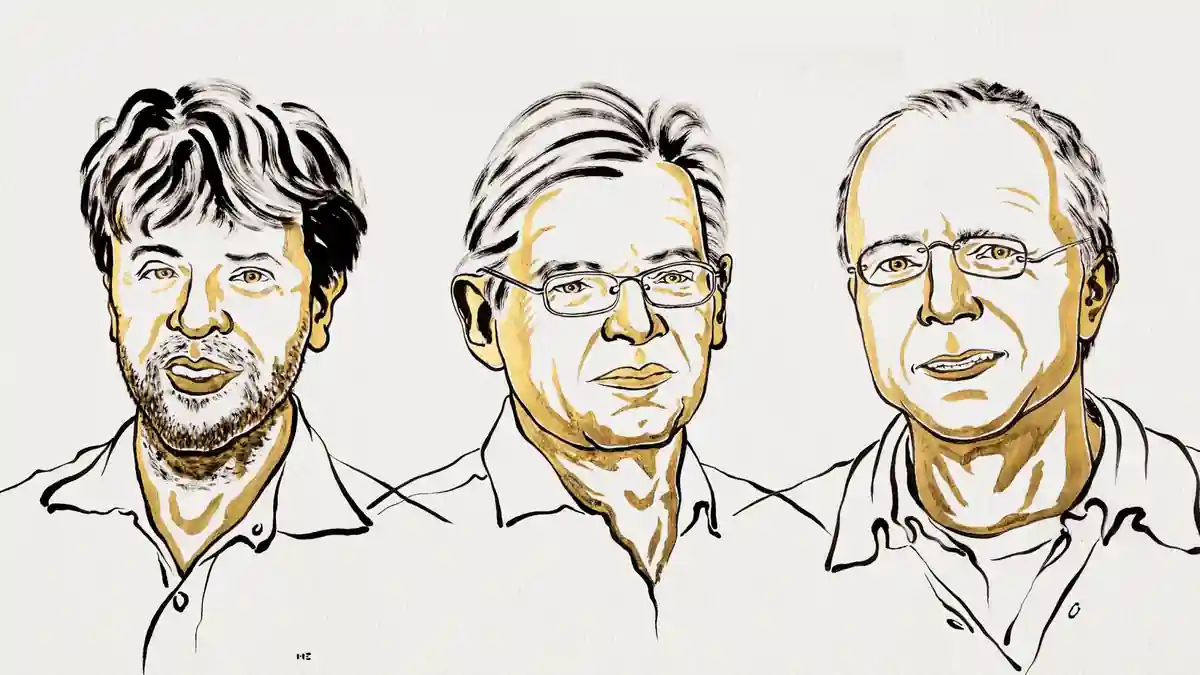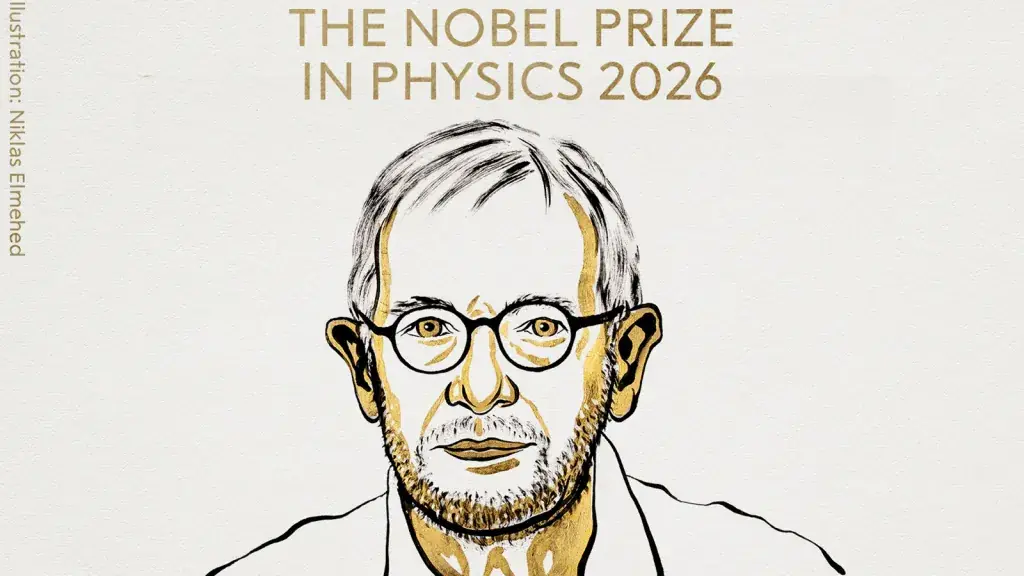
Physicist Francis Halzen, a Nobel Prize in Physics winner, is awarded for pioneering the detector that observes high-energy neutrinos, one of the hardest particles to observe in the universe, and for his efforts to understand how this type of particle is created.
The Award Announcement According to the Royal Swedish Academy of Sciences - El Informante News, 9 April 2020 The award was announced by the Royal Swedish Academy of Sciences on Tuesday, October 6, 2026. The recipient of the award is Francis Halzen for his role in the construction of the Ice Cube Neutrino Observatory.
The name “ghost particle” has been assigned to neutrinos because of their rare interactions with matter. They traverse the Earth and even our body without being detected.
Halzen focused on studying this class of neutrinos that have been described by scientists as the messengers of the universe since they provide information about the development of the universe. It is very difficult to detect neutrinos because of the infrequency of their interactions with matter.
The concept of using the South Pole for neutrino capture was first introduced by Halzen in 1988. He understood that the extremely clean ice under the South Pole can be used as a massive detector.
When there is a collision between a neutrino and an atomic nucleus under the ice, there is always some light emitted, which can then be captured by sensors installed very deep under the ice. It is important to note that neutrinos neither lose any energy nor change their direction during their journey.
However, Halzen took many years convincing other scientists of the viability of the project, which was eventually completed only in 2011.
Today, IceCube Neutrino Observatory consists of one cubic kilometer of pure Antarctic ice, at depths of up to 2,500 meters below the surface near the Amundsen-Scott South Pole Station.
The first run of IceCube started in May 2011. The site of the experimental testing of the idea before the construction of the observatory was another facility, known as the Antarctic Muon and Neutrino Detector Array (AMANDA).
Mark Pearce, chairman of the Nobel Committee for Physics, congratulated not only on the magnitude of the success but also on the group of scientists brought together by Halzen to make this success happen.
"Francis Halzen has led an international group of scientists and engineers who have provided us with a great tool," said Pearce in a press release. "His persistence and scientific foresight have laid the foundation for a new kind of astronomy."
Eva Olsson, a member of the Nobel Committee, explained the main idea of the successful project: "Francis Halzen has understood that the ice at the South Pole can give us a picture of these neutrino messengers from the universe."
According to the Nobel Committee, information from neutrino collisions obtained by IceCube allows studying the process of the formation of high-energy neutrinos and even discovering some unknown phenomena in the universe, for example, black holes, which cannot be seen through dust clouds and space distances.
Another distinguishing factor was that Halzen won the prize individually, without sharing it with other co-authors, which has become more prevalent in contemporary physics.
"This has not happened in a long time in the awarding of the Nobel Prize, and that highlights the uniqueness of his vision," Richard Fitzgerald, Editor-in-Chief of Physics Today, published by the American Institute of Physics, told the Associated Press.
Halzen, 82, is an associate professor at the University of Wisconsin-Madison, which leads the IceCube project. Though there has been a long-held belief that he will one day receive the award, Halzen was nonetheless surprised by its announcement.
"I have been told many times that I'm going to get the Nobel Prize," Halzen noted, adding that he was nonetheless surprised by the news because it made him feel "strange."
Halzen has won other recognitions for the research that led to the Ice Cube detector, for neutrino astronomy—"Neutrino Man" (Smithsonian magazine), as part of the 2014 Ingenuity Award, the 2015 Balzan Prize for Astroparticle Physics, and lastly, the 2018 American Physical Society's Medal for Exceptional Achievement in Research "for leadership of the Ice Cube Neutrino Observatory and the discovery of high-energy astrophysical neutrinos and their sources."
Halzen will get the complete amount of 12 million Swedish kroner, equivalent to about $1.2 million, since he is the only laureate for this year's physics prize.
This week will see more Nobel announcements, with those for chemistry, literature, and peace yet to be announced.
Thereafter, the final award this week will be that of the Nobel Memorial Prize in Economic Sciences. Halzen is expected to receive his prize at the Nobel Award ceremony in Stockholm, which will be held on December 10.