Half of SpaceX’s plan worked on Friday, and the half that was meant to be the easier one did not.
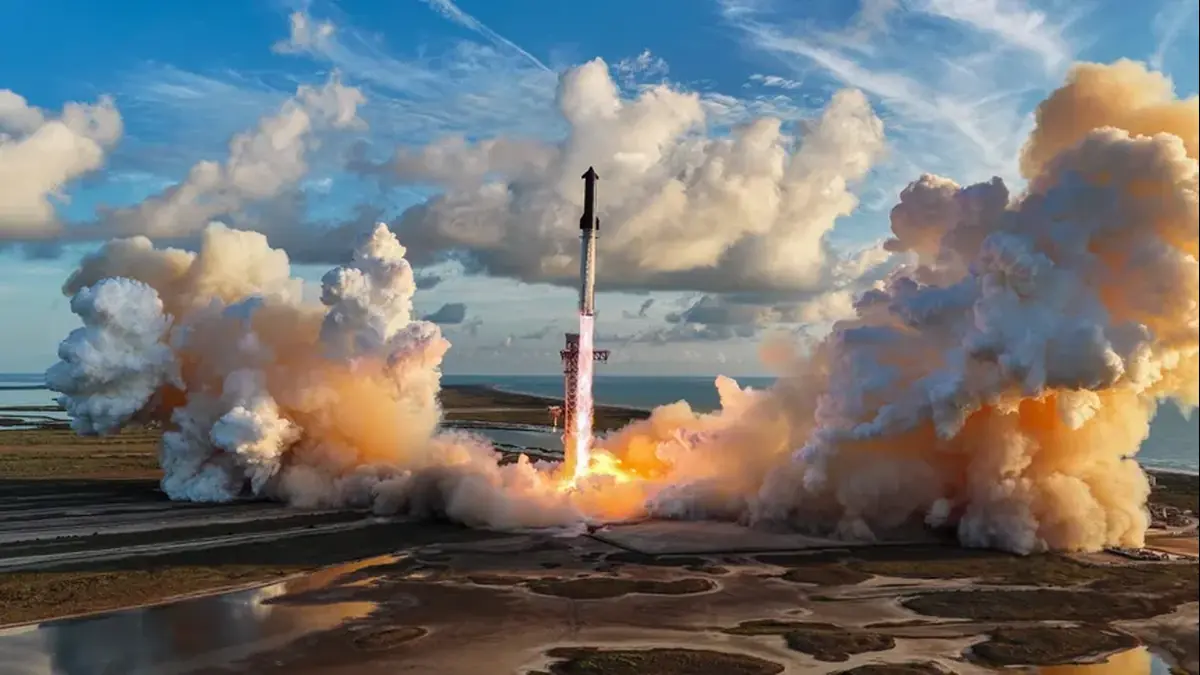
The rocket lifted off from Pad 2 at Starbase, with the 33 engines of the Super Heavy booster pushing the stack clear of the tower. The aim was to recover both stages on one mission, an ambition that would have been a first for any orbital rocket.
After stage separation, Booster 22 turned back toward Starbase. Then the catch was called off. Space.com reported that SpaceX scrapped the plan, and KeepTrack described a decision taken for safety reasons. CBS News attributed it to a technical problem. SpaceX did not immediately explain.
The booster was diverted to a splashdown in the Gulf of Mexico. Observers at Starbase heard the sonic boom, KeepTrack reported, and CBS said the booster ended in a fireball just before it hit the water as leftover propellant ignited. With the booster gone, a full recovery of the rocket is no longer possible on this flight.
Ship 42 kept going. CNN’s live blog noted that one of its engines shut down early and was ruled out, but the ship continued and reached orbit at about 275 kilometres. It is only the second Starship to reach orbit, after Ship 41. Roughly 40 minutes into the flight it released all 26 Starlink V3 satellites. Ars Technica, cited by KeepTrack, described it as the first time Starship has carried a full operational Starlink load. Three of the satellites carry cameras to inspect the ship’s heat shield.
SpaceX said on X that the ship and its heat shield were healthy as it orbited. Elon Musk wrote that it was circling the Earth about every 90 minutes.
If all goes to plan, Ship 42 will re-enter over the Pacific, steer with its flaps over northern Mexico and southern Texas and settle into the tower’s arms at around 4:17 pm ET. No one has caught an orbital rocket’s upper stage before.
SpaceX has built in checkpoints. The last comes about 20 hours and 41 minutes into the mission, a little over an hour before the catch, and decides between the tower and a controlled splashdown in the North Pacific. SpaceX has not said what it will do if that checkpoint comes back red.
SpaceX wants to refly its vehicles rapidly instead of building new ones. The FAA issued the Flight 15 licence on launch day, and Teslarati reported that, unlike the previous flight’s, it covers the return of both stages. Morgan Stanley called the flight one of the most significant catalysts in the company’s 25-year history, according to a Yahoo Finance headline.