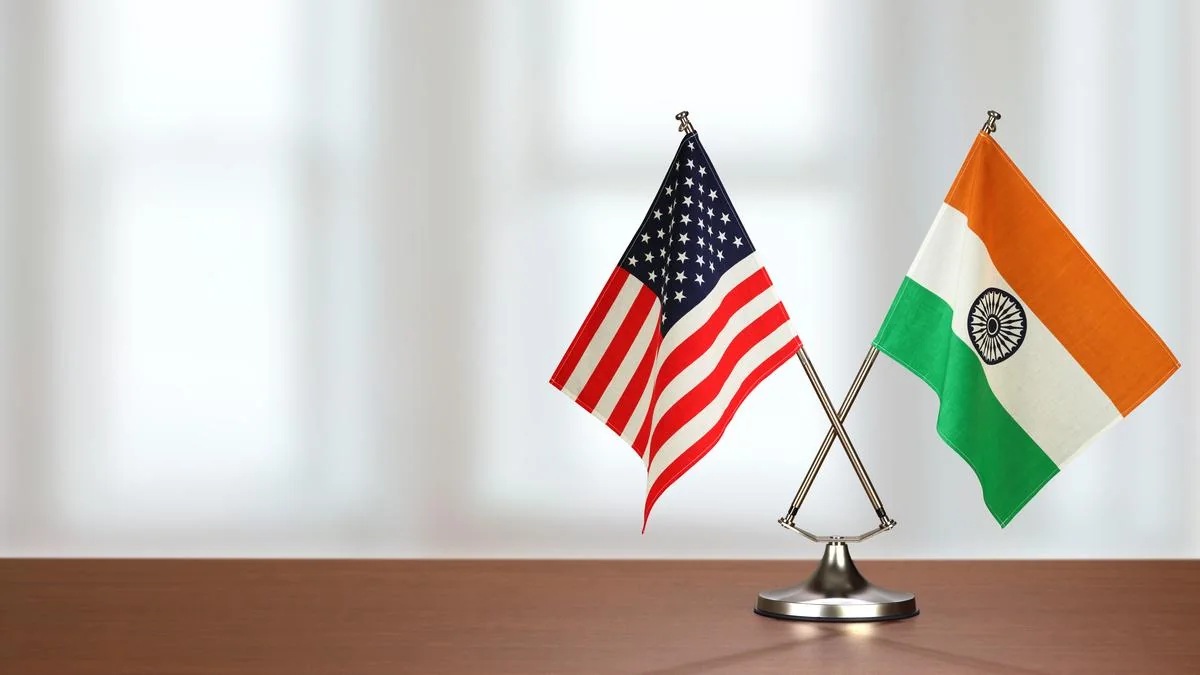
The United States has told India it will face lower tariffs than its main export rivals once a bilateral trade deal is in place. A senior Indian official confirmed the assurance to ANI on Saturday. Nothing has been signed, though, and the signing date is still anyone's guess.
The official's wording was careful. The US has "assured India of a comparative tariff advantage over its competitors," and how the wider tariff framework unfolds is something India will have to watch. DNA India named Bangladesh and Vietnam as the peers in question.
Business Standard added the sequencing. The interim deal gets signed after Washington settles its internal tariff structure, not before.
For Indian exporters of garments, leather goods, gems and engineering parts, this is the whole game. A tariff matters less in absolute terms than relative to what a buyer in Ohio would pay for the same shirt from Dhaka.
The external affairs minister was at the Hindustan Times Leadership Summit on Saturday when the question came up. India and the US, he said, had sorted out the bulk of the issues, including tariff lines, and the pact could be sealed "soon."
He called it the last stretch and added, "That's not a secret."
Then the detail that got picked up everywhere: many of the leftover concerns are "not so much at our end," he said, because the changes have come more from the American side. He also repeated what Delhi wants, a deal that is balanced and gives India an advantage over groups of comparable economies.
Back in late September, speaking in New York, he had framed the open question as what had changed on the American side. Same complaint, six weeks on.
The two governments issued a joint statement on 7 February laying out a first-phase framework, which reportedly put the US tariff on Indian goods at 18 per cent. Formal talks had started in February 2025.
Then the US rewrote parts of its own playbook. In March the US Trade Representative opened two Section 301 investigations covering dozens of economies, India included, one on excess capacity and one on forced labour. India rejected the allegations and asked for the probes to be closed. They weren't. An extra 10 per cent duty linked to the forced labour case has applied to India and others since 24 July.
On 15 October Goyal announced that the first tranche was finalised and in legal drafting. An official said at the time that signing would happen at a mutually agreed moment, depending on how the Section 301 outcomes land. Finalised on paper, in other words, and still waiting.
Trade has held up better than the headlines suggest. Merchandise exports to the US rose 11.1 per cent to $50.81 billion in the first half of the fiscal year, against $45.73 billion a year earlier. Imports from America jumped 26 per cent to $32.33 billion, which trimmed India's surplus to $18.48 billion from $20.07 billion.
Over the whole of 2025-26 India shipped about $87.3 billion worth of goods to the US. Nearly $141 billion in goods moved both ways in 2025.
Depends who you ask. Telegraph India's headline said the two sides want the first phase wrapped up by next month's G20 Summit. DNA India ran a later date, with the first tranche by the end of the financial year in March 2027. A few outlets have floated a signing around a Modi visit to the US. None of those dates has been confirmed by either government.
CNBC's India newsletter noted that the setback Donald Trump took in the US midterms has raised hopes in Delhi for a deal by year end. US Secretary of State Marco Rubio told reporters in Mumbai last month that the two sides were very close.
Goyal's condition has not changed. The first tranche comes into operation when the US can show India has the margin over its competitors, and until the American tariff structure is settled, that margin can't be written down.