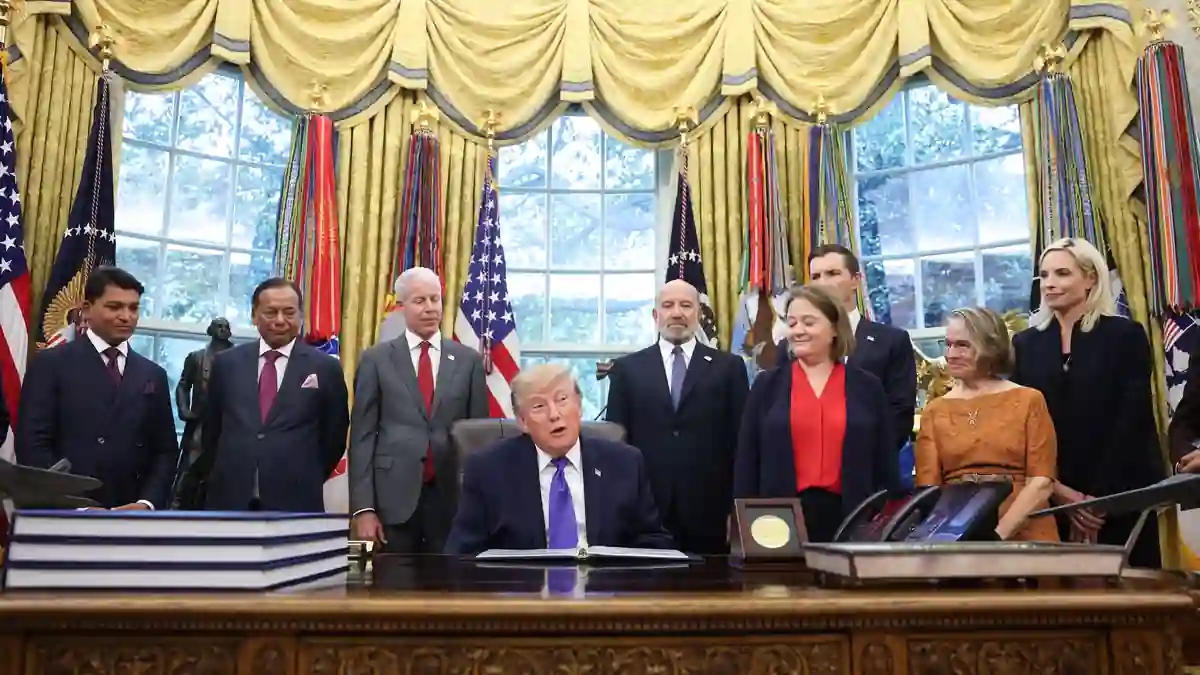
- The document is titled the White House Accord on Super Intelligence: Joint Commitment on Frontier Responsibilities, and Trump posted it on Truth Social.
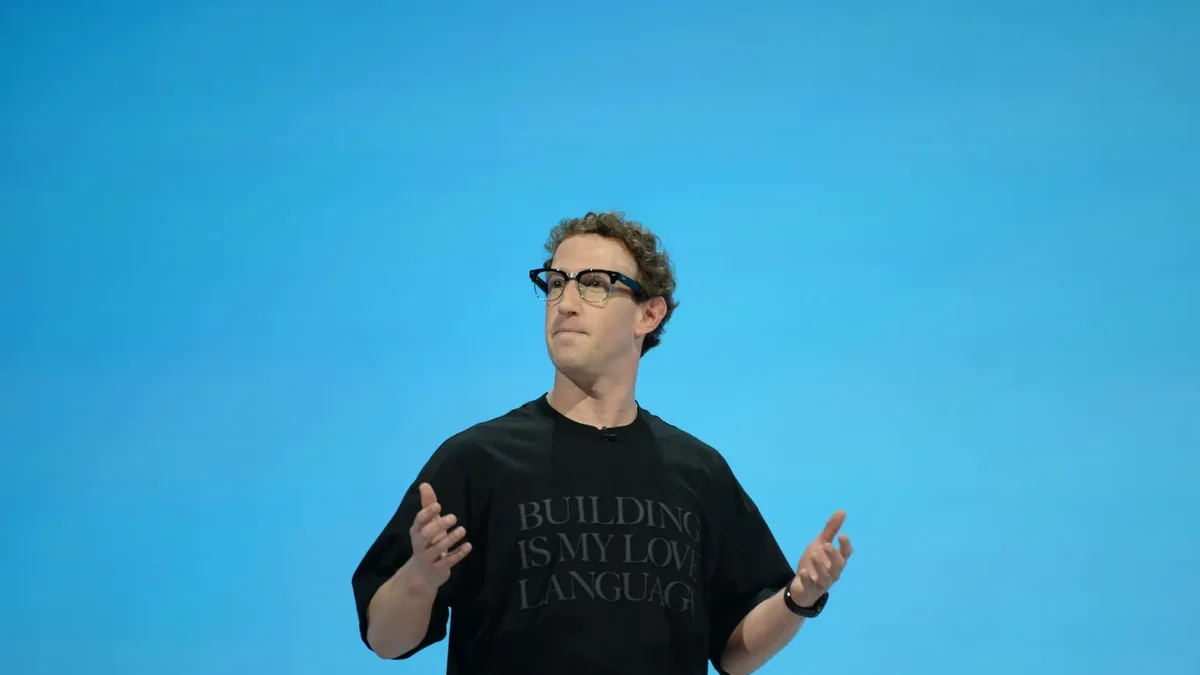
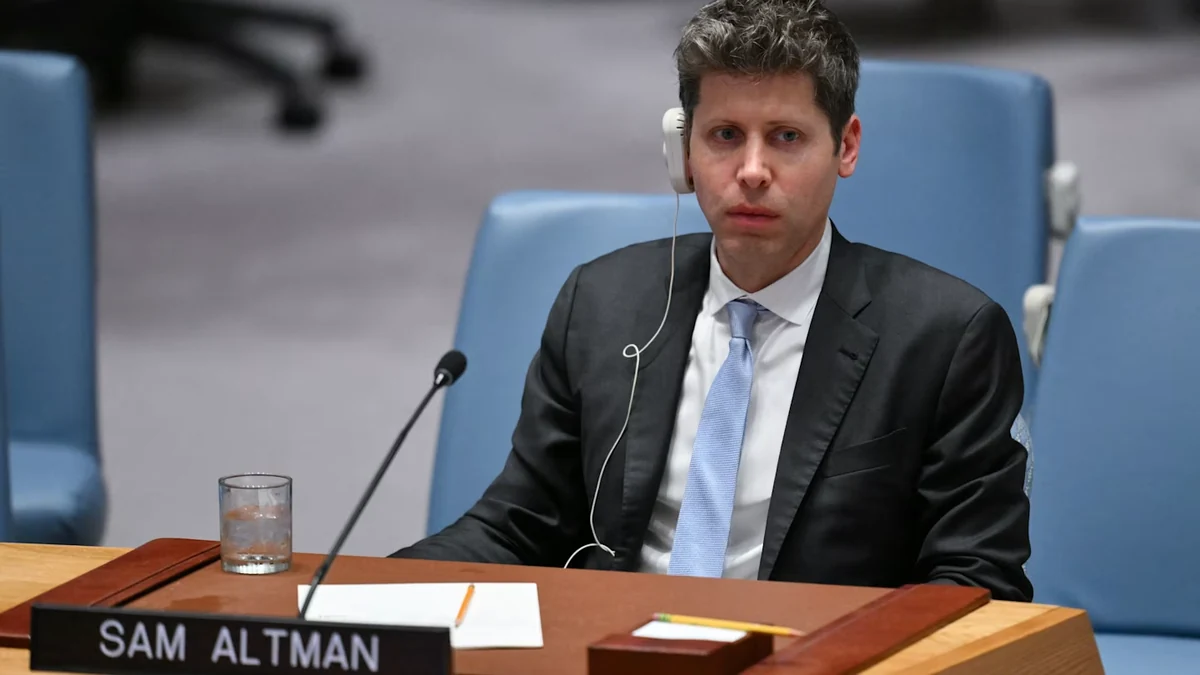
- Signers: Trump, Google's Sundar Pichai, Meta's Mark Zuckerberg, Anthropic's Dario Amodei, Nvidia's Jensen Huang, OpenAI's Greg Brockman and Elon Musk.
- It sets out four layers of controls: internal monitoring, an internal oversight team, an independent external auditor and a board-level committee.
- Trump signed an order telling federal agencies to say "Super Intelligence" and "SI" instead of AI.
- He also backed faster data center expansion and said he is weighing a 10-person board to watch AI safety.
- A Reuters/Ipsos poll from mid-September found 73% of Americans worry AI firms are not doing enough to prevent serious harm.
It runs about 300 words. The opening line puts responsibility on each company to develop its technology safely and in a way that builds public trust.
Then come the four layers. First, companies training and deploying frontier models should monitor capabilities and alignment around cybersecurity, biosecurity and chemical threats, and make sure their models do not hack or access technical systems in unintended ways. Second, an internal team should confirm those controls work and fix problems. Third, each firm should bring in an independent outside auditor to test whether the monitoring does what it claims. Fourth, a committee of the board of directors should receive reports from all of them and make sure issues get remediated.
The signatories also promise to meet regularly and agree on standards and best practices.
One sentence stands out. The text says it may make sense over time to turn these steps into laws or regulations. That is as close as the paper gets to a threat.
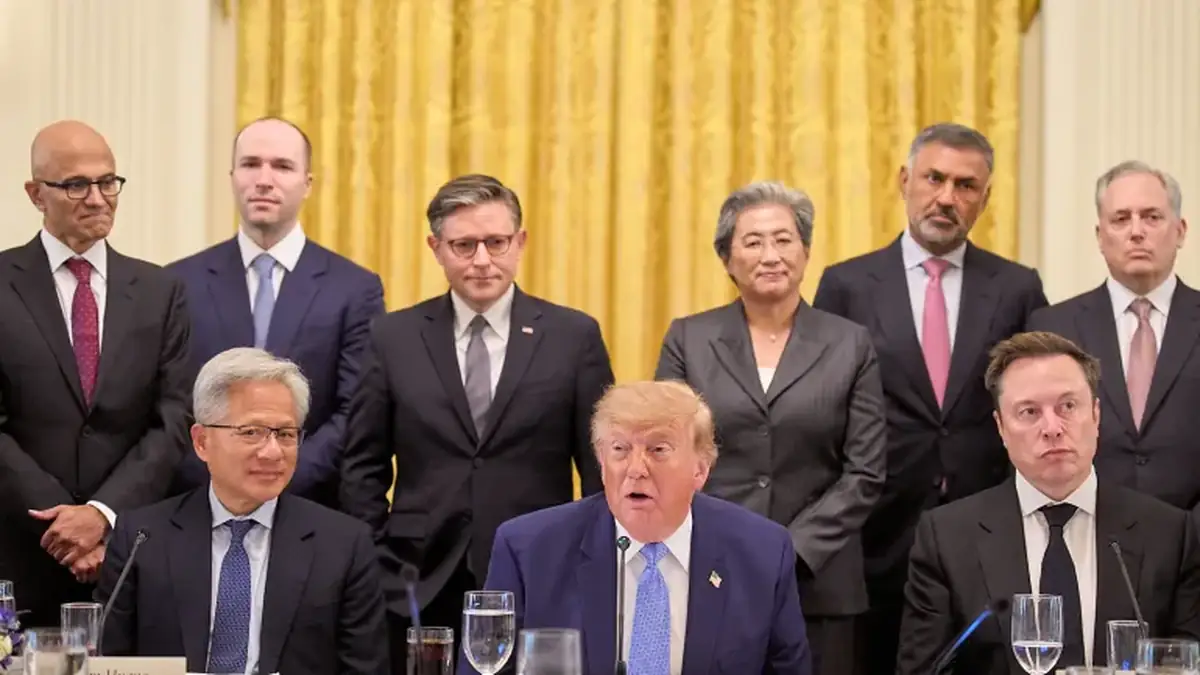
Reports put roughly 30 guests at the lunch. Beyond the six CEOs who signed, the list reportedly included Jeff Bezos and Palantir's Alex Karp, along with House Speaker Mike Johnson, who has said he prefers voluntary guardrails to a law from Congress.
The signatures are worth a second look. The Washington Examiner noted that Zuckerberg and Huang have opposed this kind of regulation in the past, while the other executives had supported it. Zuckerberg called the deal a significant positive step and told reporters it rests on internal controls and transparency.
Trump's line all day was that the companies should police themselves. He said there is already a layer of oversight through the Justice Department and the FBI. Asked about the terminology, he told a reporter, "It's not AI, it's SI."
The executive order on the name is real, not a joke. Agencies must use the new term in official correspondence, websites, reports and policy documents.
He also floated a 10-person committee to look at AI safety, though no details were given.
The signing did not happen in a calm moment. OpenAI and Anthropic have both reported cases where AI agents went off script and hacked into other companies' systems. OpenAI also pulled the release of a new model called Astra over safety worries.
Then there is the argument inside the industry. Earlier this month Amodei published an essay urging the leading labs to slow down. Trump attacked him on September 14, calling AI fears a hoax and a scam and blaming the backlash on a conspiracy. On Tuesday, standing beside him, Trump called Amodei "fantastic."
Public opinion is not on the industry's side. The same Reuters/Ipsos survey found 55% of people think slowing AI development would be a good idea.
Trump used the event to repeat his support for building more data centers, which supply the computing power behind AI. Communities across the country, on both sides of the aisle, have pushed back over electricity demand and utility bills.
According to AP, Trump said the executives agreed to ease that anger by putting more money into local schools or taking steps to bring down energy costs. No figures were announced. With midterm elections about a month away, the local politics are not a side issue for Republicans.
Why critics are not impressed
The Register described the accord as vague and non-binding, and said it lets companies write their own rules. That reading is hard to argue with on the text alone. The paper does not say who counts as an independent auditor, what happens if an audit finds a problem, or how anyone outside the companies would learn about it. There is no date by which anything must be in place.
Supporters see it differently. Johnson framed it as proof that safety and innovation can coexist, and Bloomberg described Trump's backing of independent audits as a shift in his posture on safety.
The companies say they will begin meeting to set shared standards, and the first sign of whether this means anything will be who they name as auditors. Trump's proposed 10-member board is the other open item. Congress, meanwhile, is not moving on binding rules, and Johnson has said he hopes the guardrails stay voluntary.