US President Donald Trump says the odds of restarting the war with Iran are low, as long as Tehran keeps negotiating and eventually puts its name to a deal. He said as much on Sunday in a phone interview with CNN, and the wording was careful. A return to strikes was "highly unlikely" to be necessary, he said, but whether it happens "depends on whether or not they sign a very strong agreement."
That is a condition, not a promise.
Trump leaned on an argument he has been making for weeks: the US has already hit Iran hard enough. In his telling Iran is a failing country that is running out of money. He claimed Tehran can now produce only about a tenth of its previous missile output and roughly 15 percent of its drones, because so many factories are gone. Iran has denied this, and nothing in the coverage of the interview independently confirms the figures.
He also said Iran badly wants a deal. Tehran's own public line, delivered the same day, sounded rather different.
Trump was just as clear that the military option is still there. Three aircraft carriers are in the region, he said, the newest having just arrived, and all of them "locked and loaded." If strikes do resume, Washington has already picked out infrastructure targets, among them 38 bridges he says could be brought down in about an hour.
Then he talked himself back from it. Wrecking that kind of infrastructure would leave Iran needing roughly ten years to rebuild, he said, and bridges are the hardest thing to put back up. He described himself as a builder who doesn't enjoy tearing them down.
Foreign Minister Abbas Araghchi described a process that has simply stopped. Mediators, Qatar and Pakistan among them, have not travelled in recent days, he told state television, and he blamed the "shock" of last week's American election results. It will take time, he said, for Washington to digest them and for the mood to improve enough for shuttle diplomacy to restart.
On X he was blunter. Iran's two-day proposal still stands, he wrote, and the White House can either meet its requirements or "choose war."
That proposal has shrunk over time. In September Iran offered a seven-day plan to reopen the strait, with conditions: an end to the war on all fronts, unfrozen Iranian assets, relief from oil sanctions and an end to the American counter-blockade of Iranian ports. Tehran later cut the timeline to two days.
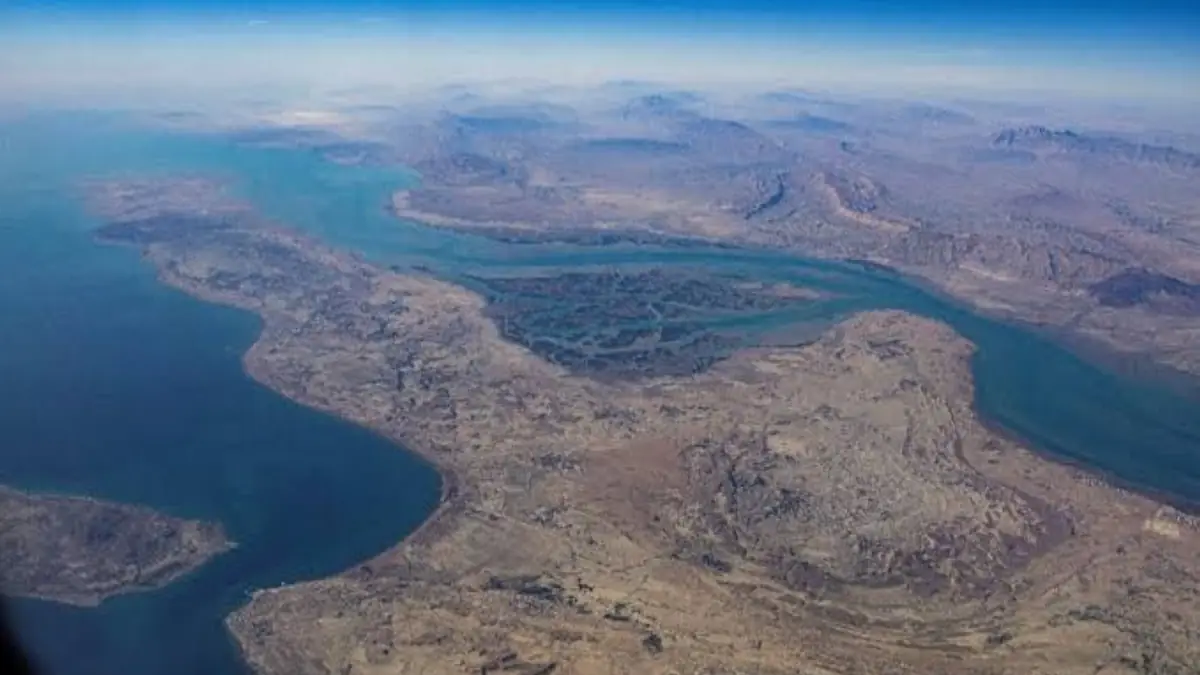
Large-scale fighting has mostly faded since the April 8 ceasefire, which followed a war that began in late February with US and Israeli strikes. The waterway never really reopened. Iran continues to restrict traffic through Hormuz, and the US Navy runs its own blockade of Iranian ports.
Sunday brought more incidents. The Revolutionary Guards said three tankers exploded and caught fire in what they called an illegal channel. Iranian media said two vessels hit mines. Each side has reported shipping hit in or near the strait, and US forces disabled a commercial vessel trying to run the blockade on Saturday, according to CENTCOM.
Iraq, meanwhile, says it has worked out an arrangement with Washington to ship oil through a lane near Oman. Foreign Minister Fuad Hussein gave no detail on how it would work, but put Iraq's losses from the war and export disruption at $60 billion. Iraqi exports recovered to about 3.5 million barrels a day in October, up from 2.65 million in September.
Back home, gasoline prices have climbed with the disruption to Gulf supply, and the war is unpopular. Trump has acknowledged it was at least partly to blame for the Republican defeat in Tuesday's midterms.
Inside his camp the diagnosis is not unanimous. Vice President Vance has reportedly blamed the long war, while Trump's pollsters, according to Israeli press reports, found that Republicans who switched sides did not cite Iran or Israel as the reason. The Times of Israel's live blog on Monday also carried Trump saying the party did poorly because of a "great dislike" for Israel.
None of this has stopped contingency work. Reuters, citing a US intelligence official and two senior officials, reported that recent assessments judged renewed strikes would be unlikely to change things substantially. Trump has also floated several strike dates in recent weeks, only to postpone each one. Israel, which coordinates closely with Washington on Iran, is preparing for a range of scenarios, including a return to fighting.
There is no scheduled round of talks. Araghchi's comments suggest nothing moves until mediators are back on the road, and Iran's position on the strait has not changed. The nuclear file remains the hardest issue on the table.
Pressure is also building at the edges. An Iranian official said on Monday that the US attacked Qeshm Island without major damage to infrastructure, according to the Times of Israel's live blog, though that has not been independently verified. Iranian media had earlier put Saturday's blasts there down to Iranian military activity. Secretary of State Marco Rubio has called Iran's demands "outrageous and ridiculous." And the conflict has spread, with Houthi attacks on Saudi Arabia escalating this month.
Whether Trump's "highly unlikely" holds will depend on the one thing nobody has delivered yet: a signed agreement.