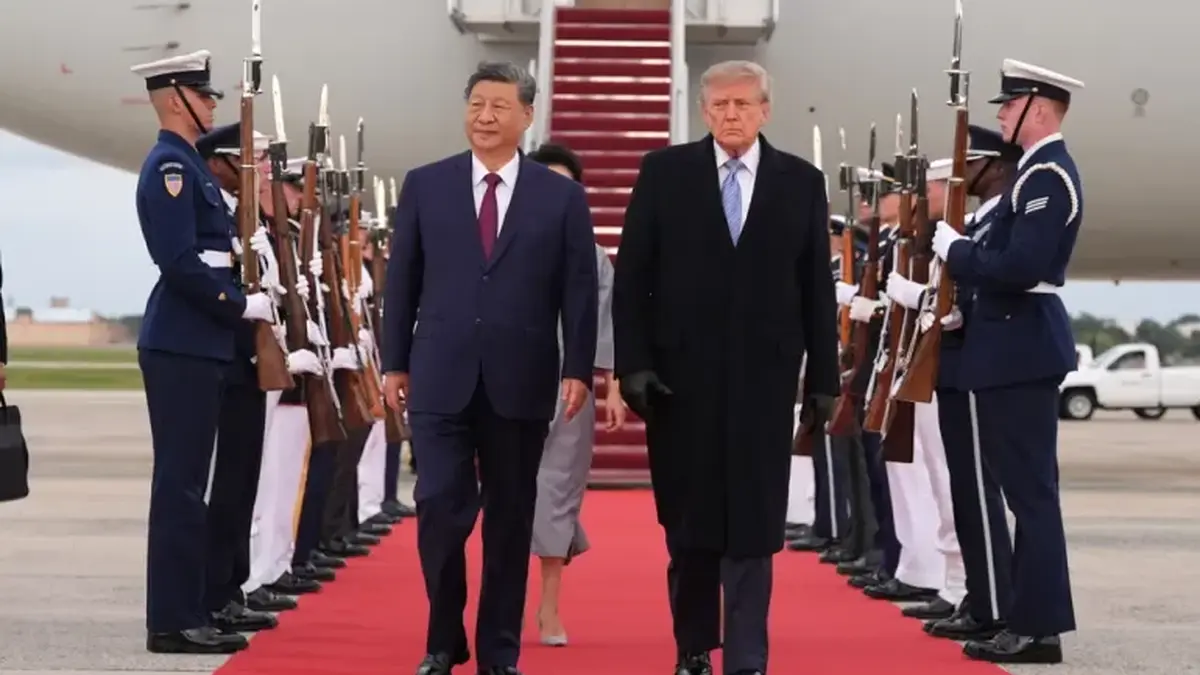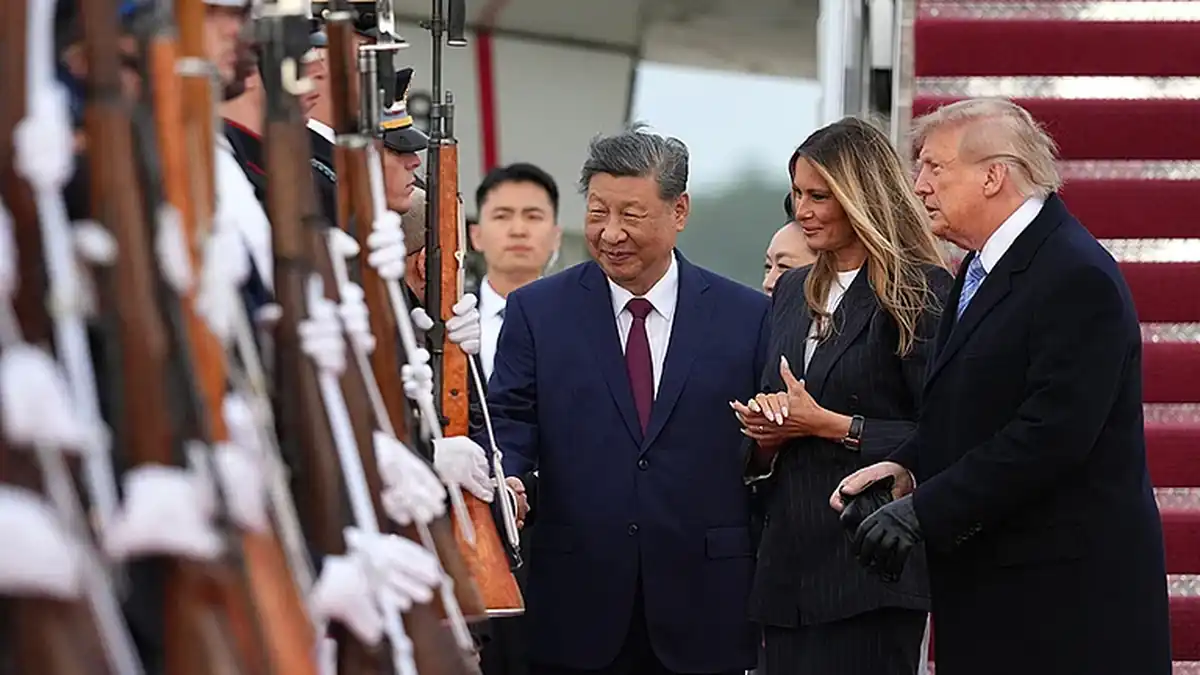
President Xi Jinping of China ended his visit to the US on Friday, September 25, 2026, following a two-day discussion with President Donald Trump that bore fruit in terms of an extension of the US-China trade truce but very little else.
This was Xi's first state visit to the US in eleven years, and it was full of pomp and circumstance, but on the issues that separate the two nations, such as tariffs, technology, artificial intelligence, and Taiwan, there were no substantial agreements reached.
Scott Bessent, the US Treasury Secretary, revealed the most important outcome of the summit when Xi’s plane landed—an agreement to extend the existing ceasefire between China and the US for another two months, thereby prolonging it to January 10, 2026.
The initial ceasefire was negotiated last year between Trump and Xi during their meeting in South Korea, and it was scheduled to expire in November.
Bessent commented that the extension will provide the parties "with more time to find out what can be done on the economic side," but noted that China still needs to do more regarding its previous commitments.
Even the duration of the extension has become a topic of discussion. Before the summit, most experts predicted an extension of at least six months.
Scott Kennedy of the Center for Strategic and International Studies pointed out that the shorter time frame of two months "signals to me that the U.S. is unhappy with China’s proposals and wants to keep the pressure on," saying that it increases the probability of Xi being present at the G20 summit in Miami.
Bessent also pointed out that there were several deficiencies regarding China’s commitment to the previously agreed-upon trade deal during the summit.
Specifically, he noted that China was complying with the deal’s provision requiring them to buy 25 million tons of soybeans, but it failed to deliver on its promise to purchase $17 billion of other farm products.
However, the two-month extension did not settle the bigger problems such as tariffs, rare-earth minerals, and technology restrictions, say analysts.
Artificial intelligence was also a key point in discussions despite the lack of any agreement on the subject. According to an earlier Truth Social post from before the meeting, Trump claimed that AI would be "a big topic of discussion," noting that he wanted US policy regarding AI to "leave it exactly where it is," as China would want as well.
On his side, Xi was more positive in his public speech, calling for cooperation so that AI technologies are "under human control." Xi also cited the concept of the "Thucydides "Trap"—the academic concept stating that rivalry between rising and ruling powers leads to war. The risk of falling into this trap "can be overcome," but the use of the term by Xi showed the ongoing fear of military confrontation with the US.
According to Bessent, the US and China were negotiating how to alert each other in case of AI incidents that affect national security.
The same visit was also used by Xi to put pressure on the US regarding the issue of Taiwan, as per the narrative provided by Beijing regarding the dialogue.
There were no signs of any change in the US stance on this issue.
In spite of the increasing rivalry between China and America in trade and technology, throughout the visit Trump used to refer to Xi as an individual, not a rival state leader.
Starting the ceremonies at the White House, Trump said about his friendship with Xi: "There's much we can achieve together." It is worth noting that the more restrained Xi made his remarks concerning the bilateral relations, emphasizing concrete requests. "China keeps its doors open and welcomes American companies that want to invest in and do business there," he said. "I hope Chinese companies are welcomed equally in the United States." The two-day visit involved a welcoming ceremony with hundreds of members of the US military and a flyover of a B-2 Stealth Bomber, as well as the state dinner with three courses for the American technology and finance executives.
The financial markets proved to be among the few who rendered a verdict about the content of the summit.
The expected agreements regarding cutting tariffs and communication platforms about artificial intelligence were not met, while the Chinese shares in Hong Kong markets fell after the summit because of the lack of progress made.
The new January 10 deadline for the trade truce creates the next major pressure point in the US-China dynamic. Unless a more permanent solution can be found with respect to tariffs, rare earth minerals, and technology, experts believe that investors are basically trading truces and not the conclusion of the wider trade disagreement.
President Xi Jinping’s possible participation in the upcoming G20 meeting in Miami, which now seems even more likely given the limited extension period, would give both parties the chance to address outstanding concerns arising from this week's discussion.