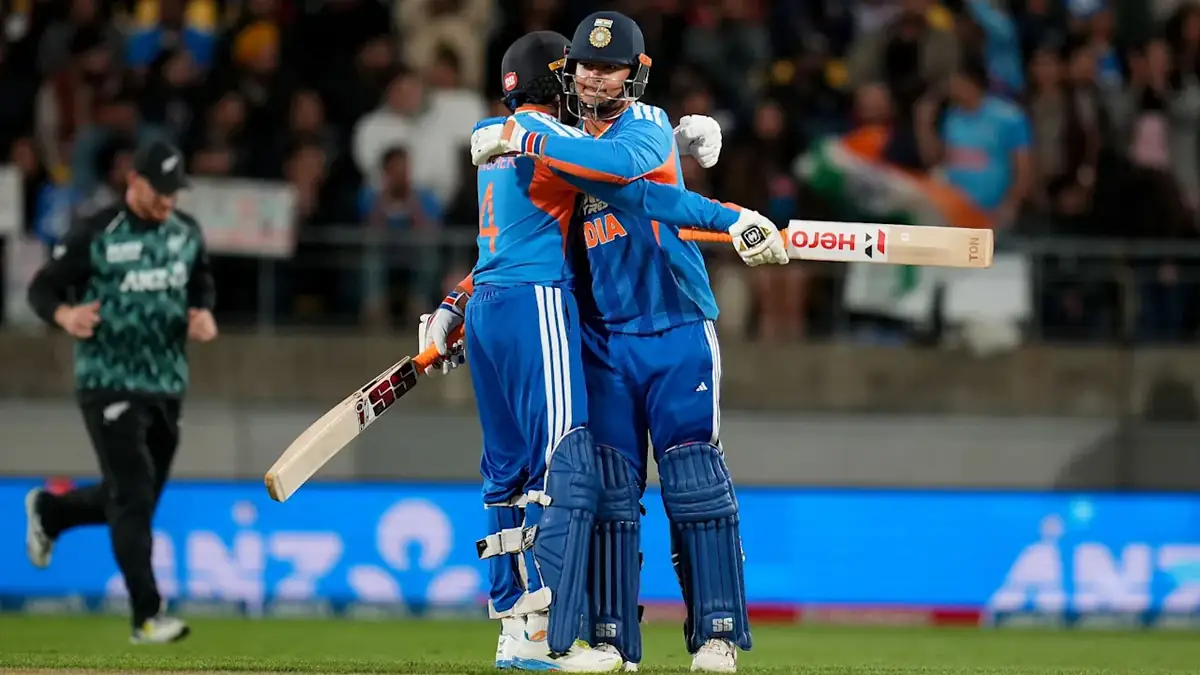
New Zealand put up what looked like a genuinely competitive total in Wellington on Thursday. India treated it like a warm-up.
Daryl Mitchell was the standout for the home side, finishing unbeaten on 89, the highest individual score of his T20I career. He built the innings around a 75-run partnership with Bevon Jacobs, who chipped in an unbeaten 39 of his own, the kind of platform that usually sets up a defendable total on a used Wellington pitch. New Zealand finished on 198 for 3, a score that, on paper, gave their bowlers something real to work with.
It wasn’t enough. Not close.
From the very first over of India’s reply, it was clear this wasn’t going to be a normal run chase. India scored 26 runs in that opening over alone, immediately setting the tone, and by the end of the powerplay, they’d raced to 100 runs inside the first six overs, a new record for men’s T20I cricket.
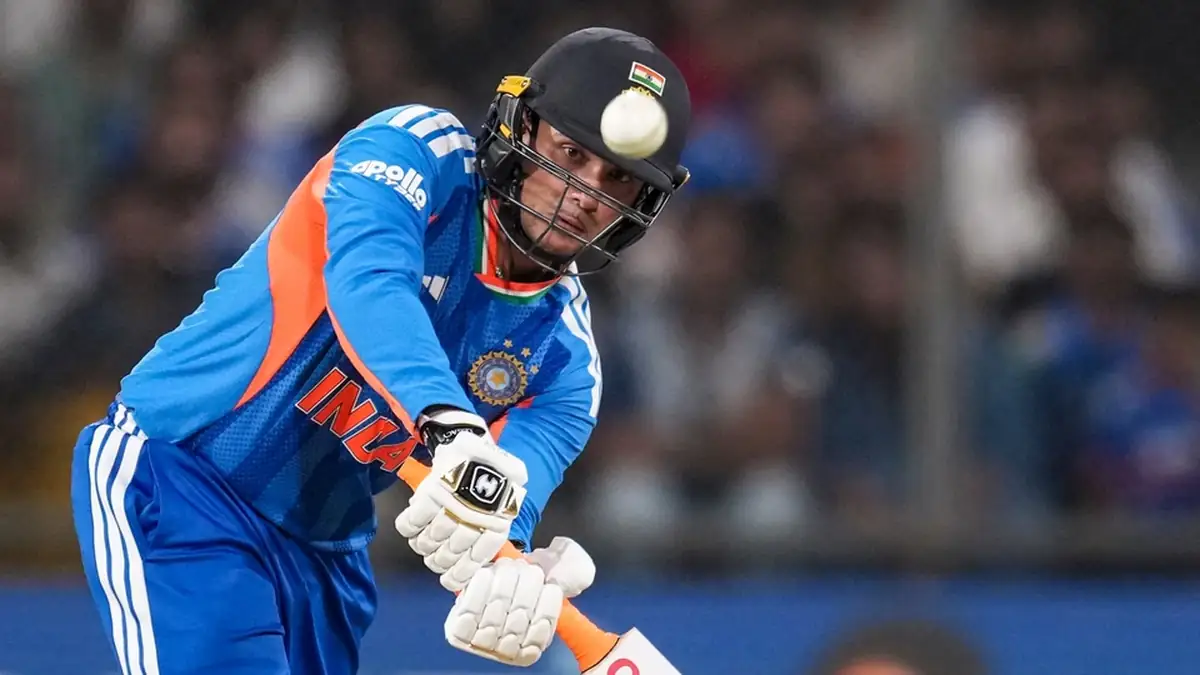
Abhishek Sharma was the one doing most of the damage. He brought up his century off just 35 balls, one of the fastest hundreds in the format’s history, and finished his innings on 113 off 38 deliveries by the time he was finally dismissed. It’s his fourth T20I century for India, a number that’s now pushed him past Virat Kohli’s career tally in the format, a genuinely significant marker given how closely Kohli’s numbers get tracked in Indian cricket.
Vaibhav Sooryavanshi provided the perfect foil at the other end, matching Sharma’s aggression early and helping turn what should have been a tense chase into a procession. Together, the pair all but ended the contest before New Zealand’s bowlers had any real chance to regroup.
India completed the chase in just 13.2 overs, finishing on roughly 199 for the loss of 4 wickets, with more than six overs still unused. For a target of 199, that’s not a tight chase, it’s a dismantling. New Zealand’s bowling attack, which had looked reasonably composed while setting up their total, had no real answer once Sharma and Sooryavanshi got going.
Unsurprisingly, the reaction out of New Zealand’s own camp afterward was fairly blunt. Local coverage described the Black Caps’ bowlers as having been thoroughly outplayed, a fair assessment given how one-sided the second innings turned out to be.
With this win, India locked up the three-match series 3-0, having dominated across all three games. It’s the kind of result that tends to generate its own debate, several reports and reactions following the game openly asked whether cricket at this level of dominance, 26 runs in the first over, a century in 35 balls, a chase finished with six overs unused, is still a fair contest or edging toward something closer to a mismatch.
Whatever side of that debate people land on, there’s no disputing the numbers. Sharma’s innings, paired with the powerplay record and the sheer speed of the chase, make this one of the more lopsided results in recent T20I history between two full-strength international sides.
The series moves to Auckland’s Eden Park for a fourth match on Friday night, now essentially a dead rubber with the series already decided. For New Zealand, it’s a chance to salvage some pride and figure out what went wrong against an Indian top order that, on Thursday at least, looked nearly unplayable. For India, it’s an opportunity to keep the momentum going, and for Abhishek Sharma in particular, a chance to build further on what’s quickly becoming one of the standout individual stretches of form in the format this year.