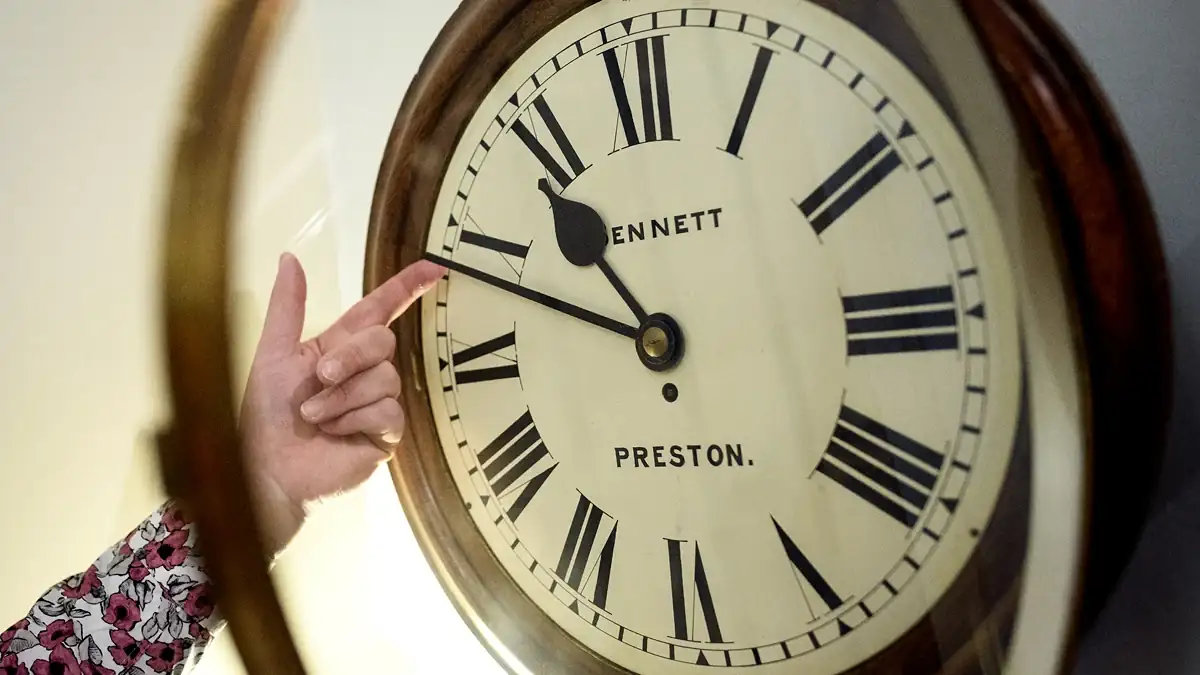
- Daylight saving time ended at 2 a.m. local time on Sunday, Nov. 1, 2026
- The Sunshine Protection Act passed the House in July and is waiting on the Senate
- Pending bills expire in early January when newly elected lawmakers take office
- Hawaii, most of Arizona and five U.S. territories skip the time change
- Daylight saving time starts again Sunday, March 14, 2027
Most Americans gained an hour Sunday morning when clocks went from 2 a.m. back to 1 a.m. and the country returned to standard time. It happened the night after Halloween, which for a lot of people meant the extra hour went to a party and not to sleep.
Phones set to update automatically fixed themselves overnight. Everything else with a clock on it is waiting for you.
The bill would end the twice-a-year switch by keeping the U.S. on daylight saving time all year. The House passed it in July. Since then it has been sitting in the Senate, and the politics around it got messy.
President Trump supports it. He has blamed Sen. Tom Cotton, an Arkansas Republican, for holding it up, and at one point posted what he said was Cotton's personal cellphone number on social media and asked people to call him about it. Cotton's response was that Congress already tried this once. Lawmakers made daylight saving time permanent before, he said, and then backed out when people started dealing with sunrises that came absurdly late in winter.
The bill also lets states opt out of daylight saving time before it takes effect, so even a passed version wouldn't put every state on the same clock.
And then there's the schedule. Midterm elections are Tuesday. The lawmakers who win take office in early January, and when they do, every bill still waiting for a vote goes away. If the Sunshine Protection Act is one of them, supporters would have to start from scratch with another House vote, another Senate vote, and a signature from the president at the end.
Boston, according to the National Weather Service, saw the sun rise at 7:16 a.m. Saturday and set at 5:39 p.m. By Sunday it was up at 6:17 and down at 4:37. That's the whole trade. The morning gets light back and the evening loses it, and the days keep getting shorter for a while yet.
Parents of young kids know the other cost. A toddler who woke at 6 a.m. last week is now awake at 5, and it can take days before a child's sleep settles down again.
The U.S. started using daylight saving time in 1918, during World War I, to save fuel. Europe had already done it. After the war Congress repealed the change but let states and cities keep it if they wanted, and plenty did, each on its own dates. It took until 1966 for Congress to set one start and end date for everybody.
Congress tried year-round daylight saving time in World War II and again during the 1970s energy crisis, both times to cut energy use, according to the Congressional Research Service. Neither version lasted. The one in the 1970s was dropped before it hit ten months.
The dates people use now only go back to 2007. A 2005 law moved the end of daylight saving time from the last Sunday in October to the first Sunday in November, and the start from the first Sunday in April to the second Sunday in March.
Hawaii and most of Arizona stay on standard time year-round. The Navajo Nation, which covers part of Arizona, does change its clocks, so it matches its communities in New Mexico and Utah, the tribe has said. American Samoa, Guam, the Northern Mariana Islands, Puerto Rico and the U.S. Virgin Islands don't change either.
Daylight saving time begins again Sunday, March 14, 2027, at 2 a.m. local time. That's later than usual because March 2027 starts on a Monday and the second Sunday lands on the 14th. This year, the switch happened March 8.