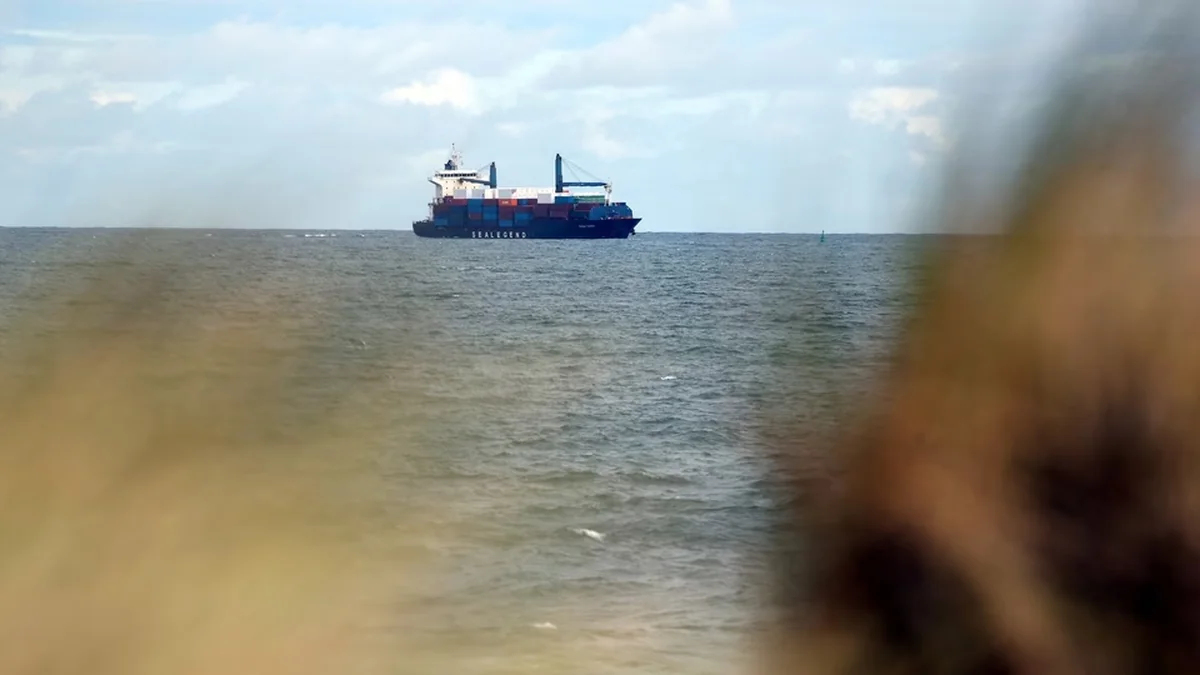
The death toll on this one kept moving all week, and not in a good direction. Five confirmed dead at first. Then word settled around 86 missing, a number that sat there for a couple of days while search teams tried and failed to get close enough to the wreck. By Friday, once crews finally made it inside, that number jumped. Thirty-five dead, confirmed. Fifty-four are still missing.
Forty-three known survivors. Out of roughly 132 people who were aboard when the fire started.
The ship was the MV June Aster, sailing out of Manila, closing in on Coron in Palawan province.
Coron's the kind of place people go for the diving, clear water, limestone cliffs, and that whole scene. The ferry never got there.
Wednesday evening, local time, the fire broke out while the boat was still about four nautical miles from a village called Turda, short of its final stop. A distress call went out around 6:45pm. Coast guard crews say they were responding within five minutes of getting it.
There's a survivor account from a man named Richard Marceliano that's stuck with a lot of the coverage. He told GMA News he saw a little smoke, barely noticeable, and then within seconds it wasn't a little smoke anymore. It was the whole ship.
Seconds. That's genuinely how fast people said this went from nothing to catastrophic.
The ferry didn't go down right away. It drifted overnight, ended up closer to shore, and ran aground near Coron town, still too hot to approach, still smoking. Crews tried getting on Thursday and had to back off. Heat, smoke, the usual reasons rescuers can't do their jobs right after something like this. So the search stalled for most of a day.
Friday, firefighters finally got inside. And that's when the death toll jumped from five to 35 in the space of a few hours, once bodies started turning up in the wreckage. Nobody's saying that's a final number either.
There was cargo on board too, not just people. An electric vehicle. A pickup truck. A few motorcycles. Whether any of that fed the fire or made it spread faster is something investigators still need to sort out. As of now, there's no official word on what actually caused it.
The company that runs the June Aster put out a statement saying it's working with the coast guard and maritime officials to find the missing and cooperating with whatever investigation follows.
Fairly standard stuff, the kind of language companies reach for after something like this. Doesn't say much. It's what's on the record, though.
What actually says something is the route. Ferry disasters aren't some rare occurrence in the Philippines, and they tend to happen again and again along the same stretches of water.
Back in January, a triple-decker called the MV Trisha Kerstin 3 sank along nearly this same corridor, with more than 340 people aboard, at least 52 killed. Go back to 2023, and there's the Lady Mary Joy 3, a fire on a similar route that killed 31.
The reasons people point to don't really change year to year.
Overcrowded boats. Old vessels that don't get the maintenance they're supposed to. Monsoon weather that turns an ordinary crossing dangerous fast. In a country made up of more than 7,000 islands, ferries aren't a luxury option; they're just how people get from one place to another, which is a big part of why these safety gaps keep costing lives.
And there's still the number that hangs over all of it. Back in 1987, the Dona Paz collided with a fuel tanker and went down, killing more than 4,300 people. It's still the deadliest peacetime maritime disaster ever recorded, anywhere in the world.
Search crews are still out there right now, working through what's left of the June Aster. Fifty-four families are waiting on a phone call nobody wants to make.
A fire broke out Wednesday evening aboard the MV June Aster, a ferry traveling from Manila toward Coron in the Philippines' Palawan province, roughly four nautical miles from shore. Of about 132 people aboard, the confirmed death toll rose to 35 by Friday, after rescuers finally boarded the burned-out vessel, which had drifted and run aground overnight. Fifty-four people remained missing, and 43 were confirmed survivors, including one who described the fire spreading within seconds of the first sign of smoke.
The vessel was also carrying cargo, including an electric vehicle and a pickup truck, and the cause of the fire has not been determined.
The incident echoes past disasters along similar Philippine ferry routes, including a January 2026 sinking that killed at least 52 and a 2023 ferry fire that killed 31, against the backdrop of the 1987 Dona Paz disaster, the deadliest peacetime maritime accident on record.