India and Japan maintain one of the most significant bilateral relations in Asia. Beginning from the diplomatic relation in 1952, the nature of the relationship has continued to expand to incorporate trade, investments, infrastructure development, defense, technology, semiconductors, artificial intelligence, renewable energy, and even the entire Indo-Pacific region.
The current relationship that exists between India and Japan has been designated as the Special Strategic and Global Partnership owing to the increasing importance of the same for both nations. This current phase of the partnership began in 2026 as both nations started focusing on issues of economic security and advanced technologies.
One of the major developments occurred in the 2000s when India and Japan began forming a strategic partnership.
In 2014, the India-Japan partnership was elevated to a Special Strategic and Global Partnership. Since then, India and Japan have extended their collaboration to areas such as infrastructure development, maritime security, defense, science and technology, and diplomacy in the region.
The other important factor that plays an important role in strengthening India-Japan relations is the involvement of both countries in regional forums such as the Quad.
The nature of the partnership goes beyond mere diplomacy. For India, these include its large economy and its rapidly growing market, its technological prowess, and its strategic positioning in the Indian Ocean.
For Japan, these are its advanced manufacturing capabilities, technology, finance, infrastructure, and development finance. There is an increasing congruence of interests on both sides, as both seek increased economic resilience and stability in the Indo-Pacific region.
India and Japan’s diplomatic relations began in 1952. Over the following years, the economic and political relations slowly developed between the two nations. One of the most prominent changes happened in the 2000s when India and Japan started to form a strategic partnership.
The year 2014 saw the elevation of the India-Japan relationship to the Special Strategic and Global Partnership. Since then, their cooperation has diversified into infrastructure, maritime security, defense, science and technology, and diplomacy within the region.
The other aspect that helps strengthen India-Japan relations is their joint involvement in regional mechanisms like the Quadrilateral Security Dialogue (Quad), which includes India, Japan, the USA, and Australia. Nevertheless, there is substantial cooperation between the two nations beyond the Quad.
Economic relations have become one of the pillars of the partnership. The investments of Japanese firms in India have covered automobiles, electronics, infrastructure, financial services, and the manufacturing industry. Japan has also been a source of development aid for Indian infrastructural projects.
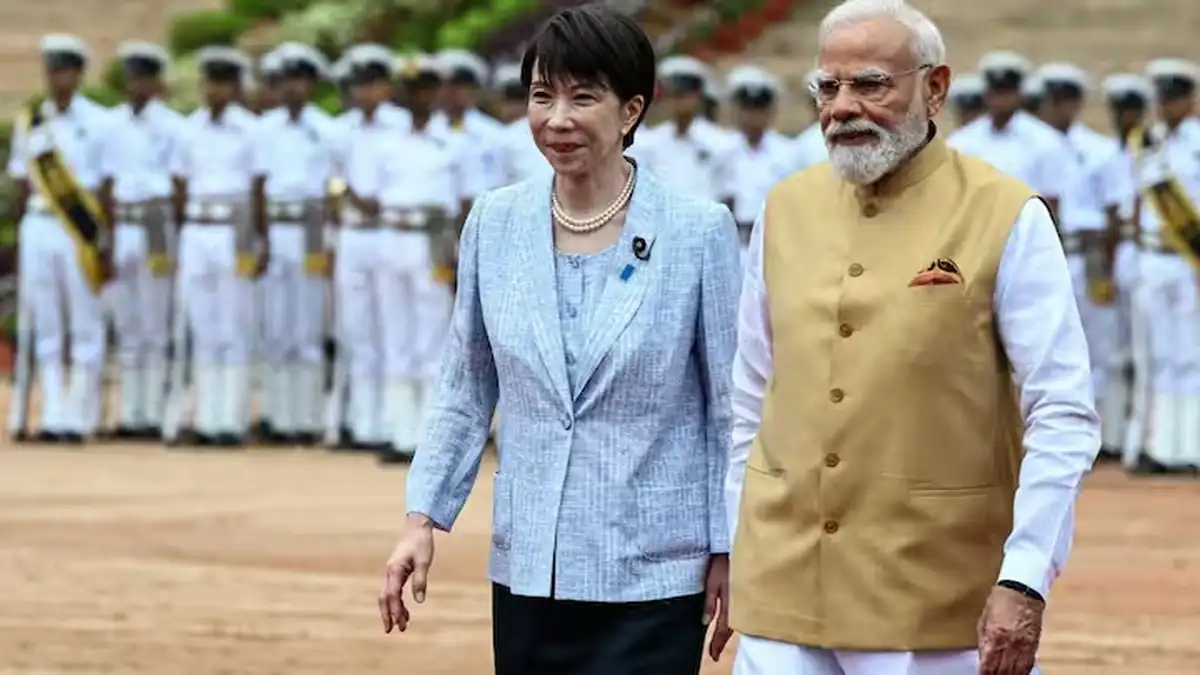
Both nations have started to focus on economic sectors with strategic importance, rather than traditional trade practices only. In the 2026 India-Japan Annual Summit, both nations have stressed collaboration in areas like semiconductors, critical minerals, pharma, green energy, information and communication technologies, and AI.
In addition, India and Japan are trying to conduct a review of their Comprehensive Economic Partnership Agreement (CEPA). In August 2026, Indian Commerce Minister Piyush Goyal and Japan’s Minister of Economy, Trade, and Industry reviewed the process so that CEPA could address new economic challenges effectively.
Moreover, Japan has set its long-term investment goal at JPY 10 trillion worth of private investments in India.
The Japanese have contributed significantly to India's infrastructural development. For example, there is the India-Mumbai-Ahmedabad High-Speed Rail project, which employs Shinkansen train technology from Japan.
The Japanese are not only cooperating in high-speed rails. There is now the plan for cooperation in logistics, ports, roads, shipping, and other mobility industries. In the 2026 strategy, there will be increased focus on next-generation mobility and more manufacturing collaboration with India.
This is a significant infrastructural cooperation for India, which is striving to develop transportation infrastructure, while Japan is seeking a chance to use its technological expertise in the booming Indian market.
Technological cooperation has been one of the most rapidly developing spheres of cooperation between the two countries. Both nations have come to realize that semiconductors, artificial intelligence, and telecommunications have been increasingly becoming an integral part of national economic security.
A semiconductor partnership was agreed upon by India and Japan in 2023. Japanese companies have since joined in India's emerging semiconductor industry through cooperation between governmental organizations, which includes companies like Renesas and Tokyo Electron.
Another one is artificial intelligence. At the 2026 summit, India and Japan released a joint statement on AI cooperation that is intended to bolster R&D and collaboration in the realm of safe and responsible AI systems.
The joint venture between Tata Electronics and Nexperia, signed in September 2026, is another example of India's involvement in the fabrication of semiconductors and the global desire to produce semiconductors in India.
Security cooperation has become essential in light of the evolving situation in the Indo-Pacific and efforts by both India and Japan to adapt to the changing reality.
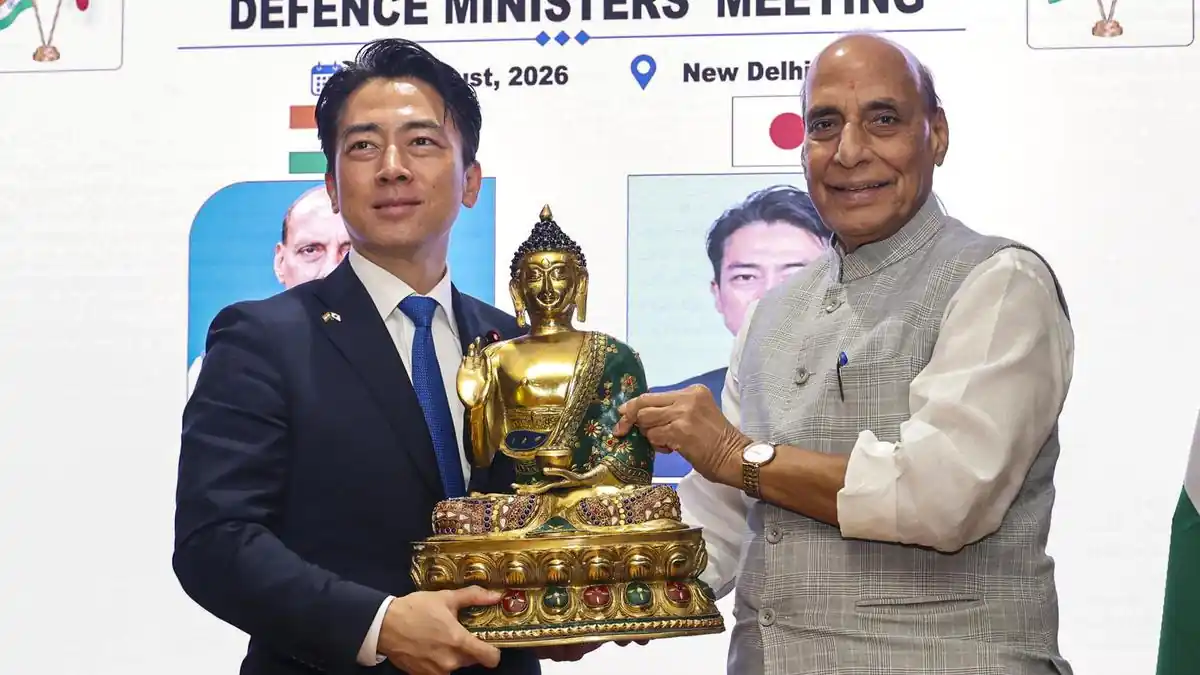
India and Japan carry out military drills and cooperate in such fields as maritime security, defence technology, and information exchange. The strategic partnership is also linked to cooperation in the framework of the Quad.
At the 2026 Annual Summit, the two governments adopted a Joint Declaration on Security Cooperation, providing a framework for further development of bilateral defence and security cooperation.
Nevertheless, the cooperation differs from the military alliance because of the independent foreign policy goals and strategies of the states.
Besides, energy security and critical minerals have become increasingly important topics for both countries. Contemporary industries require such minerals that are used to produce batteries, electronic devices, renewable energy sources, and high technologies in manufacturing.
Both countries have reached an agreement concerning the cooperation in the field of critical minerals' supply chain, processing technologies, investments, and securing the resource base. Besides, clean energy, hydrogen, and ammonia production have also been included in the list of joint priorities.
Such collaboration corresponds to the emerging trends in the international economy—besides the cost of the resources, now countries pay attention to the reliability of their supply chains.
Together with emerging fields of cooperation, the two countries face several problems. Bilateral trade is below the estimated level due to the size of the economies. The possible reasons for that include such issues as the regulation, market access, investments, and supply chain.
In this context, the CEPA review becomes crucial as both countries aim to adapt their economic cooperation to the needs of modern industries and technologies. India and Japan need to implement their political decisions into commercially successful projects.
Another issue is that the region includes a complicated strategy rivalry. While India and Japan can have multiple common security concerns, their diplomacy priorities will differ. Strategic cooperation while retaining independent foreign policy will remain one of the key features of their partnership.