About one-fifth of voters have dropped off Karnataka’s voting list, and the majority of those who disappeared from the list belong to the younger generation.
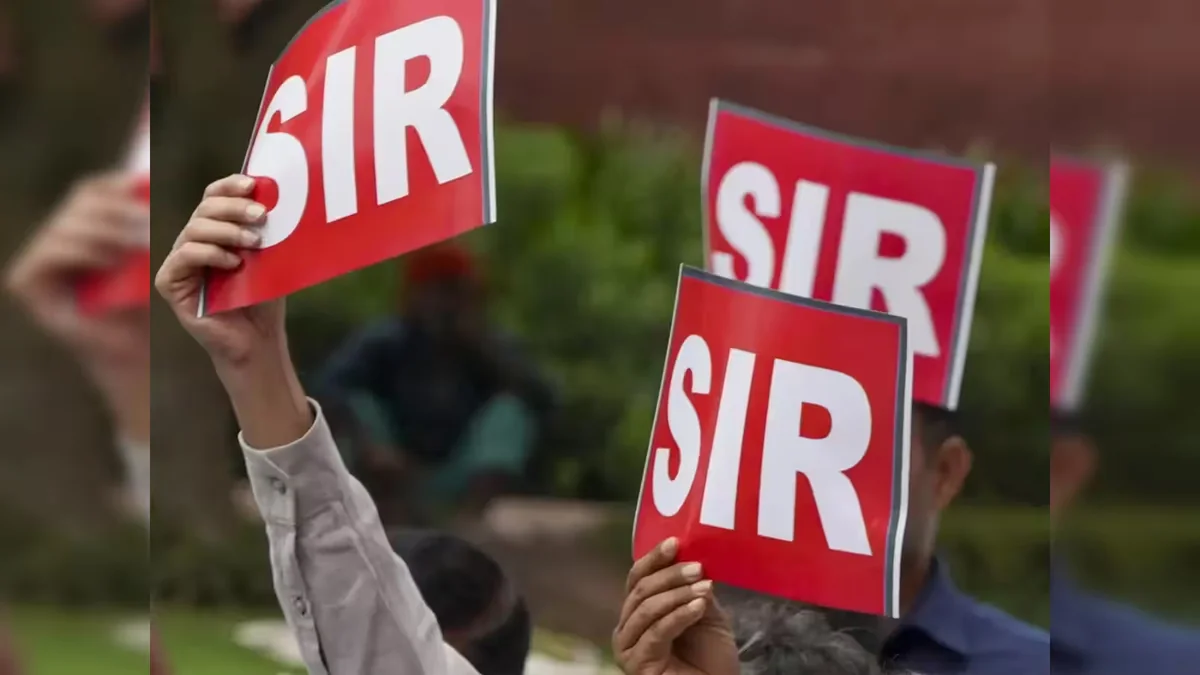
The Special Intensive Revision (SIR) exercise conducted in Karnataka ended on October 27. The number of electors decreased from 5.54 crore to 4.55 crore, while 99.32 lakh voters were taken off the rolls, according to the latest voter list issued by the Chief Electoral Officer.
The number of electors that disappeared from the list has been cited by Daily Pioneer as 99.76 lakh.
The most striking data point comes from the analysis conducted by The South First. They showed that of the 64 lakh adult voters not on the rolls, 53 lakh voters are below 40 years of age.
There is a clear trend here. Voters above 50 years are 94% to 99% enrolled. The difference is at the lower end and is specific to Bengaluru.
As per the analysis, this may have lasting ramifications. With the current roll, the next election will be fought with a roll where one voter in every fourteen eligible voters is missing, and even more among the younger voters and in Bengaluru.
This is the analysis done by The South First and is not an official observation. The Election Commission did not comment on it in the available reports.
The deletions were categorized into ASDDO—absent, shifted, dead, duplicate, and others. In the draft, which was issued on August 24, there were around 20 percent deletions in terms of voters of the state according to this categorization.
The largest category included people who had been shifted. The permanent shifts category included 65.45 lakh voters.
There were 16.39 lakh voters who were deleted on the grounds that they were dead, and more than seven lakh voters were deleted on the grounds of being duplicates.
They argue that the term "shifted" obfuscates the issue. Individuals migrate due to job and educational reasons while keeping their family home. An individual who is not at the same address during an official visit may be marked as absent.
South First's report showed instances where voters were residing at home despite the deletion request that they had permanently shifted their residence. One report spoke of 243 eligible voters affected in one such instance. The reports reviewed by the analysis did not mention anything about the subsequent events.
It was maintained that an incomplete form could be labeled as "absent" or "shifted," and deleting eligible citizens is another issue entirely.
Procedural problems also emerged in another report. At least 61,059 forms and 7 applications for deletion have been submitted by electoral authorities without stating any reasons at all, despite the fact that a reason is required by the Registration of Electors Rules 1960.
This is according to Maktoob’s reports. The reports checked failed to provide any comments from the Election Commission.
This roll was also different from the draft roll. In fact, there is an addition of 8.64 lakh voters compared to the draft roll. The number of additions and deletions that took place during the claim process included an addition of 10 lakh voters and a deletion of 1.9 lakh voters.
The notice process was also successful for the majority of those who were notified. Out of 43.82 lakh notified voters, 43.2 lakh could make it to the final rolls, while 61,867 were left out.
Youth voters form part of the roll in actual numbers. There are over 6.83 lakh voters aged between 18 and 19 in the roll.
The door is not totally shut. The Office of the Chief Electoral Officer has issued a statement regarding an enrollment initiative for those who are eligible to vote but had their names struck from the rolls.
Applications for Form 6 received after the September 23 cutoff will be considered for inclusion in supplementary lists to the SIR produced quarterly.
The trouble for most of these people is that they don't even know they've been struck from the list.
Karnataka is not an exception. In Bihar, some 66 lakh voters were excluded from the draft list following the first phase of the SIR, with opposition parties and activists informing the Supreme Court that the process could disenfranchise poor and migrant workers.
The same pattern has continued state-wise.